
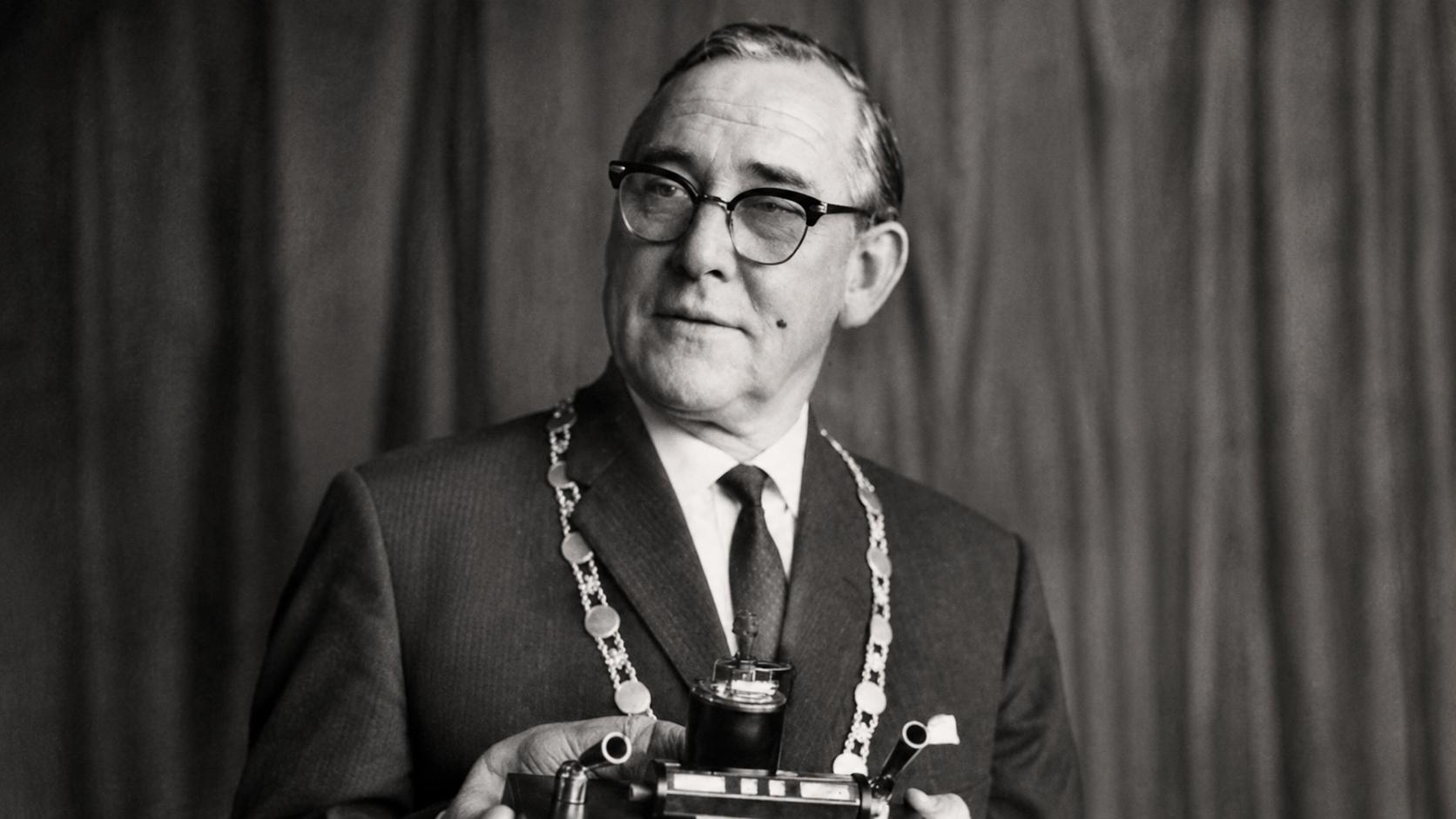
Andrew Cunningham was born in Durham in June 1910 and spent most of his life in Chester-le-Street, building an extraordinary concentration of civic and trade union power across County Durham during the 1950s and 1960s. At the height of his influence in the early 1970s, Cunningham simultaneously held a remarkable range of official positions, making him arguably the single most powerful unelected figure in North East local government at the time.
Cunningham served as chairman of Durham County Council from 1963 to 1965, chairman of Felling Urban District Council's housing committee from 1953 to 1967, chairman of the Northumbrian River Authority from 1964 to 1968, and chairman of Durham Police Authority from 1964 to 1973. He also sat on the National Executive Committee of the Labour Party and chaired the party's Northern Region executive, giving him significant influence over Labour's organisation across the entire North East.
Alongside his civic roles, Cunningham headed the Northern District of the National Union of General and Municipal Workers, then the North East's largest trade union, giving him a genuinely rare combination of industrial and political power. He also served on the Peterlee New Town Development Corporation and the Tyneside Passenger Transport Authority, placing him at the heart of virtually every significant regional public body operating in the region during this period.
Cunningham's downfall came through his connection to architect John Poulson, whose bankruptcy in 1972 exposed a nationwide bribery network implicating politicians and officials across Britain. Cunningham was tried alongside T. Dan Smith and Poulson himself at Leeds Crown Court in 1974, where the court heard how he had used his various official positions to help direct public contracts toward Poulson's firm in exchange for payments and favours.
Cunningham was convicted on corruption charges and initially sentenced to five years in prison, later reduced to four years on appeal. The court heard detailed evidence covering the period between 1960 and 1970, during which Cunningham held many of his most significant public offices simultaneously, raising serious questions about how so much unchecked power had been allowed to concentrate in the hands of a single unelected official for so long.
The scandal's personal dimension extended into the next generation of his own family. Cunningham's son, John Cunningham, went on to become a Labour MP for Copeland and later served as a Cabinet minister under Tony Blair, achieving the kind of senior national political success his father's career had been permanently denied by the corruption conviction, a contrast frequently noted by political historians studying the family's story.
After his release from prison, Cunningham lived quietly, largely out of public view, for the remainder of his life. Remarkably, he lived to the age of 100, dying in June 2010, having witnessed the North East's political landscape transform dramatically in the decades since his own conviction, including the rise of directly elected mayors and, eventually, the regional devolution deals that reshaped how the North East is governed today.
Cunningham also served as a Justice of the Peace between 1964 and 1969 and sat as one of the first members of the Northern Economic Planning Council from 1965 to 1969, the very same regional body chaired by T. Dan Smith, placing the two men directly alongside one another on yet another significant regional institution in the years before their shared corruption trial brought both careers to an abrupt and permanent end.
The Court of Appeal later reviewed Cunningham's case in July 1974, ultimately reducing his original five-year sentence to four years after considering the specific circumstances and evidence presented regarding his conduct across the various public roles he had held between 1960 and 1970, the period covered by the original indictment against him.
Cunningham's story remains a significant, if less widely remembered, chapter of the Poulson Affair, illustrating just how deeply the scandal reached into County Durham's civic institutions specifically, beyond the more widely known case of T. Dan Smith in Newcastle. Together, their convictions marked the definitive end of an era in which a small number of powerful local figures had operated with strikingly little independent scrutiny. His century-long life meant Cunningham personally witnessed the entire post-war transformation of County Durham's local government, from the county's industrial mining heyday through to its more recent unitary authority status.
Join the discussion.
Should Andrew Cunningham be remembered as much as Smith?
Political News
Andrew Cunningham: The Durham Boss Convicted Alongside T. Dan Smith
Andrew Cunningham held an extraordinary concentration of power across County Durham for two decades, before his conviction in the Poulson Affair ended his career in disgrace.
Advertisement


Comments (0)
You must be logged in to post comments.
Don't have an account? Register here
No comments yet. Be the first to share your thoughts!