
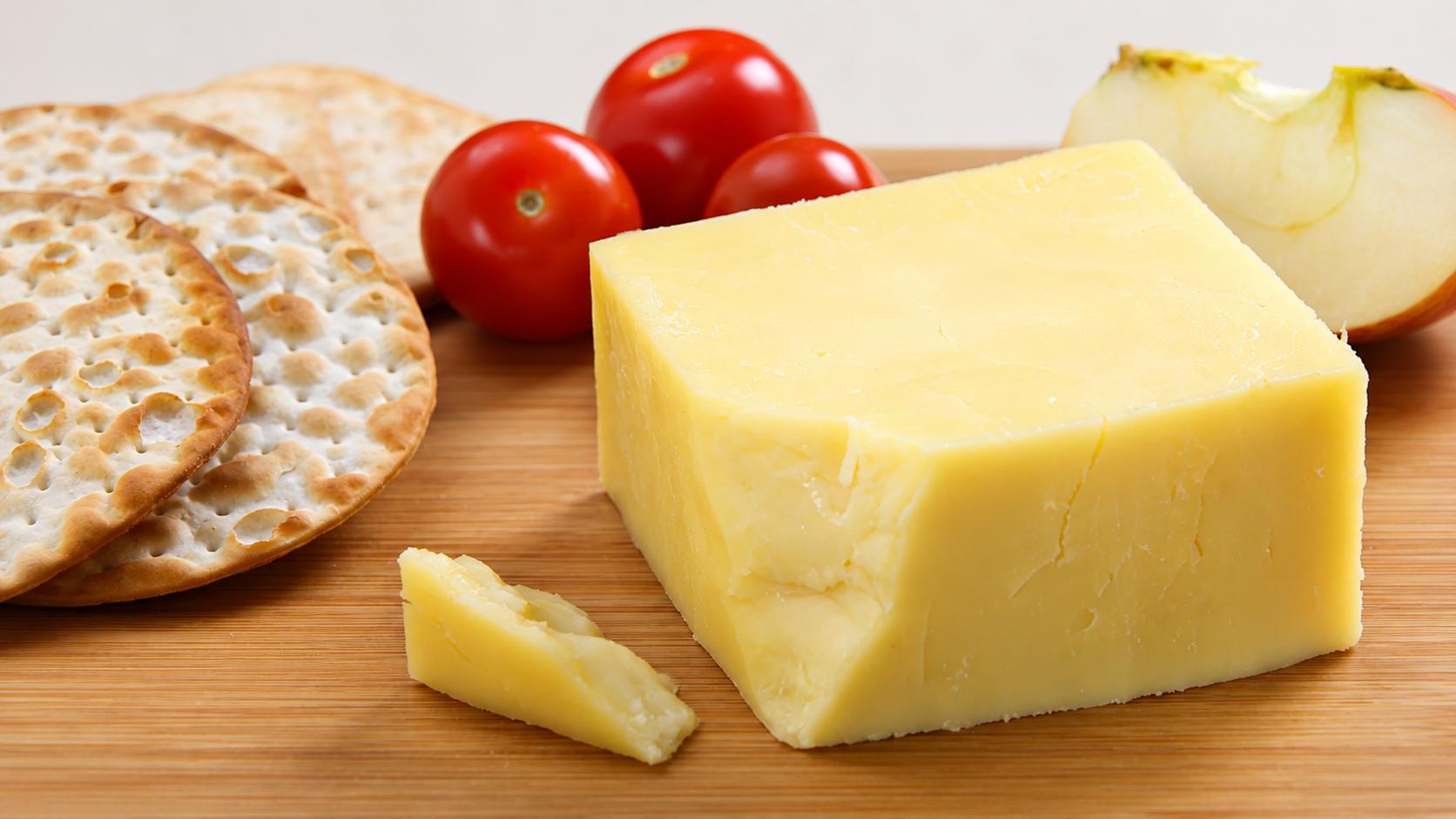
Cheddar is the most widely produced cheese on earth. It is made in Ireland, Canada, the United States, Australia, New Zealand and across Britain, in volumes that dwarf anything the village of Cheddar could produce.
That village, in the Mendip Hills of Somerset, gave the cheese its name and its method. It has almost no control over either.
Here is the story of how a regional cheese became a global commodity, and what still separates the traditional article from the block in the supermarket chiller.
The caves came first.
Cheddar Gorge, the limestone ravine above the village, contains extensive caves with a naturally cool, humid and remarkably stable atmosphere.
Those conditions are close to ideal for maturing cheese, and the caves were used for exactly that purpose. Cheese made in the surrounding dairy country was brought to the gorge to age.
Cheddar cheese is recorded from at least the twelfth century, and by the seventeenth century it had a considerable reputation, with demand reportedly outstripping supply well before modern production methods existed.
Cheddaring is a process, not just a name.
The word cheddaring describes a specific stage in making the cheese, and it is what distinguishes it technically from most other cheeses.
After the curd has formed and the whey has been drained, the curd is cut into slabs. Those slabs are then stacked, turned and restacked repeatedly over a period.
The weight of the stack presses out more whey while the curd continues to acidify, and the texture changes from soft and granular to firm and layered, somewhat like cooked chicken breast.
The slabs are then milled into small pieces, salted, and pressed into moulds. That combination of stacking, turning and milling is cheddaring, and any cheese made this way anywhere in the world can legitimately be called cheddar.
One Somerset farmer standardised it.
Joseph Harding, a nineteenth-century Somerset dairy farmer, is widely described as the father of modern cheddar.
He and his wife studied the process systematically, established standards for hygiene and consistency, and promoted a defined method that could be taught and replicated.
Their work spread the technique well beyond Somerset, including to North America and Australia, which is a large part of why the cheese became global. Standardisation made it exportable in every sense.
The name was never protected.
Because the method spread so widely and so early, cheddar became a generic term long before protected food names existed.
The result is that anyone anywhere can make and sell cheddar. There is no legal barrier, and the great majority of cheese sold as cheddar has no connection to Somerset whatsoever.
Two narrower protections do exist. West Country Farmhouse Cheddar holds Protected Designation of Origin status, requiring production in defined western counties using traditional methods, and there is a separate protected designation covering certain Orkney cheese.
Those designations cover a tiny fraction of total production.
Traditional truckles differ substantially.
Traditional cheddar is made in cylindrical truckles, bound in cloth and larded, then matured for a year or more.
Cloth binding allows the cheese to breathe and lose moisture slowly, which concentrates flavour and produces a drier, more crumbly texture with complex, sometimes nutty notes.
Block cheddar is matured in plastic film, which prevents moisture loss. It stays moister and more uniform, matures faster and is far cheaper to produce, but it does not develop the same character.
Anyone who has only eaten block cheddar and then tries a mature cloth-bound truckle generally reports that they taste like different products, which in most respects they are.
Maturity labels are loosely defined.
Terms such as mild, mature, extra mature and vintage are not tightly regulated, and different producers apply them to different ages.
As a rough guide, mild cheddar is matured for a few months, mature for around nine to twelve, and extra mature or vintage for eighteen months or more.
The white crystals found in well-aged cheddar are frequently mistaken for mould or salt. They are amino acid crystals formed during long maturation and are a mark of a properly aged cheese.
Colour is added, not natural.
Cheddar is naturally pale cream. The orange colouring found in many cheeses comes from annatto, a plant-based dye.
The practice originated as a way of making cheese from partially skimmed milk resemble richer, deeper-coloured cheese made from summer milk when cows grazed on fresh grass.
It persists largely through custom and regional expectation, with some markets strongly preferring coloured cheese and others expecting white.
The village still makes cheese.
Cheddar itself remains a working village with cheesemaking on site, and the gorge and caves are a major tourist attraction.
Visitors can see cheese being made and buy truckles matured in the caves, which is as close to the original as it is possible to get.
For a cheese produced in millions of tonnes worldwide, it is worth remembering that the whole thing began in one limestone valley in Somerset.
Share your thoughts.
Mild, mature or vintage, and does colour make any difference to you?
Food & Drink News
Cheddar: How a Somerset Village Named the World's Cheese
Cheddar is made everywhere from Wisconsin to New Zealand, and almost none of it comes from anywhere near the Somerset village that named it.
Advertisement

Comments (0)
You must be logged in to post comments.
Don't have an account? Register here
No comments yet. Be the first to share your thoughts!