
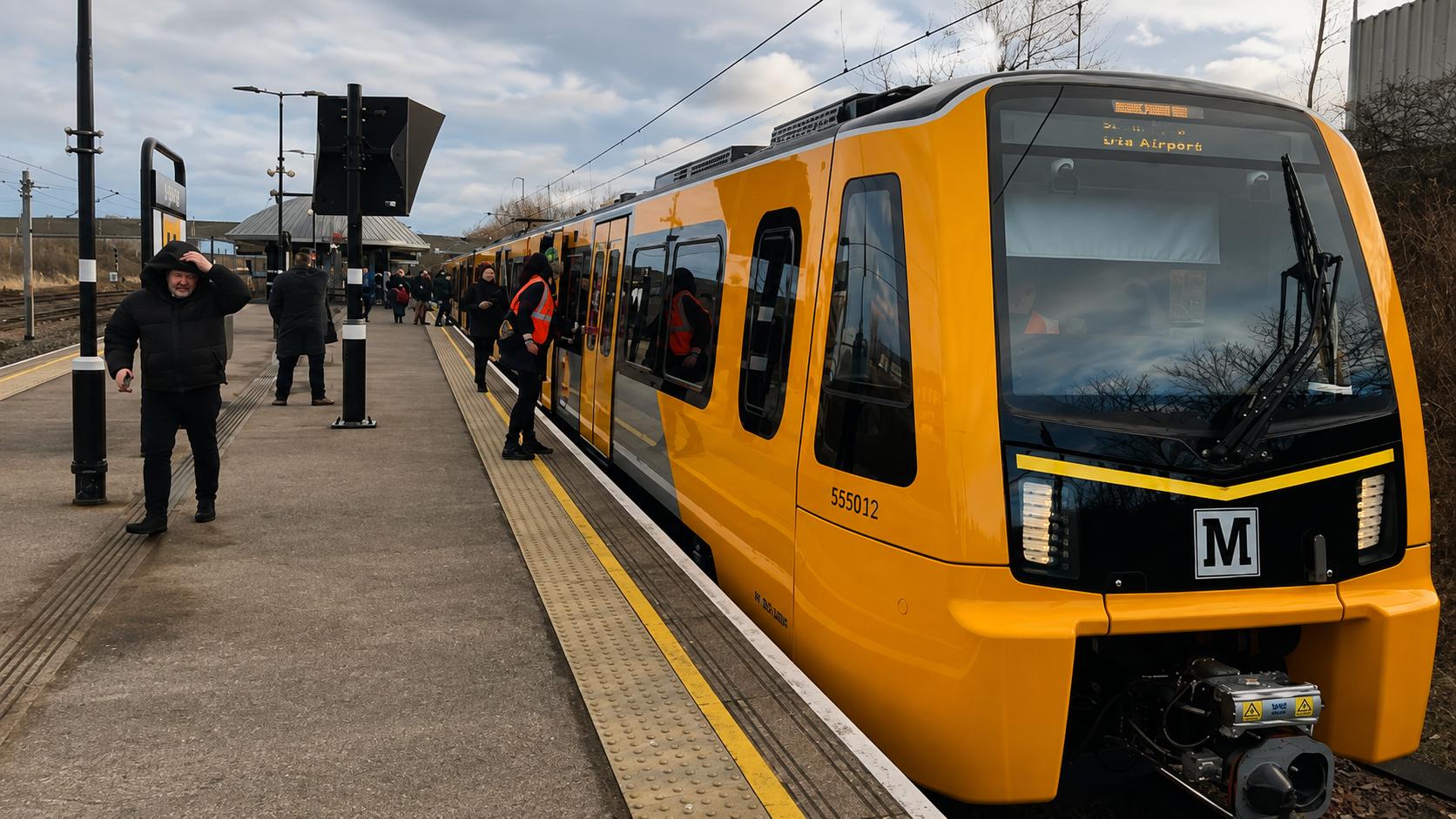
The Tyne and Wear Metro was built on a principle that now looks either admirably trusting or hopelessly optimistic, depending on your mood: that people would buy a ticket because they were supposed to.
Most stations have no barriers. You walk on to the platform, board the train and travel. Nobody stops you, and on many journeys nobody checks.
That design decision keeps the system fast and cheap to run. It also creates an obvious temptation.
The honour system is not quite an honour system.
The Metro operates what is properly called proof of payment. You must hold a valid ticket or pass for your entire journey and be able to produce it on request.
Ticket gates exist at the busiest stations, including several in the city centre, which catches a share of travel. Beyond that, enforcement relies on revenue protection staff boarding trains and checking passengers.
Get caught without a valid ticket and you are liable for a penalty considerably higher than the fare you avoided. Persistent or deliberate evasion can be prosecuted under railway byelaws and related legislation, which produces a criminal record and a court-imposed fine that dwarfs the original saving.
The amounts change periodically, so the sensible thing is to check the current figure on the Nexus website rather than rely on what somebody told you two years ago.
The cost lands on everybody else.
Every unpaid fare is revenue the system needed. The Metro's running costs do not fall because some passengers did not pay, so the gap has to be filled from fares paid by everybody else, from public subsidy, or from the maintenance and investment budget.
That last option is the worst of the three, because deferred maintenance on a railway is a debt that compounds. The saving today becomes a larger repair later.
The network has needed substantial investment in recent years for new trains and infrastructure renewal, and every pound lost to evasion is a pound that has to come from somewhere with less obvious consequences.
Not every mistake is evasion.
There is a real difference between deliberate evasion and getting it wrong, and the distinction matters.
Common honest errors include failing to validate a ticket where validation is required, using a pass outside its permitted hours, travelling beyond the zone the ticket covers, or a contactless payment that did not register properly.
Concessionary passes have conditions attached, and a pass used outside those conditions is not valid however genuine the holder's intention.
If you are challenged and believe you have paid, keep the evidence. A bank statement, an app record or a machine receipt is worth far more than an explanation.
Why people do it.
Surveys of fare evasion on open systems tend to find the same mix everywhere. A small group evades deliberately and habitually. A larger group evades opportunistically when they judge the risk of a check to be low. A third group is simply confused by the ticketing.
That last category is the one operators can fix most easily, and it is the reason simplification of fares and clearer signage tends to reduce evasion more cheaply than enforcement does.
Barriers everywhere are not the obvious answer.
Gating every station sounds like the solution, but it is expensive to install, expensive to staff and physically impossible at some of the network's smaller surface stations without rebuilding them.
Gates also slow passengers down and create crowding at peak times, and they have to be opened during disruption anyway.
Most open systems land on the same compromise: gate the busiest stations, where the volume justifies the cost, and rely on visible mobile checking elsewhere. The deterrent depends on the perception that a check could happen on any journey.
What passengers can reasonably ask for.
Enforcement is more acceptable when it is even-handed and when the ticketing is genuinely easy to get right. That means reliable machines, a working app, clear zone information and staff who deal with honest mistakes proportionately.
It also means being straight with passengers about what evasion actually costs the network each year, because the case for enforcement is strongest when the numbers are in public view.
Share your thoughts.
Would you support ticket barriers at every Metro station?
Local News
Fare Evasion on the Metro and What It Costs Everyone Else
Advertisement


Comments (0)
You must be logged in to post comments.
Don't have an account? Register here
No comments yet. Be the first to share your thoughts!