
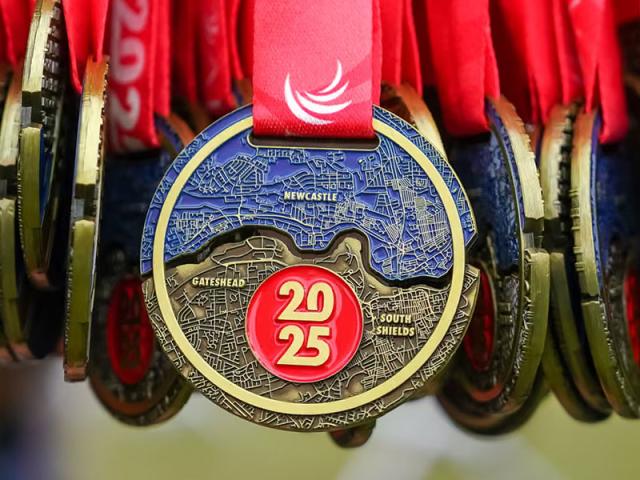
Organisers of the Great North Run have issued an apology after medals distributed to participants mistakenly depicted the wrong city and river. Approximately 60,000 runners completed the half-marathon, expecting medals showcasing Newcastle, Gateshead, South Shields, and the River Tyne. Instead, the medals featured Sunderland and the River Wear, unrelated to the event.
The Great North Run, a hallmark event in the UK's running calendar, has been celebrated for its vibrant atmosphere and charitable contributions since its inception in 1981. The half-marathon, spanning 13.1 miles (21 kilometres), traditionally begins in Newcastle upon Tyne and concludes in South Shields, drawing participants from across the globe. The event is not only a test of endurance but also a significant fundraiser, supporting numerous charities each year. On average, the run attracts around 60,000 participants annually, making it one of the largest half-marathons worldwide.
The blunder with the medals was met with humour by the organisers, who quipped, "Wear sorry!" in reference to the River Wear. They acknowledged that "eagle-eyed" individuals had noticed the error, which also appeared on event clothing. The organisers jested that this mistake rendered the T-shirt and medal "the most unique in Great North Run history," suggesting they would be memorable keepsakes for years to come.
The geographical mix-up is particularly amusing given the longstanding football rivalry between Newcastle and Sunderland, cities located approximately 12 miles (19 kilometres) apart. This rivalry extends beyond the football pitch, often influencing local culture and identity. Social media users were quick to capitalise on the error, with some jokingly questioning whether Sunderland fan and athletics commentator Steve Cram was behind the design. Observers also noted the medal ribbons bore Sunderland's red and white colours, further fuelling the playful banter.
In a statement, the Great Run Company addressed speculation that the medal design might hint at a future route change, clarifying, "To answer the rumours that this was the route reveal for next year... sorry to disappoint, it's a mistake." They admitted that despite numerous reviews of the designs, the error went unnoticed. The company highlighted the irony of having Newcastle United stars at the starting line while the medals featured Sunderland's Stadium of Light.
Sir Brendan Foster, the founder of the Great North Run, expressed his surprise at the oversight. He admitted to spending considerable time admiring the designs without recognising the mistake, even when they were prominently displayed in a Newcastle department store. Foster, who has lived by the River Tyne his entire life, confessed, "I should've noticed." Despite the mix-up, he maintained that he would wear the medal with pride if he had participated in the run.
The Great North Run is renowned for its community spirit and the enthusiastic support of spectators lining the route. This year's event was no exception, with thousands of supporters cheering on the runners. The organisers expressed gratitude to everyone involved, emphasising the event's success and looking forward to future editions, albeit with a renewed focus on geographical accuracy.
The charitable impact of the Great North Run cannot be overstated. Each year, the event raises millions of pounds for various causes, with participants often running in support of personal or local charities. The run has supported a wide range of organisations, from large national charities to smaller, community-based initiatives. This philanthropic aspect is a core element of the event's identity, fostering a sense of collective achievement and goodwill.
The history of the Great North Run is rich with memorable moments and achievements. Since its first race, the event has grown exponentially, both in terms of participation and its role in the community. It has become a symbol of resilience and camaraderie, with stories of personal triumph and community support emerging each year. The run's ability to unite people from diverse backgrounds in a shared goal is a testament to its enduring appeal.
Looking ahead, the organisers are committed to maintaining the event's high standards and ensuring future editions are free from similar errors. They have pledged to enhance their review processes to prevent such oversights, recognising the importance of attention to detail in preserving the event's reputation.
While the medal mishap provided an unexpected twist to this year's Great North Run, it also highlighted the event's capacity to bring people together in good humour. The organisers' light-hearted response and the community's engagement underscore the spirit of the Great North Run, where the journey and shared experience are as significant as the finish line. As the event continues to evolve, its legacy of community, charity, and celebration remains steadfast.
Local News
Great North Run Medals Feature Wrong City, Organisers Apologise
Organisers of the Great North Run have issued an apology after medals distributed to participants mistakenly depicted the wrong city and river. Approximately 60,000 runners completed the half-marathon, expecting medals showcasing Newcastle, Gateshead, South Shields, and the River Tyne.



Comments (0)
You must be logged in to post comments.
Don't have an account? Register here
No comments yet. Be the first to share your thoughts!