
A haulage company director who used his transport business as a front for a large-scale cocaine trafficking network has been sentenced to 15 years in prison following a major National Crime Agency investigation linked to Operation Venetic.
Guy Mitchell, 56, from Blaydon-on-Tyne, was found guilty of playing a central role in a sophisticated drug conspiracy that saw huge quantities of cocaine transported across the UK while the country was under strict Covid-19 lockdown restrictions.
Investigators revealed that Mitchell exploited his knowledge of the haulage industry to help criminal associates move drugs and cash under the guise of legitimate transport work. The conspiracy was ultimately exposed after law enforcement agencies cracked EncroChat, the encrypted communications platform widely used by organised crime groups across Europe.
Mitchell, who operated under the EncroChat handle “nova-train,” was convicted at Newcastle Crown Court on two counts of conspiracy to supply cocaine. On May 7, he received a 15-year prison sentence for his involvement in the network.
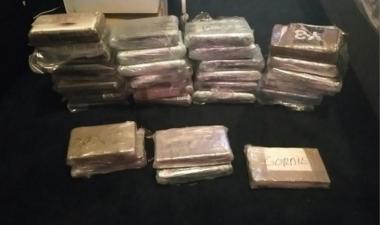
The court heard that in April 2020 Mitchell paid one of his HGV drivers to collect 15 kilograms of cocaine from Warrington. The drugs carried an estimated street value of £615,000 and formed part of a much wider trafficking operation stretching across the UK and Europe.
Authorities also discovered that Mitchell’s haulage business was being used to move criminal cash linked to drug dealing activities. During the investigation, officers stopped a vehicle driven by employee Hugh Goldie, 50, from Stanley in County Durham, and seized more than £15,000 in cash.
Goldie was later sentenced to nine years and six months behind bars after being convicted of conspiracy to supply cocaine as well as offences relating to criminal property.
The wider conspiracy involved several other organised criminals working together to import and distribute cocaine on a massive scale. Prosecutors said Mitchell partnered with David Jeavons, 60, from Felton near Morpeth, to purchase part of a 42-kilogram cocaine shipment worth around £3.36 million on the streets.
The drugs were smuggled into the UK from the Netherlands by William McChesney, 35, from Banbridge in Northern Ireland. McChesney, known on EncroChat as “solidzebra,” was jailed for seven years in December last year.
Jeavons, whose EncroChat alias was “slickpearl,” received a prison sentence of 10 years and eight months in September after his role in the operation was uncovered.
Another key figure in the conspiracy was David Bowen, 53, from Mitcham in London. Bowen, who used the handle “discocockney,” allegedly helped arrange the importation process and identified buyers for the cocaine once it arrived in Britain.
Encrypted messages recovered by investigators revealed detailed discussions about transportation routes, loading plans, and costs associated with moving the Class A drugs across the country. Mitchell was shown to have taken an active role in planning logistics and coordinating collections using his haulage expertise.
The criminal network became increasingly volatile after members realised that 10 kilograms of cocaine had disappeared. According to prosecutors, the group believed the drugs had been stolen by a man living in Fenham, Newcastle.
Recovered messages contained disturbing conversations about “grabbing him,” raising fears of violent retaliation. Authorities considered the threat serious enough to issue the suspected individual with an Osman warning - a formal police notification informing someone their life could be in danger.
In July 2020, tensions within the group escalated further when Mitchell and Jeavons travelled to Ferrybridge Services on the M62 in West Yorkshire to meet another criminal associate. Prosecutors described the encounter as a heated confrontation focused on how to deal with the missing cocaine.
The investigation formed part of Operation Venetic, the UK’s response to the takedown of EncroChat in 2020. The encrypted messaging platform had become notorious for its use by organised crime groups involved in drug trafficking, money laundering, firearms offences, and violence.
When international law enforcement agencies successfully infiltrated the platform, investigators gained access to millions of messages exchanged between criminals who believed their communications were secure.
Those messages provided crucial evidence against Mitchell and his associates, allowing officers to piece together the structure of the cocaine network and the roles played by each conspirator.
The National Crime Agency worked closely with the North East Regional Organised Crime Unit (NEROCU) throughout the lengthy investigation.
NCA Branch Commander Martin Clarke said Mitchell had used his industry knowledge to facilitate the movement of dangerous drugs for profit without regard for the damage caused to communities.
He said cocaine trafficking fuels violence, addiction, and exploitation across the UK and warned that organised crime groups continue to profit from misery and fear.
Clarke added that Mitchell’s involvement appeared to be driven entirely by greed, even during a period when much of the country was struggling through the uncertainty of the Covid-19 pandemic.
NEROCU Detective Inspector Simon Drenon described the investigation as a major success resulting from strong cooperation between law enforcement agencies.
He said Mitchell wrongly believed his experience in the haulage sector would help him avoid detection, but investigators were ultimately able to dismantle the operation and secure convictions against those involved.
Authorities have repeatedly stressed that EncroChat evidence continues to play a major role in disrupting organised crime networks throughout the UK.
The sentencing of Mitchell and his associates marks another significant victory for Operation Venetic, which has already led to hundreds of arrests, major drug seizures, and the disruption of countless criminal enterprises.
Despite the convictions, agencies warn that the fight against organised drug trafficking remains ongoing, with investigators continuing to target networks responsible for flooding British streets with cocaine and other illegal substances.
What do you think about the growing use of encrypted platforms by organised crime groups? Should sentences for large-scale drug trafficking be even tougher? Share your thoughts in the comments below and join the conversation.
Local News
Haulage Boss Jailed After Cocaine Smuggling Plot Exposed in Major Investigation
Advertisement



Comments (0)
You must be logged in to post comments.
Don't have an account? Register here
No comments yet. Be the first to share your thoughts!