
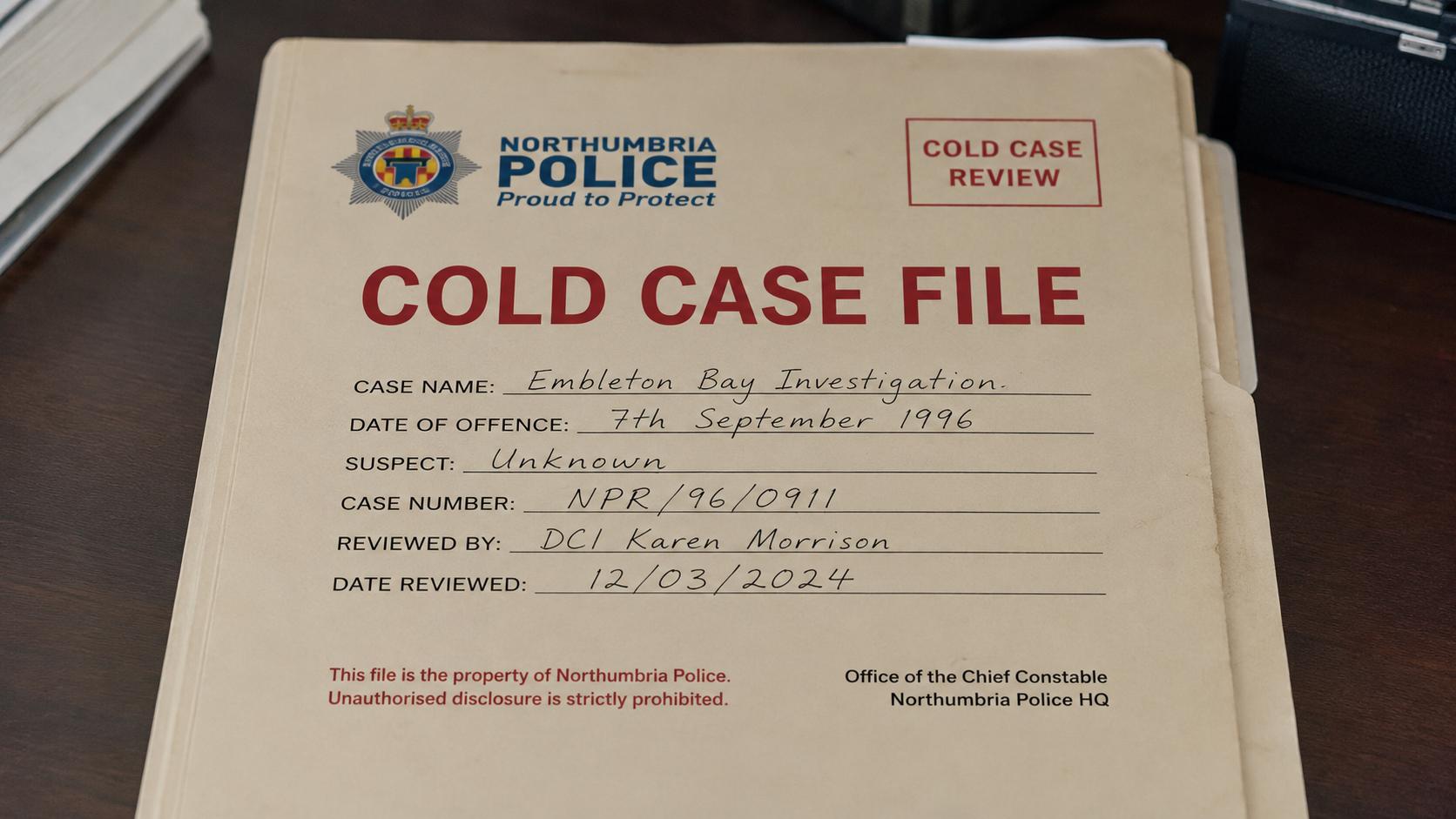
There is no statute of limitations on murder in England and Wales. A killing that took place forty years ago remains as prosecutable today as one that happened last week, and the file on an unsolved homicide is never formally closed. It is filed, reviewed periodically, and waits. What has changed dramatically in the past two decades is the likelihood that the wait ends in an arrest.
Cold case work has moved from something approaching a hobby, conducted by retired detectives with a personal interest, to a structured discipline with defined review processes, scientific protocols and dedicated resources. Convictions have followed across the country in cases that were considered hopeless at the time, and the reason is almost always the same: the science caught up with evidence that somebody had the sense to keep.
Preservation is the whole game.
Nothing else matters if the exhibits are gone. The single greatest determinant of whether a historic case can be solved is whether the physical evidence gathered at the time still exists, and whether it was stored in conditions that preserved it.
This is where practice has changed most. Investigators in earlier decades retained items according to the standards and expectations of their era, and material was sometimes destroyed after appeals were exhausted or storage space ran short. Where officers went against the grain and kept clothing, bedding, swabs, tapings and other apparently exhausted exhibits, they created the possibility of a conviction decades later that nobody at the time could have anticipated.
Storage conditions matter as much as retention. Biological material degrades with heat, humidity and light, and items sealed in plastic can be ruined by moisture that paper packaging would have allowed to escape. Modern property stores are managed with this in mind precisely because of what has been learned from historic cases.
DNA has moved further than most people realise.
Early DNA profiling in the late 1980s required a relatively large, fresh sample. Successive generations of technique have reduced the amount of material needed by orders of magnitude, to the point where a usable profile can now sometimes be obtained from a few cells transferred by touch.
That progression means a stain or a taping that produced nothing in 1990 may produce a full profile now, and a partial profile that was useless then may be sufficient today. It also means that exhibits are frequently re-examined more than once, as each new technique arrives, rather than being tested once and set aside.
Familial searching added another dimension. Where a crime scene profile does not match anyone on the national database, it can be searched for close but imperfect matches that may indicate a relative of the offender, generating a list of family lines to investigate. It is resource-intensive and carefully governed, but it has produced results in cases where nothing else could.
Fingerprints and other traces have improved too.
DNA takes the attention, but the same story applies elsewhere. Fingerprint enhancement techniques have advanced, and automated searching against national collections can now be repeated as the databases grow, so a mark that matched nobody in 1995 may match somebody who was arrested for something unrelated in 2015.
Digital evidence has created an entirely new category for more recent cold cases. Call data, cell site information, vehicle movement records and material recovered from devices can be re-examined with analytical tools that did not exist when the case was live.
Ballistics, tool marks, fibres, paint and glass all have improved comparison methods and better reference collections. Even document and handwriting analysis benefits from better imaging.
People change, and that changes cases.
The forensic story is only half of it. The other half is human, and it is frequently decisive.
Loyalties shift over decades. Relationships end, marriages break down, fear of a particular individual fades when that individual dies or goes to prison for something else, and people who kept silent at twenty are willing to speak at sixty. Witnesses who were children at the time become adults with a different understanding of what they saw.
Guilt is a factor as well. A meaningful number of historic cases have been resolved because somebody could no longer carry what they knew, often at a point in life when their own mortality became more real to them.
Review is systematic, not random.
Forces operate periodic review of unsolved homicides and serious sexual offences, examining what evidence is held, what could now be tested that could not be tested before, and what investigative avenues were not pursued at the time.
Reviews are frequently conducted by officers who had no involvement in the original investigation, precisely so that assumptions embedded in the original case theory can be challenged. A common finding in successful cold case work is that the original investigation focused on a plausible theory and, quite reasonably at the time, did not pursue a line that later proved to be the correct one.
Anniversary appeals form part of this, and they are not simply a matter of keeping a case in the public eye. They are timed to reach people whose circumstances may have changed, and they frequently generate new information.
The double jeopardy rule is no longer absolute.
Reform in the early 2000s created the power to seek a retrial of a person previously acquitted of certain serious offences, including murder, where new and compelling evidence emerges and a retrial is in the interests of justice. The application must be approved at a senior level and by the Court of Appeal, and it is used sparingly, but it removed what had been an absolute bar.
What families live with.
Behind every unresolved case is a family for whom nothing has been filed away. Long-term liaison with those families is a recognised part of the work, and forces are expected to keep families informed about reviews rather than leaving them to wonder whether anybody is still looking.
Anyone with information about an unsolved case can contact the police directly, or can pass information anonymously through the independent charity Crimestoppers, which does not trace calls or take personal details.
Share your thoughts.
Do you think enough resource goes into reviewing historic unsolved cases, or should more be prioritised elsewhere?
Crime News
How a Cold Case Is Reopened in the North East
Advertisement


Comments (0)
You must be logged in to post comments.
Don't have an account? Register here
No comments yet. Be the first to share your thoughts!