
In the difficult years of the nineteen-thirties, when unemployment and hardship gripped the industrial towns, a group of men from a Tyneside town undertook a march to London that would become one of the most famous protests in the nation's history. The Jarrow March, or Jarrow Crusade, was a dignified protest against unemployment and poverty that captured the conscience of the nation. Its story is a proud and moving chapter in the history of the region.
A Town in Crisis.
The town of Jarrow, on the Tyne, had long depended on shipbuilding, and the closure of its great shipyard plunged the town into crisis. With the shipyard gone, the town was left with mass unemployment, as the great majority of its working population found themselves without work. The closure brought poverty and hardship to the town, and the people of Jarrow faced a desperate situation, with little prospect of employment and the threat of poverty and want. The crisis that engulfed Jarrow was severe, a consequence of the wider economic depression and the decline of the industries on which the town depended. It was out of this crisis that the famous march would be born.
The Decision to March.
Faced with the crisis in their town, the people of Jarrow resolved to take action, organising a march to London to demand help for their town. The decision was taken to send a group of men to march the long distance to the capital, to bring the plight of Jarrow to the attention of the government and the nation. The march was conceived as a dignified and peaceful protest, a means of drawing attention to the desperate situation of the town and of demanding action to bring work and relief. The decision to march reflected the determination of the people of Jarrow to make their voices heard and to seek a remedy for the crisis that had befallen their town. It was a bold and determined response to their plight.
The Long March.
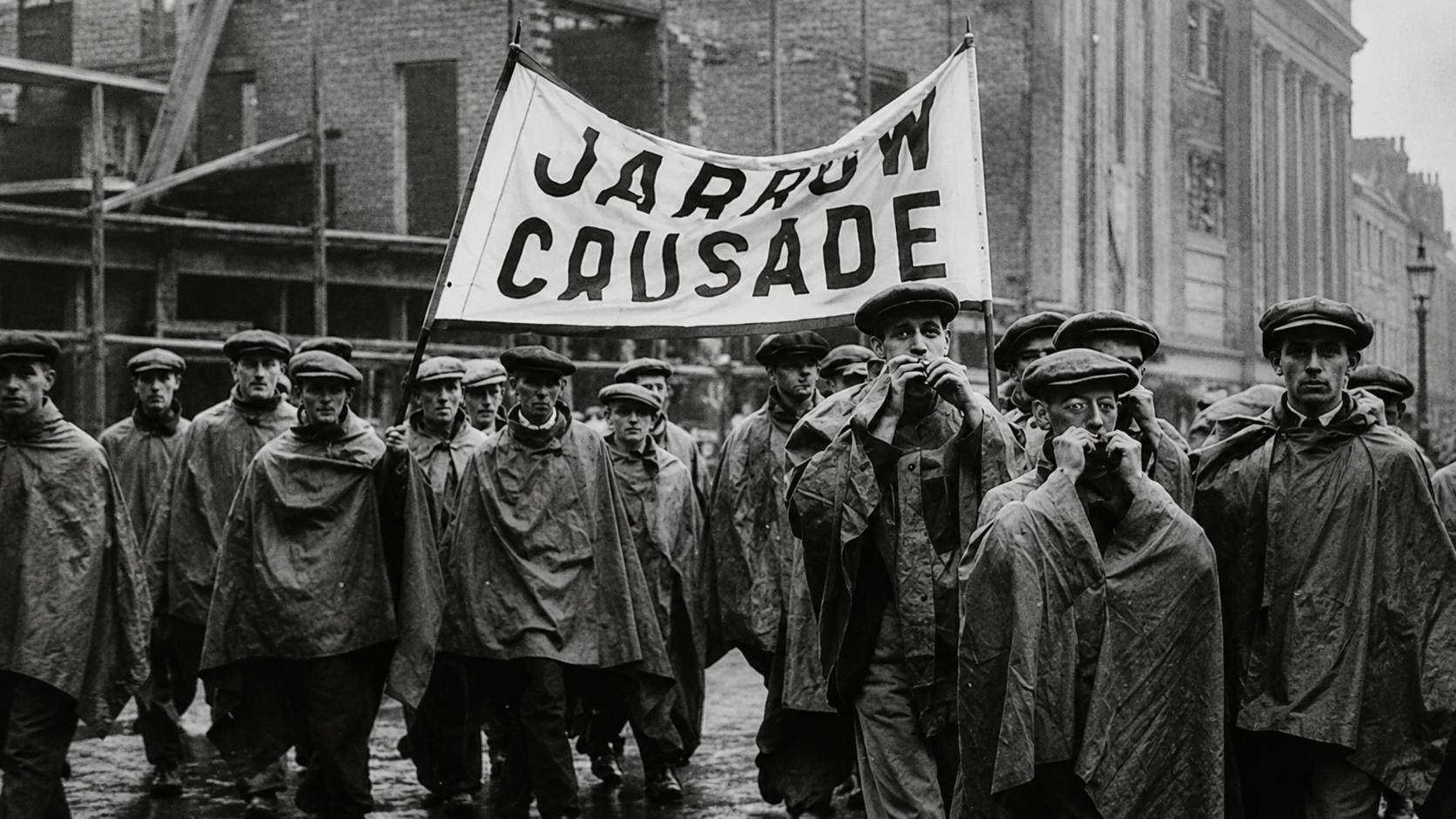
A group of around two hundred men set out from Jarrow to march the long distance to London, a journey of many miles that would take several weeks. The marchers walked day after day, covering the great distance to the capital on foot, in an arduous undertaking that demonstrated their determination and resolve. Along the way, they were received with sympathy and support by people in the towns through which they passed, who provided hospitality and encouragement. The long march was a remarkable feat of endurance and determination, as the men walked the great distance to bring their cause to the capital. The dignified and orderly conduct of the marchers won them admiration and sympathy, and their journey captured the attention of the nation.
A Dignified Protest.
The Jarrow March was distinguished by its dignity and its peaceful character, qualities that won it widespread respect and sympathy. The marchers conducted themselves with discipline and dignity, presenting their cause in an orderly and peaceful manner that contrasted with the desperation that had prompted the march. This dignified conduct was a deliberate and important feature of the protest, designed to win sympathy and to present the case of Jarrow in the most effective way. The dignity of the marchers, and the peaceful character of their protest, made a deep impression on the public and contributed greatly to the impact of the march. The Jarrow Crusade became a model of dignified protest, remembered for the quiet determination of the marchers.
A Petition for Work.
The marchers carried with them a petition, signed by many thousands of the people of Jarrow, calling for action to bring work to their town. The petition expressed the desperate situation of Jarrow and demanded that the government take action to relieve the unemployment and poverty that afflicted it. On reaching London, the marchers sought to present their petition and their case to the government, in the hope of obtaining help for their town. The petition was the formal expression of the marchers' demand, the document that set out the plight of Jarrow and the action that was sought. The carrying of the petition to London was the central purpose of the march, the means by which the people of Jarrow sought to obtain relief for their town.
A Symbol of an Age.
Although the Jarrow March did not bring immediate relief to the town, it became a powerful and enduring symbol of the hardship of the nineteen-thirties and of the dignity of those who suffered it. The march captured the conscience of the nation and came to stand for the plight of the industrial towns devastated by unemployment and for the determination of ordinary people to seek justice. The image of the marchers walking the long road to London became one of the most famous and moving of the age, an enduring symbol of the hardships of the depression and of the dignity of the working people who endured them. The Jarrow March became a defining event of its age, remembered long after the immediate crisis had passed.
A Proud Memory.
The Jarrow March is a proud and moving chapter in the history of the region, a dignified protest against unemployment and poverty that captured the conscience of the nation. From the crisis that engulfed the town to the decision to march, the long road to London, the dignity of the marchers and the petition they carried, the story is one of determination, dignity and the struggle for justice. Though the march did not bring immediate relief, it became an enduring symbol of the hardships of its age and of the dignity of those who suffered them. The memory of the Jarrow March is cherished in the region with pride, a reminder of the determination and dignity of the people of Jarrow in the face of great adversity.
The Dignity of the Marchers.
What has made the Jarrow March endure in the national memory, long after the immediate crisis that prompted it has passed, is above all the dignity of the marchers, the quiet determination and orderly conduct with which they presented their cause and which won them lasting respect and admiration. The marchers from Jarrow were not a desperate mob but a disciplined and dignified body of men, who conducted their protest with restraint and determination, presenting the plight of their town in an orderly and peaceful manner. This dignity was a deliberate and important feature of the march, for the marchers understood that their cause would be best served by a dignified protest that would win sympathy rather than provoke alarm. The orderly conduct of the marchers, their discipline and their quiet determination, made a deep impression on the public and contributed greatly to the impact and the enduring memory of the march. The dignity of the marchers stood in poignant contrast to the desperation of their situation, for these were men who faced unemployment and poverty, yet who conducted their protest with restraint and self-respect. This combination of desperate circumstances and dignified conduct gave the march its particular power and poignancy, and it is this that has made it endure in the national memory. The image of the Jarrow marchers, walking the long road to London with quiet determination and dignity, has become one of the most enduring and moving of its age, a symbol of the dignity of working people in the face of adversity. The dignity of the marchers has won them lasting respect and admiration, and it is for this dignity, as much as for the cause they championed, that the Jarrow March has been remembered and honoured. To remember the Jarrow March is to honour the dignity of the marchers and the quiet determination with which they presented their cause, a dignity that has made their protest endure as one of the proudest and most moving chapters in the history of the region. The dignity of the Jarrow marchers is a lasting inspiration, a reminder of the self-respect and determination of ordinary people in the face of great adversity.
Over to you.
The Jarrow March was a dignified protest against unemployment that captured the conscience of the nation.
What does the dignity of the Jarrow marchers mean to you today?
Newcastle History
The Long Road to London: The Jarrow Crusade
The proud and moving story of the Jarrow March, the dignified protest against unemployment and poverty in the 1930s that captured the conscience of the nation.
Advertisement


Comments (0)
You must be logged in to post comments.
Don't have an account? Register here
No comments yet. Be the first to share your thoughts!