
Houseplants have become a fixture of British homes again after decades out of fashion. They also die in enormous numbers, usually within a few months of arriving.
The reassuring news is that most of those deaths come down to a small number of correctable mistakes, and the largest by some distance is too much attention rather than too little.
Here is what actually keeps indoor plants alive.
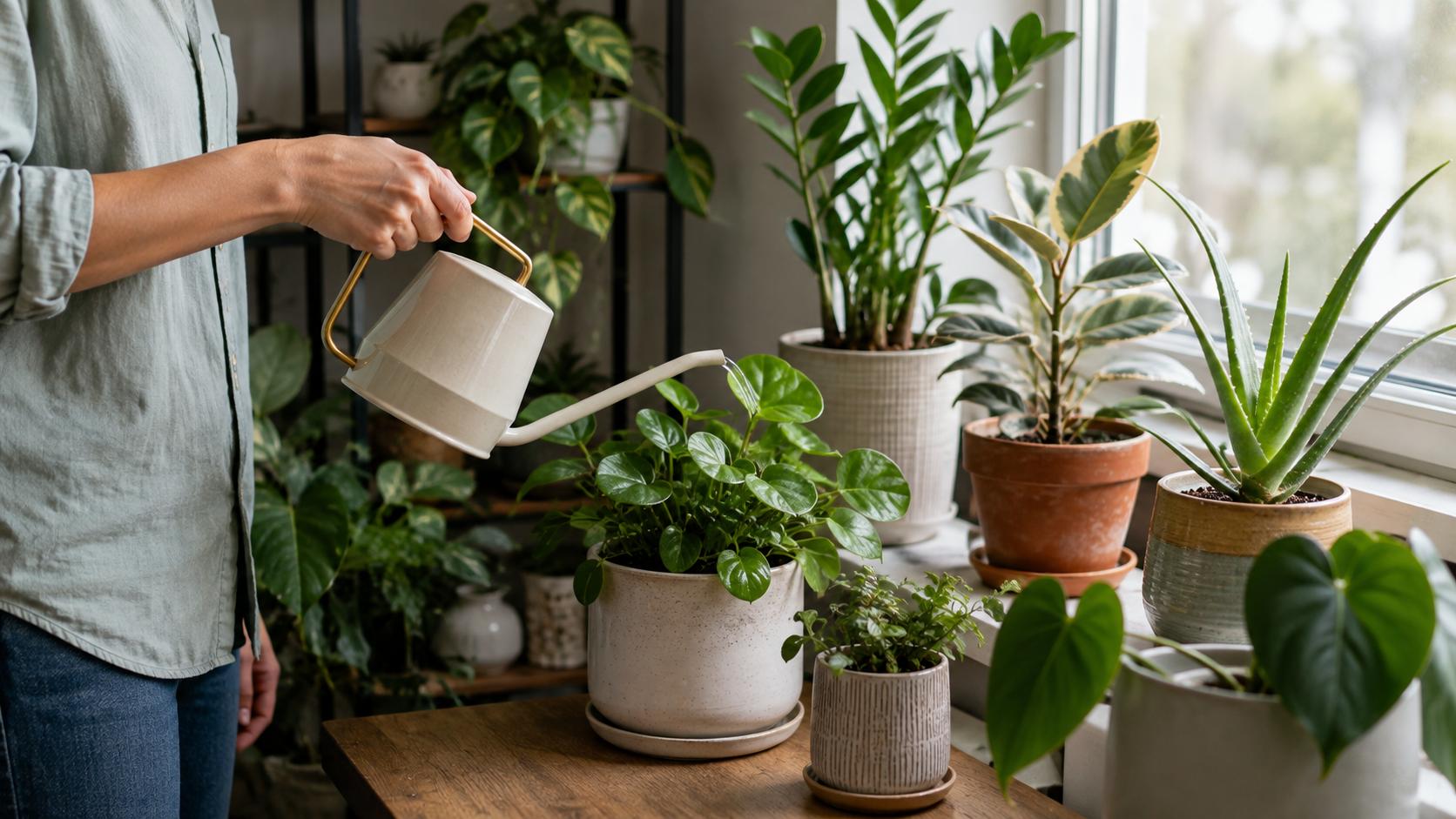
Overwatering kills more plants than neglect.
Roots need air as well as water. Compost that stays permanently saturated excludes oxygen, roots begin to rot, and the plant then cannot take up water at all.
The cruel irony is that a plant with rotting roots looks thirsty. Leaves droop and yellow, the owner waters more, and the decline accelerates.
The fix is to water according to the plant rather than the calendar. Push a finger an inch or two into the compost. If it is damp, leave it. If it is dry at that depth, water thoroughly until it runs out of the base, then empty the saucer.
Never leave a pot standing in water. That single habit accounts for a great many losses.
Light is the factor people misjudge.
Humans are poor at estimating light levels, because our eyes adjust automatically. A room that feels bright to us may be considerably darker than it appears.
North-facing rooms receive gentle, indirect light all day. South-facing windows are the brightest and can scorch plants that dislike direct sun. East and west sit between.
The crucial point is that a spot two or three metres from a window receives dramatically less light than one directly beside it, even in the same room.
Match the plant to the light you actually have rather than buying something and hoping it adapts. Almost every houseplant problem traced back far enough is a light problem.
Some plants genuinely tolerate neglect.
For beginners, or for darker rooms, a handful of species are remarkably forgiving.
Snake plants and ZZ plants tolerate low light and infrequent watering, and both suffer far more from overwatering than from being forgotten. Pothos and heartleaf philodendron trail happily and recover well from mistakes.
Spider plants are almost indestructible and produce plantlets that can be potted up, making them the traditional gift between households.
Peace lilies are useful because they wilt dramatically when thirsty and recover within hours of watering, effectively telling you what to do.
Humidity matters for some, not all.
Central heating produces dry air, and plants from tropical rainforests, including calatheas, ferns and many aroids, show it through brown crispy leaf edges.
Grouping plants together raises local humidity, as does standing pots on a tray of damp pebbles, with the pot base sitting above rather than in the water.
Misting is popular but its effect is brief. A more consistent approach works better, and kitchens and bathrooms are naturally more humid rooms for the plants that want it.
Cacti and succulents want the opposite and will rot in humid, poorly ventilated conditions.
Repot before the plant demands it.
Signs a plant needs repotting include roots emerging from the drainage holes, water running straight through without being absorbed, and growth that has stalled despite adequate light and feeding.
Move up one pot size only. Putting a small plant into a very large pot leaves a mass of wet compost the roots cannot reach, which brings the overwatering problem back in a new form.
Spring is the best time, as the plant is entering active growth. Use a compost suited to the type, since cacti, orchids and general houseplants all want different mixes.
Feeding follows the seasons.
Most houseplants grow actively from spring through late summer and slow considerably in autumn and winter as light levels fall.
Feed during the growing season with a general houseplant feed, following the dilution on the bottle. Overfeeding causes leaf scorch and salt build-up on the compost surface.
Reduce or stop feeding in winter, and reduce watering too. Many plants killed in January were watered on a summer schedule through a dark, cold month.
Pests are common and usually manageable.
Fungus gnats are small black flies around the compost surface, and they are a symptom of compost kept too wet. Letting the top layer dry between waterings usually resolves them, and yellow sticky traps catch the adults.
Spider mites appear in dry conditions, producing fine webbing and a stippled, dusty look to leaves. Raising humidity and wiping leaves helps, and severe cases need treatment.
Mealybugs look like small white cotton specks in leaf joints. They can be dabbed off with a cotton bud dipped in alcohol.
Inspect new plants before bringing them home and, ideally, keep them apart from the rest for a couple of weeks.
Check toxicity if you have pets or young children.
A number of popular houseplants are toxic if chewed, including many aroids, lilies, and dieffenbachia. Lilies are particularly dangerous to cats.
That does not rule them out of every household, but it is worth checking before buying and placing anything risky out of reach.
Non-toxic alternatives include spider plants, calatheas, prayer plants and most true ferns, all of which are widely available.
Share your thoughts.
Which houseplant have you never managed to keep alive?
Lifestyle News
Keeping Houseplants Alive: A Beginner's Guide
Most houseplants that die are killed by kindness, and understanding that single fact solves the majority of indoor plant problems.
Advertisement





Comments (0)
You must be logged in to post comments.
Don't have an account? Register here
No comments yet. Be the first to share your thoughts!