
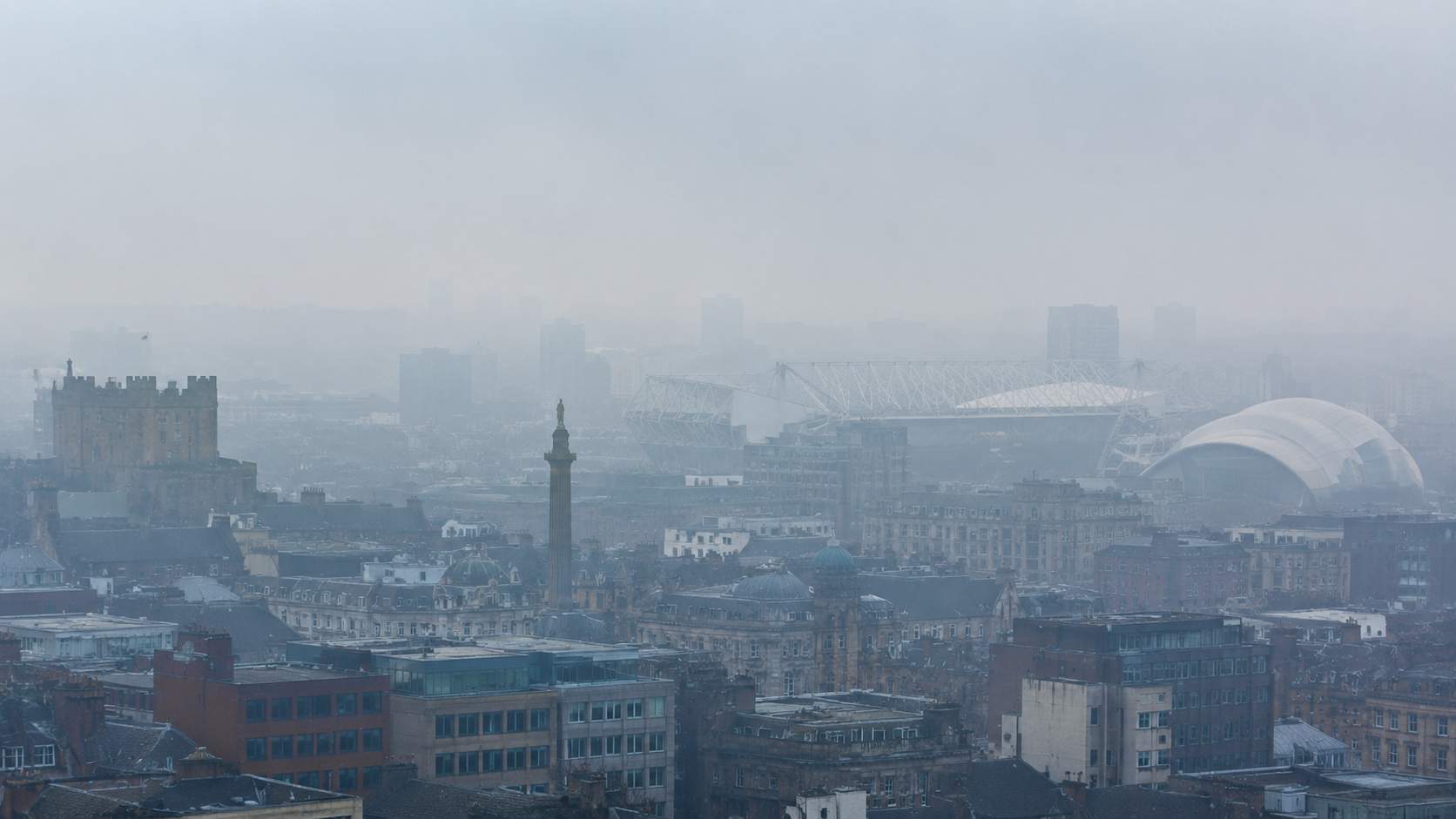
The traffic may appear to move on, but some of what it leaves behind remains in the air. Newcastle’s latest official monitoring results show that several busy city-centre streets continue to record elevated levels of nitrogen dioxide, a pollutant closely associated with road vehicles.
The figures come from Newcastle City Council’s 2025 Air Quality Annual Status Report, which covers measurements collected during 2024. They do not create a definitive ranking of every Newcastle street because monitors are installed at selected locations. They do, however, identify the most significant pollution hotspots within the council’s network.
Overall, the picture is improving. Newcastle recorded an average 9 per cent reduction in nitrogen dioxide levels between 2023 and 2024, and no monitoring location exceeded the annual legal objective after readings were adjusted to represent places where people are regularly exposed.
That does not mean the city’s air is free from risk. The council says particulate pollution can affect health even below legal limits, while one roadside location produced a reading high enough to indicate a possible breach of the short-term nitrogen dioxide objective.
Stephenson Road recorded the highest roadside reading.
A monitor on Stephenson Road, near the entrance to Jesmond Park West, produced Newcastle’s highest reported nitrogen dioxide result. Its 2024 annual mean was 64.5 micrograms per cubic metre, compared with the annual legal objective of 40.
The monitor was only around one metre from the kerb. When the council calculated the estimated concentration at the nearest location representing long-term public exposure, the figure fell to 35.8 micrograms per cubic metre.
However, the council said the monitor was positioned on a pedestrian route and the original result exceeded 60 micrograms. This means the location was likely to have exceeded the short-term one-hour nitrogen dioxide objective, making Stephenson Road particularly important for people walking or cycling beside traffic.
Percy Street remains a city-centre hotspot.
Monitoring equipment on Percy Street recorded some of Newcastle’s next-highest figures. A set of roadside diffusion tubes produced an annual average of approximately 44 micrograms per cubic metre. A separate continuous monitor recorded 41.1 micrograms.
Both results were above the annual objective at the monitoring points. Because the equipment was closer to traffic than nearby locations where people would normally experience long-term exposure, adjusted estimates fell to 25.7 and 31.9 micrograms respectively.
The figures still demonstrate how pollution can change over a short distance. Someone waiting beside a line of buses or walking near the kerb may encounter higher concentrations than a person inside a building further back.
Market Street and St Mary’s Place need watching.
A monitor at 10 Market Street recorded 38.5 micrograms per cubic metre. Unlike some of the higher roadside measurements, this site was already considered representative of relevant public exposure and did not require distance adjustment.
That placed Market Street within 4 per cent of the 40 microgram annual objective. It was also Newcastle’s highest relevant annual-exposure result in the council’s 2024 diffusion-tube network.
St Mary’s Place recorded 36.3 micrograms per cubic metre, approximately 9 per cent below the legal limit. John Dobson Street produced a similar roadside result of 36.4, although the council said that monitor was not representative of a location where long-term exposure would normally occur.
Other notable raw readings included Newgate Street and Grainger Street at 34.3, Collingwood Street’s north side at 32.4 and the Neville Street and Westgate Road junction at 31.9 micrograms per cubic metre.
Gosforth has shown sustained improvement.
Gosforth was previously one of Newcastle’s principal air-quality problem areas. The local Air Quality Management Area includes parts of the A189 and B1318, covering busy routes around Gosforth High Street and the Blue House junction.
The latest results were lower than those in the central hotspots. The monitor at 201 Gosforth High Street recorded 30.1 micrograms per cubic metre, while Station Road recorded 28.4 and 53 High Street recorded 27.6.
Gosforth has now remained below the council’s compliance threshold at relevant locations for five consecutive years. As a result, Newcastle City Council indicated that it would pursue the revocation of the Gosforth Air Quality Management Area. Continued monitoring will still be important because traffic volumes, roadworks and weather can cause results to vary.
Air pollution remains a health concern.
Nitrogen dioxide can irritate airways and worsen asthma and other respiratory conditions. Children, older people and residents with existing heart or lung illnesses are particularly vulnerable.
Fine particulate matter, known as PM2.5, is also a serious concern because the particles are small enough to travel deep into the lungs. Newcastle’s annual PM2.5 mean increased from 6.3 micrograms per cubic metre in 2023 to 6.9 in 2024, although it remained below the UK legal limit.
The council’s report says an estimated 4.6 per cent of mortality in Newcastle during 2023 was attributable to long-term particulate air pollution. This is a modelled public-health indicator rather than a direct count of individual deaths, but it illustrates the population-wide risk. The equivalent England figure was higher at 5.2 per cent. Read Newcastle’s official 2025 air-quality report.
Is the Clean Air Zone working?
Newcastle and Gateshead’s Clean Air Zone began operating in January 2023. It charges non-compliant taxis, vans, buses, coaches and heavy goods vehicles, while private cars and motorcycles are exempt.
During 2023 and 2024, more than £4.76 million was awarded to help replace 1,141 vehicles regularly entering the zone. The council believes the scheme is likely to have contributed to falling nitrogen dioxide and particulate levels, although a complete evaluation is needed to separate its impact from changes in traffic, vehicle technology and weather.
The latest data offers cautious encouragement. Pollution has fallen, but busy routes such as Stephenson Road, Percy Street, Market Street and St Mary’s Place show why Newcastle air quality remains a live public-health issue.
Share your experience below.
Do you regularly walk, cycle, work or live near one of Newcastle’s most polluted streets?
Health News
Newcastle Road Records City’s Worst Air Reading
Advertisement





Comments (0)
You must be logged in to post comments.
Don't have an account? Register here
No comments yet. Be the first to share your thoughts!