
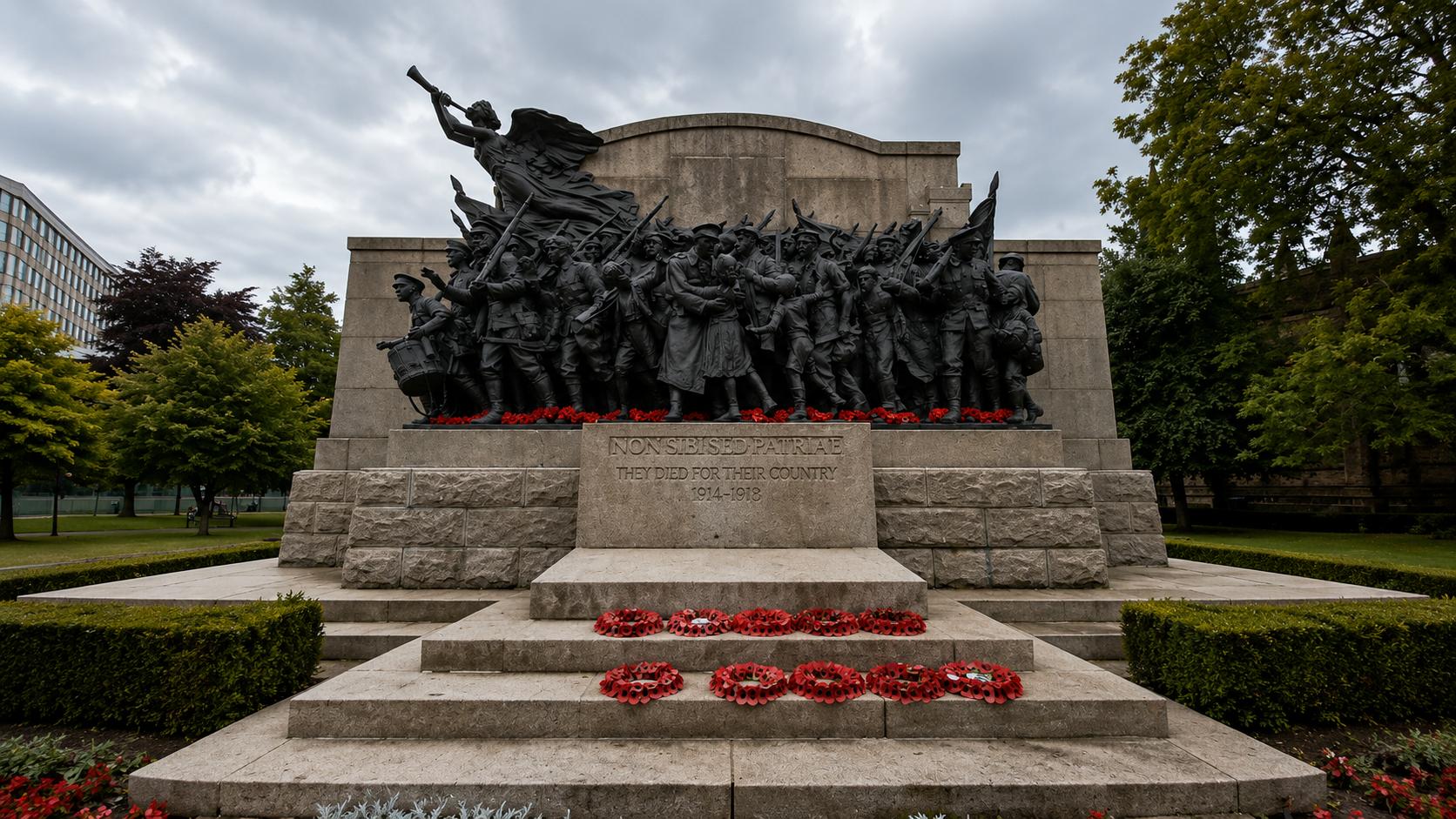
Most people in Newcastle can name one. The Response at Barras Bridge, with its extraordinary crowd of men surging forward, is among the finest war memorials anywhere in the country.
Far fewer could name ten, and yet the city has considerably more than that. They are in parks, churches, station concourses, workplaces, schools, cemeteries and on the walls of buildings whose original occupiers are long gone.
Which raises a question nobody usually asks until a memorial is damaged. Who owns them, and who is responsible for keeping them standing?
There is no single owner.
This is the central point and the source of most confusion. War memorials in Britain are not owned or maintained by a single national body.
Ownership sits wherever it happened to sit when the memorial was built. Many were funded by public subscription after the First World War and handed to a local authority. Others belong to churches, and are the responsibility of the parish. Others sit on land owned by companies, schools, hospitals, railway operators or regimental associations.
Some have no identifiable owner at all, because the company that erected them was wound up, the chapel closed, or the works was demolished around them.
That last category is where problems accumulate, because a memorial with no clear owner has no clear budget.
The Commonwealth War Graves Commission is a different thing.
A common misunderstanding is that the Commonwealth War Graves Commission looks after war memorials. It does not, in general.
The Commission is responsible for the graves and named memorials of Commonwealth service personnel who died in the two world wars, including war graves in local cemeteries. Newcastle's cemeteries contain a substantial number of these, maintained to the Commission's distinctive standard.
A civic war memorial listing local men who died is not a war grave and falls outside that remit.
Listing gives protection but not money.
A large number of war memorials are listed structures, and listing has been extended significantly in recent years as part of centenary commemorations.
Listing means consent is needed for alterations, which protects a memorial from unsympathetic change or removal. It does not come with funding, and it can make repairs more complicated and more expensive because the work must be done to conservation standards using appropriate materials and specialist contractors.
Support does exist. War Memorials Trust provides grants and advice, and the War Memorials Register maintained by the Imperial War Museum records tens of thousands of memorials nationally, including many in Tyneside, and is largely built on the work of volunteers.
The threats are mundane and constant.
Vandalism gets the headlines, and theft of bronze fittings and plaques for scrap metal value has been a persistent problem across the country.
The greater threat is slower. Stone erodes, especially the sandstone used across much of the North East. Lettering weathers until names become unreadable. Bronze corrodes. Water gets in behind fixings and expands in frost. Vegetation roots into joints.
Cleaning causes damage too, when well-meaning volunteers use pressure washers or chemical cleaners on soft stone. Conservation advice is emphatic that the wrong cleaning method can do more harm in an afternoon than a decade of weather.
Names get lost, and volunteers find them again.
One of the quiet achievements of the past two decades has been the amount of research done by volunteers to identify the men and women listed on local memorials.
Names on a memorial are often just a surname and initials, and connecting those to a person, an address, a regiment and a story takes patient work through census returns, service records, parish registers and local newspapers.
Schools, community groups and family historians across Tyneside have done a great deal of this. It has also uncovered omissions, and there is a steady stream of names being added to memorials a century after they should have been.
What happens when one is damaged.
Report it. To the council if it is on public land, to the church if it is in a churchyard, to the police if it is criminal damage, and to War Memorials Trust for conservation advice.
Do not attempt repairs. A memorial repaired incorrectly is harder and more expensive to put right afterwards, and if it is listed, unauthorised work is an offence.
Photograph the damage before anything is touched, because that record matters for both the police and the conservation assessment.
Share your thoughts.
Is there a war memorial near you that deserves more attention than it gets?
Local News
Newcastle's War Memorials and Who Maintains Them
Advertisement


Comments (0)
You must be logged in to post comments.
Don't have an account? Register here
No comments yet. Be the first to share your thoughts!