
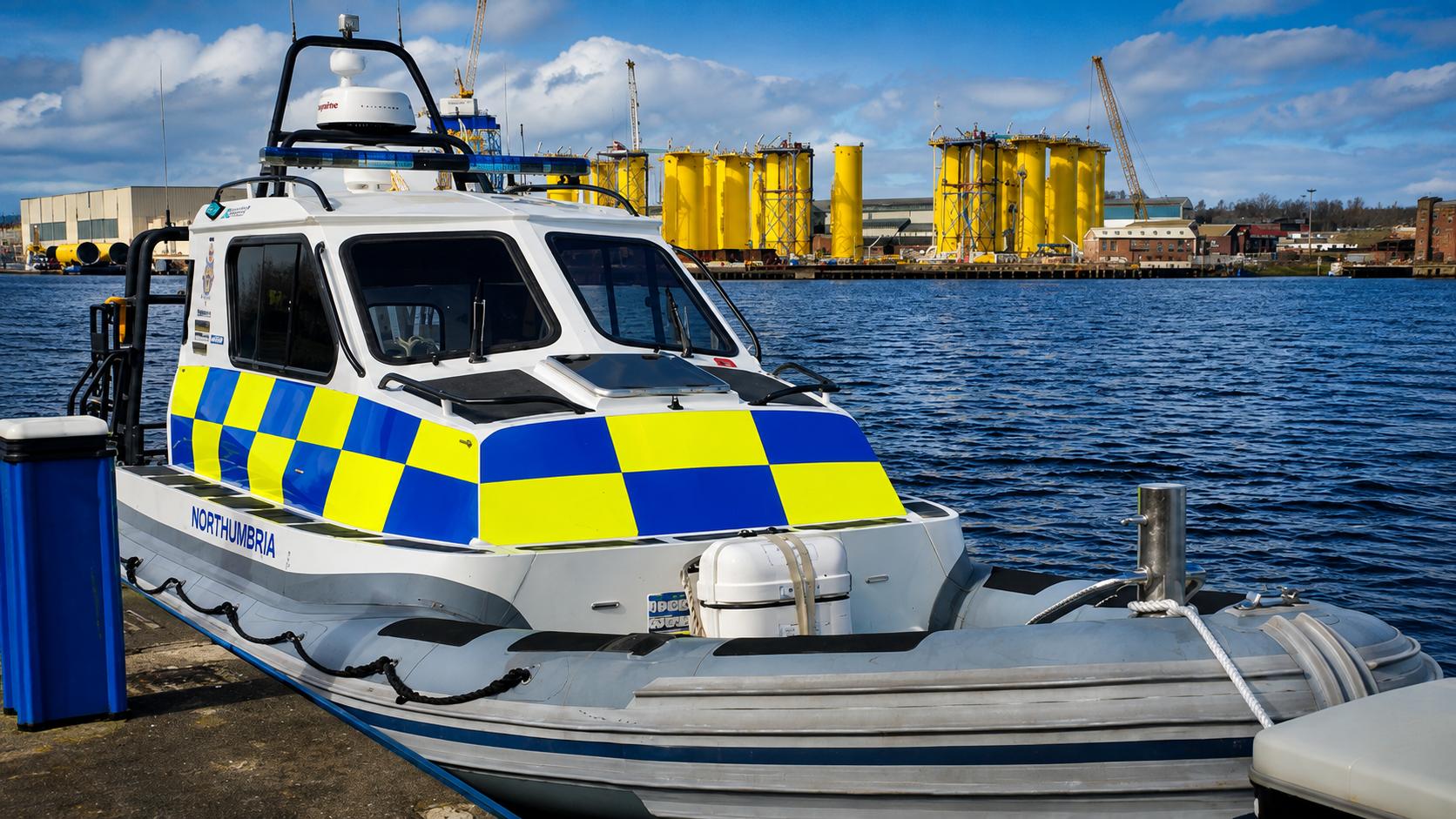
The Tyne looks placid from the Quayside on a summer evening, which is a large part of the problem. It is a working river with commercial shipping, strong tidal flows, cold water for most of the year and steep unforgiving edges, running directly through the middle of a city with one of the busiest night-time economies in the country. Policing it requires capability that ordinary response officers simply do not have, and that capability sits with a small specialist operation most residents have never thought about.
Marine policing on the Tyne is not a matter of patrolling for the sake of visibility. The river presents a specific and unusual mix of demands: safety incidents, searches, commercial and port security, major events, environmental offences and the recovery of people and property from the water. Each of those requires equipment, training and a working relationship with a long list of other organisations.
The river is genuinely dangerous, and not obviously so.
Water temperature is the underestimated factor. For most of the year the Tyne is cold enough to trigger cold water shock, a physiological response that can incapacitate a strong swimmer within seconds, causing involuntary gasping and rapid loss of muscle control. People who enter the water fully clothed, often at night and often after drinking, are at particular risk, and the sequence from entry to serious difficulty can be a matter of a minute or two.
The tidal range and the flow add to it. The Tyne is tidal well upstream of the city, and currents around bridge piers, quay walls and moored vessels are stronger and less predictable than the surface suggests. The banks compound the problem, because much of the river frontage through Newcastle and Gateshead is vertical quay wall with no easy way out for someone in the water, and no gradual shelving beach to reach.
The response is a multi-agency one.
An incident in the river typically pulls in more than one organisation. His Majesty's Coastguard coordinates search and rescue, the RNLI operates lifeboat stations covering the mouth of the Tyne and responds into the river, Tyne and Wear Fire and Rescue Service has water rescue capability, the ambulance service provides medical response, and the police coordinate the criminal and missing person aspects.
The Port of Tyne, as the harbour authority, has its own operational role in the navigable channel, and vessel traffic services monitor commercial movements. An incident during a major event on the Quayside might also involve event organisers, marshals and private security, and the coordination between all of them is rehearsed rather than improvised.
Specialist underwater search is a shared resource.
Underwater search and recovery is highly specialised, expensive to maintain and used relatively infrequently by any single force, which is why police diving and marine capability across England has increasingly been organised on a regional or shared basis rather than every force maintaining its own team. Forces draw on that capability when a search of the riverbed, a dock or another body of water is needed, whether for a missing person, a weapon, a vehicle or other evidence.
Underwater searching is nothing like recreational diving. Visibility in a river like the Tyne is frequently close to nil, so searches are conducted by touch along search lines in a methodical grid, in cold water, around obstructions, and frequently in the knowledge that what is being searched for may be a body. It is demanding work with a heavy psychological load, and the teams that do it train constantly.
Sonar and remote equipment have changed the picture considerably. Side-scan sonar can survey a large area of riverbed far faster than divers can, allowing targets to be identified first and divers deployed only where something warrants closer inspection. That reduces both cost and risk.
Prevention matters more than response.
The most effective work on the river is the work that stops anyone entering it. Physical measures along the Quayside and the wider river frontage include railings, lighting and the placement of throwlines and lifebuoys at intervals, and there has been sustained attention to making sure that safety equipment is present, visible and not vandalised.
Vandalism or theft of lifebuoys is treated seriously precisely because the consequence is potentially fatal. A missing throwline is not a piece of petty damage; it is the removal of the one thing that might have made a difference in a specific two-minute window.
Patrols during the busiest nights, and around events that draw crowds to the water's edge, are part of the same preventative approach. So is public messaging, which focuses on the simple points that matter: stay away from the edge when you have been drinking, do not enter the water to rescue someone, and if you see someone in difficulty, call 999 and ask for the coastguard, throw something that floats and do not go in yourself.
Crime on the water is a smaller but real workload.
The river carries commercial traffic, ferry services and leisure craft, and policing it includes the same range of offences found anywhere else. Theft from vessels and moorings, unsafe or intoxicated operation of boats, smuggling and importation offences involving the port, environmental offences such as illegal discharges, and occasionally the use of the river as a route or a disposal site in more serious criminal cases.
Port security is a category of its own, involving international regulation, customs and border enforcement, and the police role sits alongside those agencies rather than replacing them.
What the public can do.
Report anything that looks wrong on or near the water rather than assuming somebody else has. Missing or damaged safety equipment, people in the water, unattended vessels behaving oddly and access points that have been forced are all worth a call.
In an emergency on the coast or on tidal water, 999 and ask for the coastguard is the correct route, and it connects the caller directly to the organisation that coordinates the response.
Share your thoughts.
Do you think enough is done to keep people safe along Newcastle's stretch of the Tyne?
Crime News
Northumbria Police's Marine Unit and Policing the Tyne
Advertisement



Comments (0)
You must be logged in to post comments.
Don't have an account? Register here
No comments yet. Be the first to share your thoughts!