
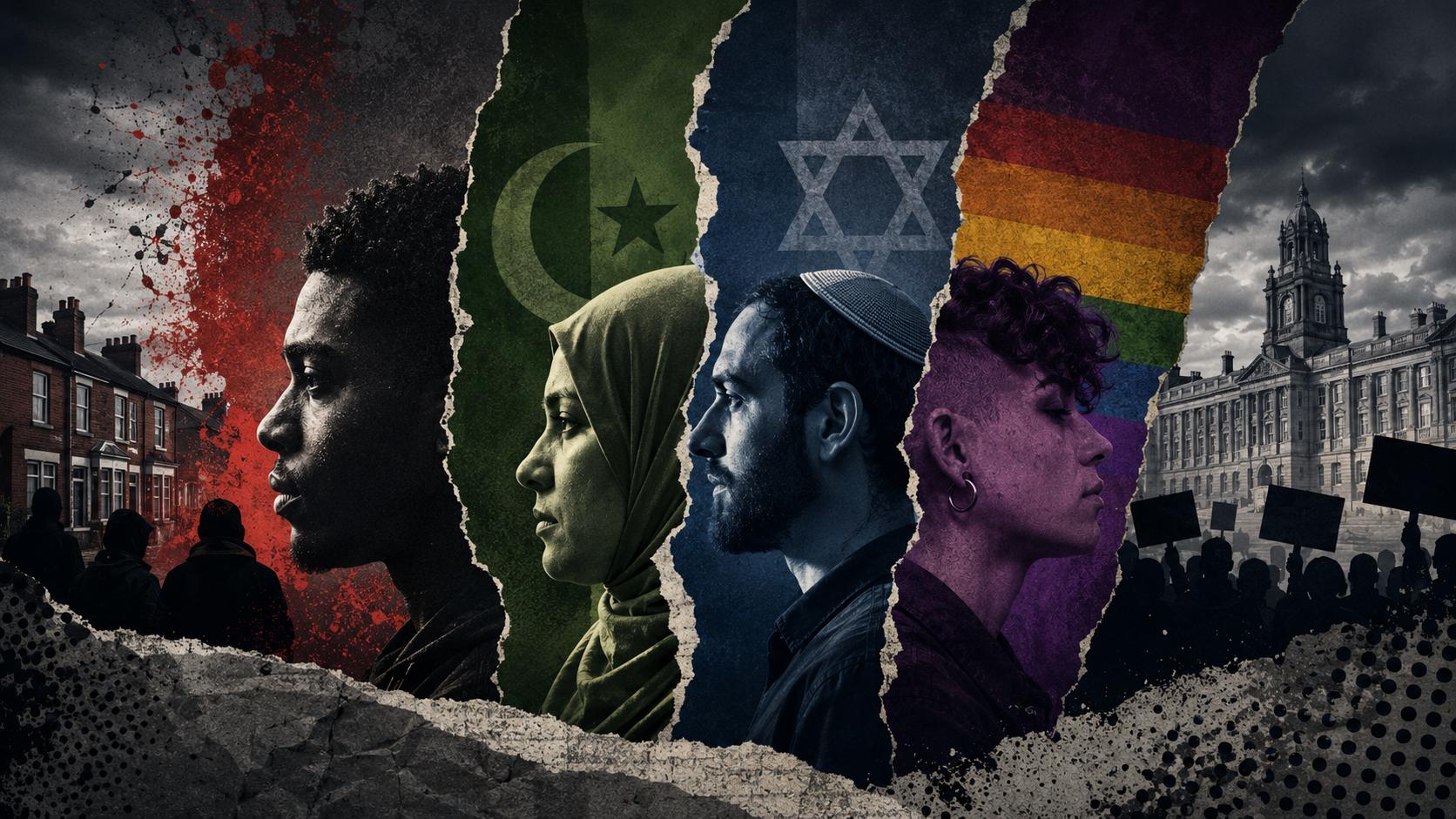
In the space of just a few years, politicians and election candidates across the North East have become embroiled in controversies involving allegations of racism, Islamophobia, antisemitism, homophobia and offensive language directed at minority communities.
The cases have crossed political and geographical boundaries. They have involved Labour, Reform UK and the Green Party, with controversies emerging in Newcastle, Sunderland, South Tyneside and County Durham.
Some of those involved apologised. Some were suspended or investigated by their parties. One councillor resigned from elected office. Another has been charged with a criminal offence and is awaiting a court appearance, with no determination of guilt having been made.
The circumstances are not identical, and it would be wrong to suggest that every case carries the same seriousness or has reached the same conclusion. Yet viewed together, they present an uncomfortable picture for a region that regularly celebrates its friendliness, community spirit and ability to welcome people from different backgrounds.
They also raise questions that extend beyond the individuals concerned.
Are political parties examining candidates thoroughly enough before putting their names on ballot papers? Are controversial social media accounts and podcast appearances being discovered only after elections have taken place? Are parties responding consistently when offensive language is uncovered? And are the political institutions representing the North East keeping pace with the standards expected by voters?
Six cases cannot prove that prejudice is widespread throughout North East politics. They can, however, expose weaknesses in how politicians are selected, scrutinised and held accountable.
Why the debate matters in Newcastle.
Newcastle has spent years presenting itself as a diverse and outward-looking city. Its universities attract students from around the world, its hospitals employ an international workforce, and neighbourhoods including Arthur’s Hill, Elswick and the West End are home to established communities with roots across Africa, Asia, the Middle East and Europe.
The city has also made public commitments to supporting refugees and people seeking sanctuary. That reputation makes accusations of prejudice within local politics particularly sensitive.
Political controversies do not occur in isolation. Remarks made by an elected representative can affect people who already feel underrepresented or vulnerable. They can also influence whether residents believe local institutions understand their experiences.
One of the most damaging recent controversies in Newcastle politics followed the dramatic deselection of former council leader Nick Forbes in 2022.
Mr Forbes, who had led Newcastle City Council for more than a decade, lost the Labour nomination in Arthur’s Hill after local members selected activist Abdul Samad to contest the seat instead. The result exposed deep divisions inside Newcastle Labour and ultimately brought Mr Forbes’ long leadership of the authority to an end.
In the aftermath, senior councillor Joyce McCarty alleged that Muslim councillors had been involved in a plot to remove him.
The allegation immediately transformed what had been an internal political battle into a much wider controversy about Islamophobia, representation and the treatment of Muslim members within the Labour Party.
Joyce McCarty and the alleged “Muslim plot”.
Joyce McCarty was not an obscure party activist when the controversy erupted. She had served as deputy leader of Newcastle City Council for around a decade and had held significant influence within the city’s Labour administration.
She had also previously held responsibility for equalities. That background intensified the reaction to her allegation that Muslim councillors had conspired to remove Mr Forbes.
Labour suspended Ms McCarty in March 2022. Although the suspension related to her party membership, she remained listed as a Labour candidate because nominations for the May council election had already closed. Her name therefore appeared on the ballot carrying the Labour description, creating an unusual situation in which the party had suspended someone voters were still being asked to elect.
The row was not simply about an ill-judged phrase. Critics argued that the language invoked a familiar and damaging idea that Muslims were secretly coordinating to take control of political institutions.
For Muslim councillors and residents, the suggestion risked portraying ordinary political organisation as something suspicious or illegitimate. Political alliances, campaigning and challenges to established leaders are common in every party. Describing the involvement of Muslim members as a religiously defined “plot” inevitably raised questions about why their faith had been treated as relevant.
The episode also exposed divisions that had been developing within Newcastle Labour for some time. Mr Forbes’ leadership had faced criticism from members on the party’s left, while supporters of the council leader argued that internal opponents had been determined to remove an experienced and nationally recognised figure.
Those political tensions may help explain the emotions surrounding the deselection, but they do not remove the significance of the language that followed.
Labour leader Keir Starmer was questioned about the case during a visit to the North East, while the controversy attracted national attention and added to pressure on the party to demonstrate that allegations of Islamophobia would be treated seriously.
Ms McCarty’s suspension did not immediately settle the matter. A photograph was subsequently published by Labour showing her campaigning after the suspension, while the party’s online election material continued encouraging voters to support her. Opponents accused Labour of confusing the public and failing to respond consistently.
The incident became one of the defining moments in the collapse of Newcastle’s long-standing political leadership. Mr Forbes left the council, Nick Kemp became Labour leader, and a major cabinet reshuffle followed in which only two members of the former administration retained cabinet positions.
More importantly, the controversy left a question that has never entirely disappeared: did Newcastle Labour fully understand why the allegation caused such offence, or did it see the row primarily as another battle in a bitter internal dispute?
That question took on greater significance in January 2024 when Habib Rahman, Newcastle’s first Muslim lord mayor, left Labour while alleging that the local party had a “culture of racism” and that complaints of Islamophobic abuse had not been adequately addressed. Those were Mr Rahman’s allegations, which Labour disputed, but their emergence showed that concerns about the experiences of Muslim politicians in Newcastle had extended beyond one argument in 2022.
Tina Ion and the Green Party investigation.
Four years after the McCarty controversy, Newcastle politics faced a very different row involving Tina Ion, who was selected as the Green Party candidate for Blakelaw and Cowgate in the 2026 council elections.
Posts attributed to an account Ms Ion acknowledged operating were reported shortly before polling day. The account used the handle “thereal.anne.frank”, an apparent reference to Anne Frank, the Jewish teenager murdered during the Holocaust.
The reported material included language about Jews and Zionists that generated accusations of antisemitism. Some of the alleged posts used dehumanising descriptions, violent imagery and stereotypes relating to Jewish people and money.
Ms Ion said that she had made the posts, but denied being antisemitic. She argued that her comments were directed at Zionism and the conduct of the Israeli state rather than Jewish people as an ethnic or religious community.
That distinction is central to many modern arguments over antisemitism. Criticism of the Israeli government, its military operations or Zionism is not automatically antisemitic. However, language that uses traditional anti-Jewish stereotypes, treats Jews collectively as responsible for Israel’s actions, or calls for violence against a broadly defined group can cross a very different line.
Newcastle’s sitting Green councillors publicly distanced themselves from the reported material. In a joint statement, they described it as racist, said that antisemitism had no place in their party and announced plans for antisemitism training. The national Green Party began an investigation.
The case appeared amid broader scrutiny of Green candidates elsewhere in the country. Party leaders faced demands to strengthen vetting after inflammatory posts allegedly made by a number of candidates were uncovered during the 2026 local election campaign. The Greens said that most of their thousands of candidates upheld the party’s values and promised to review relevant processes.
For Newcastle Greens, the timing was especially damaging. The party had been building a stronger presence on the council and presenting itself as a progressive alternative to Labour. A controversy involving alleged antisemitism threatened to undermine the values on which much of that appeal depended.
It also demonstrated one of the central problems facing political parties: a candidate can appear suitable during local interviews while maintaining a vast online history that tells a more complicated story.
A social media account may contain thousands of posts, replies, shared images and private exchanges accumulated over years. Properly reviewing all of it takes time, training and access to information that candidates may not voluntarily disclose.
Yet parties cannot reasonably argue that the task is too difficult only after offensive material has been uncovered by journalists, campaigners or opponents. When a candidate is endorsed by a recognised political organisation, voters are entitled to assume that at least basic checks have taken place.
The Green Party investigation was therefore not only about what Ms Ion allegedly posted. It became a test of whether the party’s procedures were capable of identifying serious risks before a candidate appeared on official election literature.
Glenn Gibbins and an ongoing criminal case.
The case involving Sunderland councillor Glenn Gibbins must be described with particular care because it is now the subject of criminal proceedings.
Mr Gibbins was elected to Sunderland City Council for Reform UK in May 2026. During the same month, Northumbria Police received a report concerning an alleged social media post from 2024 that referred to the Nigerian community.
On July 29, 2026, police announced that the Crown Prosecution Service had authorised a charge under the Communications Act 2003. Mr Gibbins, aged 66, is due to appear at South Tyneside Magistrates’ Court on August 21, 2026.
He has been charged, not convicted, and the allegations will be tested through the legal process. Police have urged people not to speculate online or within the community while the case is active.
The reported post was alleged to have contained a grossly offensive remark about Nigerians. Its emergence prompted questions about what Reform UK knew, when the party became aware of it and why Mr Gibbins was permitted to represent the party.
Reform carried out an internal disciplinary process before the criminal charge was announced. Political opponents subsequently demanded an explanation of the party’s handling of the matter and its decision to reinstate him.
The controversy is especially significant in Sunderland because the city experienced serious disorder in August 2024 following the circulation of far-right material online. Violence broke out in the city centre, buildings were attacked and police officers were injured. Hundreds of residents later joined a clean-up operation, with local leaders insisting that rioters did not represent Sunderland.
That history does not determine the outcome of Mr Gibbins’ case. It does, however, explain why alleged language directed at an ethnic community carries particular sensitivity in the city.
Reform’s success in Sunderland and elsewhere has been driven partly by voters who believe established parties have ignored their concerns. That support gives the party a powerful presence in local government, but it also brings responsibility.
A political movement seeking to govern councils cannot rely only on anger at its opponents. It must demonstrate that its candidates understand the distinction between challenging immigration policy, criticising government decisions and directing dehumanising language at people because of their nationality or ethnicity.
The courts will determine the criminal allegation against Mr Gibbins. Voters will separately judge whether Reform’s internal procedures and public response met the standards expected of a governing party.
Alex Clarke and the consequences of podcast politics.
The internet does not preserve only written posts. Podcasts, livestreams and video channels have created a much larger archive of politicians expressing themselves in informal settings, sometimes over many hours.
Alex Clarke was elected as a Reform UK councillor in South Tyneside in May 2026, during an election in which the party ended Labour’s long-standing control of the authority.
The following month, reporting emerged about comments allegedly made during episodes of a podcast associated with Mr Clarke. The reported remarks were criticised as sexist and homophobic.
South Tyneside Council later confirmed that Mr Clarke had resigned his seat.
His departure showed how rapidly political circumstances can change. Within weeks, a victorious candidate had moved from celebrating election success to leaving elected office.
The case also raised a straightforward vetting question. Podcasts are public material. Unlike an old private message or a deleted account recovered through an archive, recorded programmes are often intentionally published and promoted by their creators.
Listening to every episode may require considerable time, but parties need to decide whether candidates with extensive public platforms should face enhanced checks. Someone who has spent years broadcasting personal opinions presents a different level of reputational risk from a candidate with little public history.
The alternative is a system in which voters perform the vetting after polling day, only to discover that the person elected to represent them is soon resigning.
That outcome damages more than a political party. It can trigger a costly by-election, leave residents temporarily underrepresented and deepen public cynicism about the competence of candidate selection.
Andrew Husband and language from the top of a council.
Andrew Husband’s case was different again. He was not a newly selected candidate or a backbench councillor when he used a homophobic slur during an online argument.
He was the leader of Durham County Council.
Mr Husband became council leader after Reform UK won control of the authority in 2025. In April 2026, he used the same homophobic term three times while responding to a post on the North Durham Labour Facebook page. Labour politicians condemned the language and described it as damaging rhetoric.
The context matters because council leaders are not simply partisan campaigners. They are expected to represent entire counties, oversee major public services and provide leadership for workforces that include LGBT employees.
Residents do not stop being constituents because they vote for another party, belong to a minority group or disagree with the council administration.
The controversy also followed criticism of Reform’s decision to remove Pride and Ukrainian flags from Durham County Council’s headquarters after taking control. Reform figures presented changes within the authority as a move away from symbolic politics, while LGBT groups and opposition councillors argued that removing the Pride flag sent an exclusionary message.
Using a homophobic insult within that wider context inevitably intensified concerns about the tone being set by the council’s leadership.
Politicians sometimes defend offensive language by saying it was aimed at one individual rather than an entire community. That argument rarely resolves the issue. A slur draws its force from a history of being used against a group, even when deployed during a personal dispute.
The standard expected of a council leader is not that they never become angry. It is that they retain enough judgement to avoid turning a political argument into an attack using language associated with discrimination.
Kim McGuinness and the problem of historic posts.
Historic social media posts can be politically difficult because society’s language changes, individuals mature and the context surrounding a remark can be lost.
They cannot, however, simply be dismissed because they are old.
Before the 2024 North East mayoral election, Labour candidate Kim McGuinness faced criticism over a post she had published in 2011 containing a slur referring to Gypsy and Traveller people.
The Traveller Movement called for action and an apology. Ms McGuinness apologised for the language, which she said she regretted. She went on to win the election and became the first mayor of the new North East Mayoral Combined Authority.
Her case differs substantially from allegations involving repeated posts, recent conduct or criminal proceedings. It involved a single historic remark for which she apologised.
Nevertheless, its inclusion in the wider debate is important because prejudice against Gypsy, Roma and Traveller communities is frequently overlooked.
Derogatory references to those communities have remained common in everyday speech long after comparable language about some other minority groups became broadly unacceptable. Campaigners have repeatedly argued that this tolerance allows discrimination to continue with limited political consequence.
Ms McGuinness later became one of the region’s most prominent voices opposing far-right disorder. Following the Sunderland riots of August 2024, she condemned the violence and said those responsible would not define the region.
That contrast illustrates why political records should be assessed carefully rather than reduced to a single screenshot. People can apologise, change and demonstrate different values through later conduct.
An apology should not automatically erase what happened, but neither should accountability mean that no evidence of growth is ever accepted.
The more useful questions are whether an apology acknowledges the people harmed, whether it avoids excuses and whether subsequent behaviour supports the claim that the individual’s attitude has changed.
A timeline of controversy.
The cases did not emerge simultaneously, but together they reveal how frequently questions about discriminatory or offensive language have entered North East political debate.
In March 2022, Labour suspended Joyce McCarty following her allegation about a Muslim plot to remove Nick Forbes.
In 2023 and early 2024, Kim McGuinness faced criticism over her 2011 social media post and apologised before the North East mayoral election.
A social media post attributed to Glenn Gibbins was allegedly published in 2024. It was reported to Northumbria Police in May 2026, and he was charged in July 2026.
In April and May 2026, posts attributed to Green candidate Tina Ion prompted accusations of antisemitism and a party investigation.
Also in April 2026, Durham County Council leader Andrew Husband was criticised after using a homophobic slur during an online exchange.
In June 2026, South Tyneside councillor Alex Clarke resigned after controversy over reported comments made during podcast appearances.
The sequence does not demonstrate a coordinated trend, but it shows that these controversies are not confined to one party, one platform or one type of prejudice.
What the hate crime statistics show.
Political language matters partly because it exists within a society where hostility towards minority groups has consequences beyond election campaigns.
The latest complete Home Office hate crime bulletin covers the year ending March 2025. It recorded 115,990 hate crimes across England and Wales when Metropolitan Police figures were excluded because of recording-system problems.
Race hate crimes increased by 6 per cent compared with the previous year, while religious hate crimes rose by 3 per cent. Religious hate crimes targeting Muslims increased by 19 per cent outside the Metropolitan Police area, with a pronounced spike around the Southport murders and the disorder that followed.
Recorded offences based on sexual orientation fell by 2 per cent, disability hate crimes fell by 8 per cent and transgender hate crimes fell by 11 per cent. A fall in police-recorded offences does not necessarily mean hostility has disappeared, as reporting behaviour and recording practices can influence the totals.
The Crime Survey for England and Wales estimated that approximately 176,000 hate crime incidents occurred annually across the combined survey years ending March 2023 to March 2025.
The Home Office defines a hate crime as an offence perceived by the victim or another person to be motivated by hostility or prejudice based on a protected personal characteristic. The five centrally monitored strands are race or ethnicity, religion or belief, sexual orientation, disability and transgender identity.
Not every offensive remark is a hate crime, and political controversy should not be confused with criminal conduct. The legal threshold is different from the ethical standard expected of someone seeking public office.
That distinction is essential.
A comment can be lawful but still reveal poor judgement. It can be too old to support disciplinary action but remain relevant to voters. It can also be offensive without demonstrating that the person holds a consistently prejudiced worldview.
Equally, the absence of a criminal charge does not oblige a political party to endorse someone as a candidate.
Parties are allowed to establish standards that go beyond the minimum demanded by criminal law. In fact, voters generally expect them to do so.
Are political parties vetting candidates properly?
Every political party claims to examine prospective candidates, but the cases emerging across the country suggest that vetting is often inconsistent.
Local government elections create a particular challenge. Major parties may need to recruit thousands of candidates, many of whom are selected through local branches run partly or entirely by volunteers.
Some wards are highly competitive and attract several experienced applicants. Others are difficult to contest, leaving parties searching for someone willing to place their name on the ballot.
That pressure can encourage a box-ticking approach. Candidates may complete application forms, provide references, answer questions about criminal convictions and attend an interview. Social media checks may focus on easily searchable accounts rather than anonymous profiles, deleted posts, podcast archives or activity under alternative usernames.
The Tina Ion case illustrates the difficulty of accounts operating under a distinctive handle rather than a candidate’s full name. The Alex Clarke controversy demonstrates the time required to review long-form audio content. Glenn Gibbins’ case raises questions about how parties respond when material becomes known after a candidate has been approved.
None of these obstacles makes effective vetting impossible. They show that parties need procedures proportionate to the risks involved.
At a minimum, candidates could be required to disclose every account, podcast, channel and publication with which they have been associated. Parties could use trained regional teams rather than leaving all checks to local volunteers. Candidates with extensive public histories could receive enhanced reviews.
There should also be clear consequences for deliberately withholding information.
Most importantly, parties need consistent principles for responding when a problem emerges. Temporary suspension should not become a public-relations device that quietly ends once attention moves elsewhere. Investigations should have defined processes, reasonable timescales and outcomes that can be explained to voters without breaching legitimate confidentiality.
Are society’s standards changing?
Some controversies concern language published more than a decade ago. That raises a difficult question: should people be judged permanently according to standards that may have changed since a comment was made?
The answer cannot be an automatic yes or no.
Language does evolve. Words once used casually may now be recognised as demeaning. Political awareness develops, and people can genuinely reconsider views they held when younger.
However, claims that “everyone spoke like that” can become an easy way to avoid responsibility. Minority communities often objected to degrading language long before politicians or the wider public began listening.
The passage of time should form part of the assessment, but so should the seriousness of the comment, whether it was an isolated incident, how the person responded when confronted and what they have done since.
An immediate, unqualified apology is different from a statement blaming opponents for uncovering the material. A decade-old remark is different from a sustained pattern continuing into the present. Criticism of a government is different from hostility towards an ethnic or religious group.
Treating all cases identically would be simplistic. Ignoring all historic conduct would be equally inadequate.
Social media has changed political accountability.
Before social media, controversial remarks could disappear once a conversation ended. Today, a sentence written in seconds can remain searchable for years.
Politicians are discovering that there is no firm boundary between their personal and public identities. A councillor’s private Facebook account, podcast or old Twitter profile may still influence whether residents trust them to exercise public power.
That permanence can encourage accountability, but it can also produce political theatre. Opponents may search years of content not to understand a person’s values, but to find the most damaging fragment possible.
The solution is not to stop examining public statements. It is to assess them fairly.
Responsible scrutiny should consider context without using context as an excuse. It should distinguish allegations from established facts, criticism from discrimination, and a single acknowledged mistake from repeated conduct.
Political parties should apply the same standards to allies and opponents. Too often, language denounced as intolerable when used by another party is described as a misunderstanding when it comes from within their own ranks.
That inconsistency is one reason trust in politics remains fragile.
Does North East politics have a prejudice problem?
Spanning more than a decade of comments but surfacing publicly over just four years, these controversies involving politicians from three political parties do not prove that North East politics is institutionally prejudiced. They do, however, expose recurring questions about how parties select candidates and respond when offensive language comes to light.
The region is represented by hundreds of councillors, MPs, mayors, candidates and activists who carry out their duties without becoming involved in allegations of racism, Islamophobia, antisemitism or homophobia.
It is also important to distinguish between the cases. One involves an active criminal prosecution in which guilt has not been determined. Others concern party investigations, acknowledged language, public apologies or resignation from office. They should not be presented as legally or morally interchangeable.
Yet the cumulative effect still matters.
When several controversies emerge within a relatively short period, parties cannot dismiss every incident as an isolated failure. At some point they must examine the systems that allowed the candidates to be selected, the political cultures in which the language developed and the consistency of their responses.
The issue is not whether one party is uniquely guilty. The examples suggest that no organisation can assume its values make it immune from prejudice.
Labour has faced questions about Islamophobia and language directed at Gypsy and Traveller people. The Green Party has faced serious allegations of antisemitism involving candidates. Reform UK has faced controversies involving alleged racist, sexist and homophobic remarks.
Each party can point to action it has taken. Suspensions, investigations, apologies and resignations demonstrate that consequences are possible. But consequences imposed after publication or election are not a substitute for prevention.
The North East’s political leaders regularly describe the region as welcoming, compassionate and built on solidarity. Those claims carry obligations.
Residents should not have to wonder whether the people representing them view their ethnicity, faith or sexuality with suspicion. Candidates should not be allowed to hide extensive public records behind hurried selection processes. Parties should not apply one standard to opponents and another to their own members.
Modern political accountability is about more than removing an offensive post. It requires honesty about how the person was selected, what checks were performed and why warning signs were missed.
Perhaps the central question is therefore not whether prejudice exists in North East politics. Prejudice can exist in every profession, institution and community.
The more revealing question is what political parties do when it appears.
Do they investigate promptly? Do they listen to the affected communities? Do they explain their decisions? Do they improve their procedures? Or do they wait for the news cycle to move on?
The answers will determine whether these six controversies are remembered as disconnected scandals or as warnings that finally forced North East politics to raise its standards.
Share your thoughts below.
Do these controversies reveal a wider issue in North East politics?
Local News
Racism, Islamophobia, Antisemitism and Homophobia: What's Happening in North East Politics?
Advertisement


Comments (0)
You must be logged in to post comments.
Don't have an account? Register here
No comments yet. Be the first to share your thoughts!