
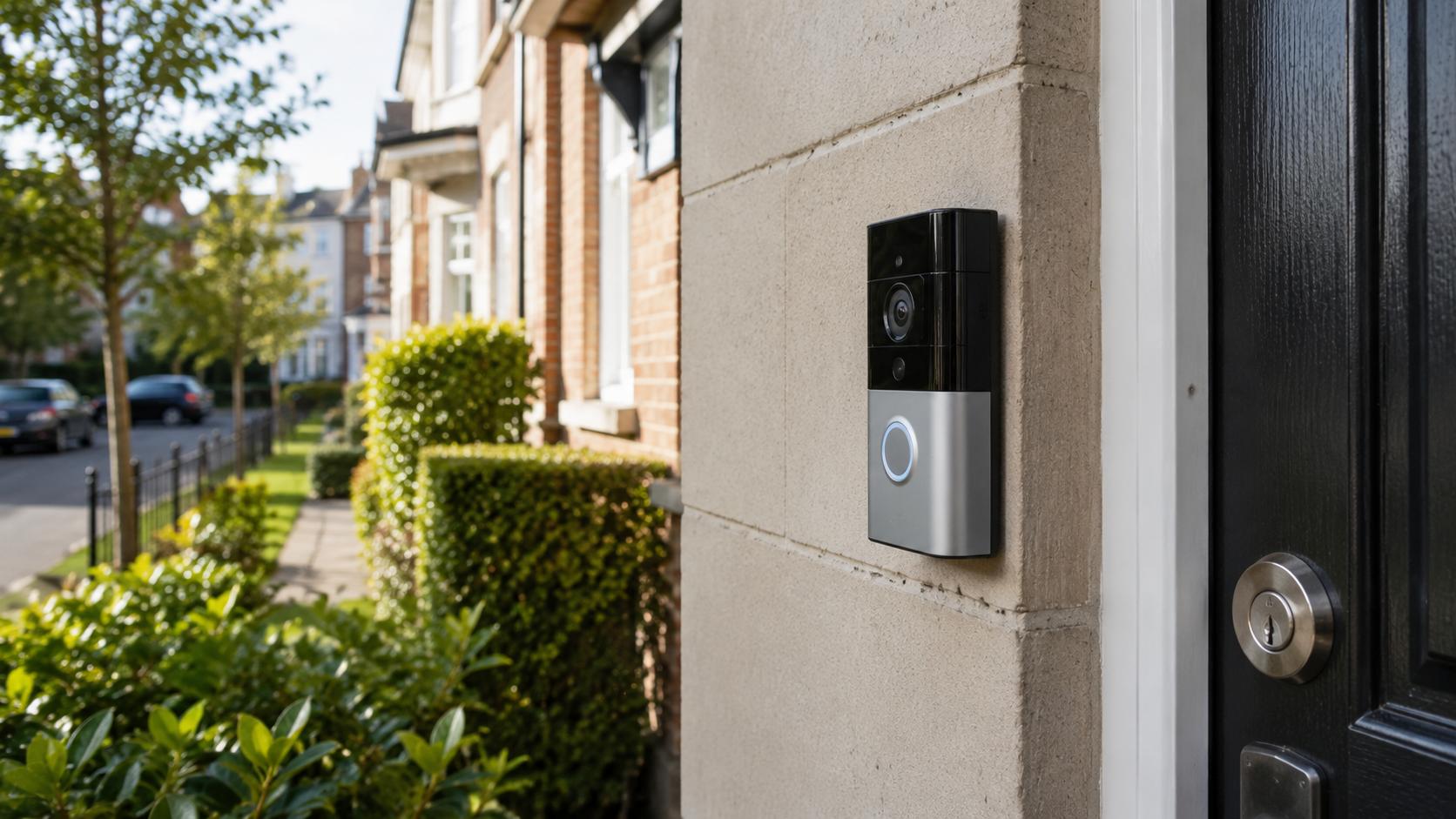
Video doorbells have become one of the most common pieces of technology in British homes. They are cheap, easy to fit and genuinely useful for parcels, callers and peace of mind.
They are also the subject of a legal position that most owners have never heard of, and which has produced court cases between neighbours.
Here is what to consider before buying, and what the law actually requires.
The legal position surprises people.
If a domestic camera captures images only within the boundary of your own property, data protection law does not generally apply.
If it captures anything beyond that boundary — a shared drive, a pavement, a neighbour's garden or their front door — then you are processing other people's personal data, and UK GDPR and the Data Protection Act 2018 apply to you as a data controller.
That does not make it unlawful. It does mean you have responsibilities: using the system fairly, not capturing more than necessary, telling people recording is taking place, keeping footage only as long as needed and responding to requests from people who appear in it.
The Information Commissioner's Office publishes clear guidance for domestic camera users, and it is worth reading before installation rather than after a complaint.
Neighbour disputes are common.
County court cases have found against camera owners where systems captured neighbouring property excessively, and the ICO receives substantial numbers of complaints about domestic CCTV.
The practical steps that avoid trouble are straightforward. Angle cameras to cover your own property. Use privacy masking, available on most decent systems, to black out areas you should not be recording. Disable audio recording where it captures conversations beyond your boundary, since audio is treated as more intrusive than video.
Putting up a small sign indicating recording is taking place satisfies the transparency requirement and costs almost nothing.
Talking to neighbours before installing is the single most effective thing you can do.
Wired or battery is the first decision.
Battery doorbells are simple to fit and require no electrical work, which makes them the obvious choice for renters and for properties without existing doorbell wiring.
The trade-off is recharging, typically every few months depending on how much traffic passes the door, and slightly slower response as the device wakes from sleep.
Wired units draw from existing doorbell wiring or a transformer, never need charging and generally respond faster. Fitting may require an electrician if no suitable wiring exists.
For Newcastle's terraced housing, where front doors frequently open directly onto the street, battery units on the door frame are common. Properties with a porch or recessed entrance have more options.
Subscriptions are the hidden cost.
Most major camera brands charge a monthly or annual subscription for cloud recording, and without it many devices only provide live view and basic motion alerts.
That cost accumulates. A subscription for several cameras over a few years can exceed the price of the hardware.
Alternatives exist. Some systems support local storage on a microSD card or a network video recorder, keeping footage in your house and avoiding ongoing fees. Others offer limited free cloud storage.
Check the subscription position before buying, not after, and check whether the free tier does what you actually need.
Specifications that matter.
Resolution above 1080p is useful, but field of view matters more for a doorbell. A taller aspect ratio lets you see a parcel left on the step as well as a caller's face.
Night vision is standard; colour night vision using a spotlight is noticeably better for identification.
Motion detection quality separates good systems from irritating ones. Person detection, package detection and adjustable activity zones dramatically reduce false alerts from passing cars, cats and rain.
Two-way audio is standard. Pre-roll or pre-buffering, which captures a few seconds before motion triggered, is genuinely valuable and not universal.
Weatherproofing rating should be at least IP65 for a device exposed to North East weather.
Wi-Fi is the usual failure point.
Doorbells sit at the edge of the house, frequently at the limit of router range, and a weak signal produces the delayed notifications and failed clips that generate most negative reviews.
Check signal strength at the door before buying. A mesh Wi-Fi system or an access point nearer the front of the house solves most problems.
Some systems support 2.4GHz only, which has better range through walls than 5GHz, and that is generally an advantage for a doorbell.
Consider what you actually need.
For parcels and callers, a doorbell alone is usually sufficient.
For wider coverage, a small number of well-placed cameras beats a large number badly placed. Cover approaches and entry points rather than open expanses of garden.
Indoor cameras raise their own considerations, particularly in shared houses and where children or lodgers are present, and covert recording in a home carries legal risk.
For rented properties, check the tenancy agreement before drilling into brickwork, and consider whether the landlord's permission is required.
Insurance and crime prevention.
Cameras rarely reduce home insurance premiums on their own, though approved alarm systems sometimes do. Check with your insurer rather than assuming.
Northumbria Police accept footage from domestic systems, and clear, well-lit footage of a face or a registration plate is considerably more useful than a distant figure in the dark.
Recording your camera locations and being able to retrieve footage quickly matters if you ever need it.
Share your thoughts.
Have you ever had a neighbour raise a concern about a doorbell camera?
Tech News
Smart Doorbells and Security Cameras: Know the Rules
Doorbell cameras are among the most popular home tech purchases, and among the most likely to land you in a dispute with a neighbour.
Advertisement





Comments (0)
You must be logged in to post comments.
Don't have an account? Register here
No comments yet. Be the first to share your thoughts!