
In the early hours of 6 October 1854, an explosion on the Gateshead riverside threw burning debris across the Tyne, set fire to the Newcastle Quayside and killed dozens of people on both banks.
It was among the worst urban disasters of Victorian Britain, and it permanently altered the shape of both riversides.
Here is what happened.
The fire began in a mill.
Fire broke out late on the evening of 5 October in a worsted mill on Hillgate, on the Gateshead side of the river, close to the water's edge.
The area was densely built, combining housing with warehouses and industrial premises, with narrow lanes running down to the quay. Firefighting capacity in both towns was limited by modern standards.
Crowds gathered on both banks to watch, which is a significant part of why the death toll was what it was.
The warehouse next door was the problem.
Adjacent to the mill stood a bonded warehouse belonging to the Bertram family, used for storing goods including substantial quantities of sulphur, nitrate of soda, arsenic, guano and other chemicals.
The fire spread to the warehouse. At around three in the morning, its contents detonated.
The explosion was heard for many miles, and it was reported to have been felt across a wide area of the North East. Contemporary accounts describe windows breaking at considerable distance.
Both banks were devastated.
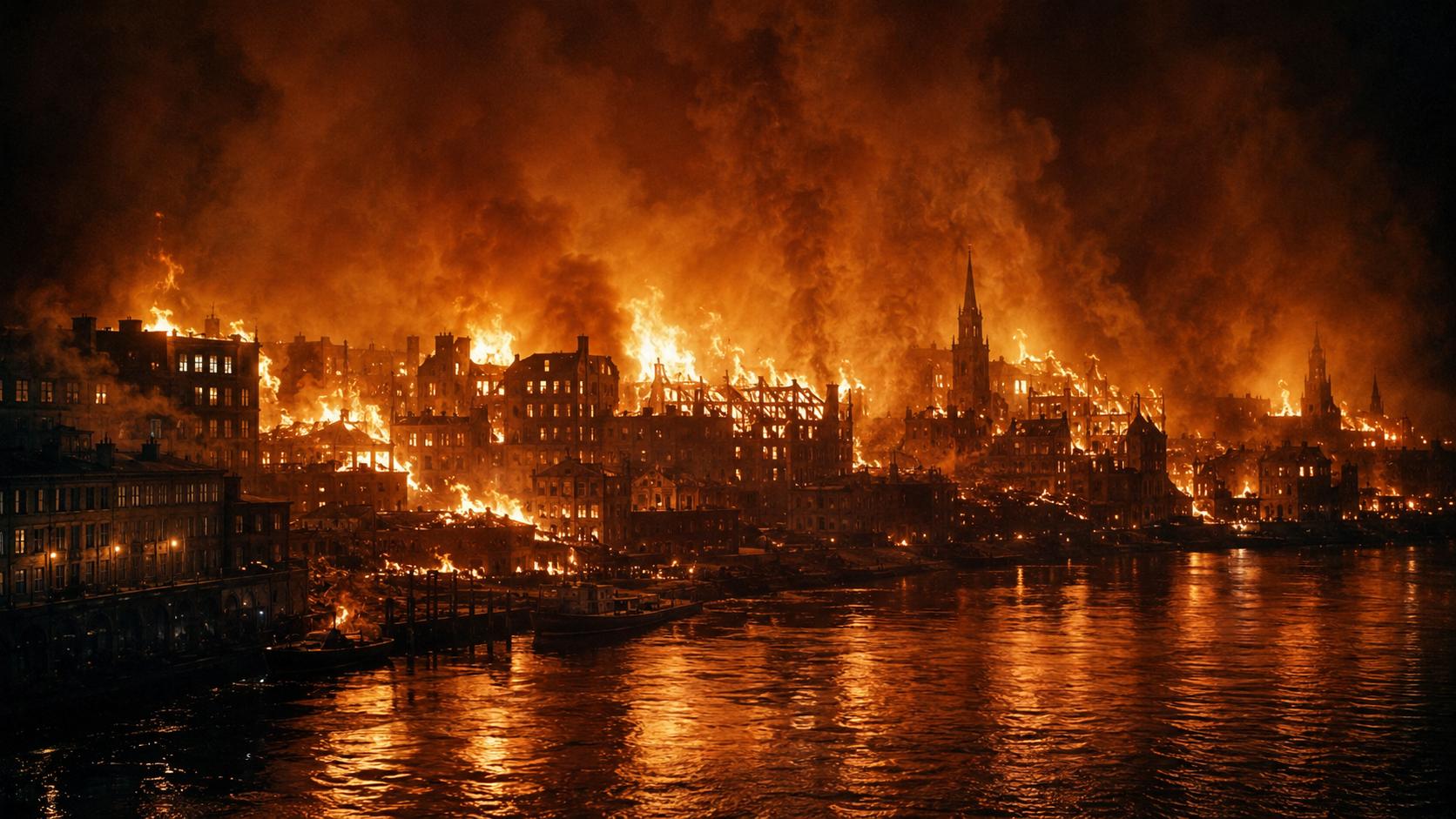
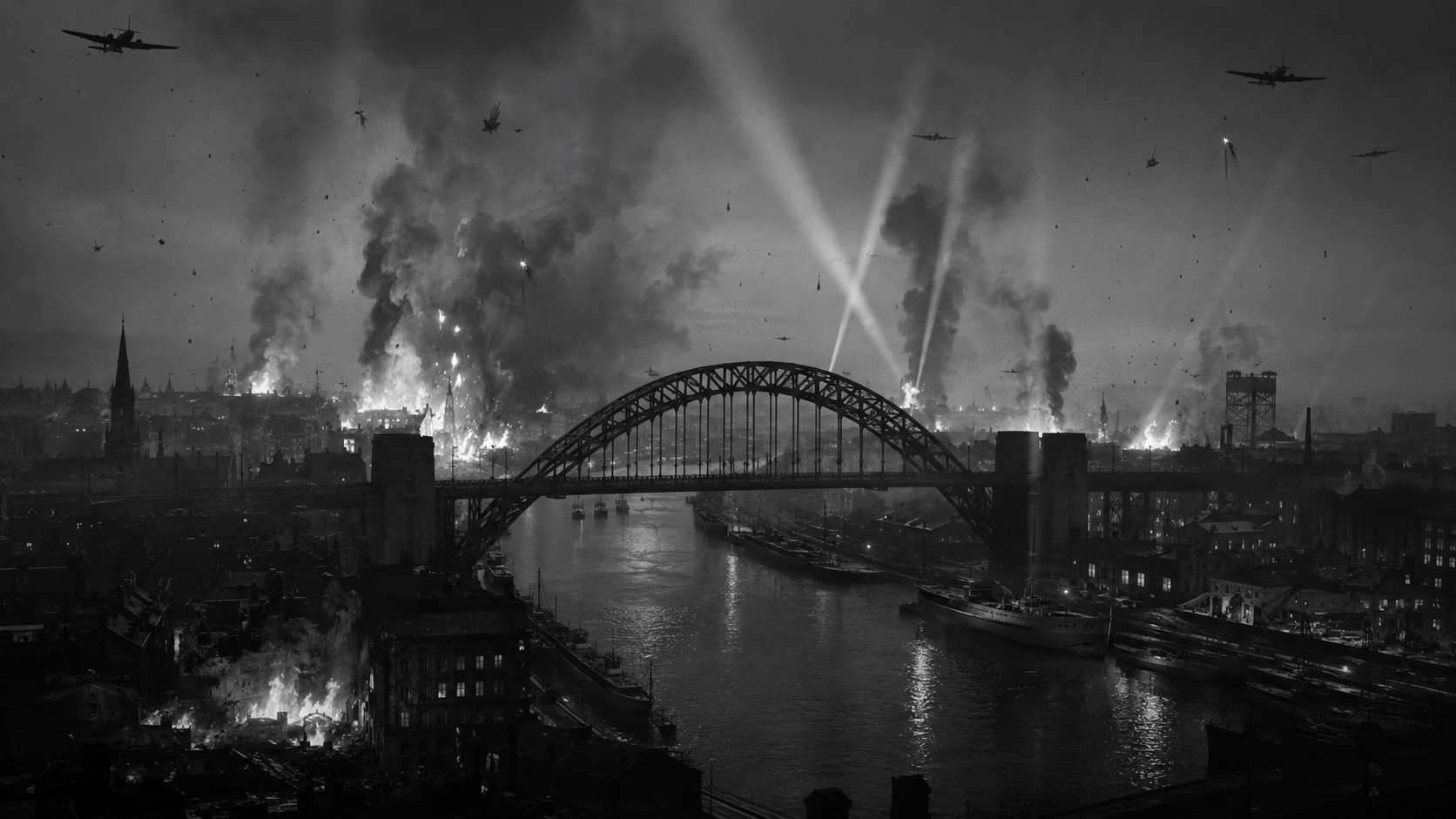
Burning debris and masonry were thrown clear across the Tyne onto the Newcastle Quayside, starting fires on the north bank that spread rapidly through the tightly packed buildings behind.
The Newcastle fires burned through the chares, the narrow medieval alleys running up from the Quayside, destroying warehouses, shops and housing.
On the Gateshead side, the area around Hillgate was largely flattened. Buildings were destroyed outright, and the riverside was left in ruins.
Fires continued to burn for days, and the destruction on the Newcastle side extended over a substantial area of the historic Quayside.
The death toll was substantial.
At least 53 people are generally recorded as having been killed, with hundreds injured, though the true figure has always been uncertain given the difficulty of accounting for spectators and for people in destroyed buildings.
Among the dead were firefighters, police officers and members of the crowd who had come to watch the original fire.
The Newcastle Chronicle's coverage of the disaster, and its subsequent reporting, was substantial, and the paper's proprietor at the time made the relief effort a significant cause.
Relief was organised quickly.
Public subscription raised funds for those made homeless and for the families of the dead, and relief committees were established in both towns.
The scale of displacement was considerable, with a substantial number of families losing homes and possessions entirely.
Newspapers across the country reported the disaster, and donations were received from well beyond the region.
The Quayside was rebuilt differently.
The clearance created by the fire allowed a substantial reconstruction of the Newcastle Quayside that would otherwise have been impossible.
The medieval street pattern of narrow chares running up from the river was partially swept away, and new streets including King Street, Queen Street and Lombard Street were laid out on the cleared ground.
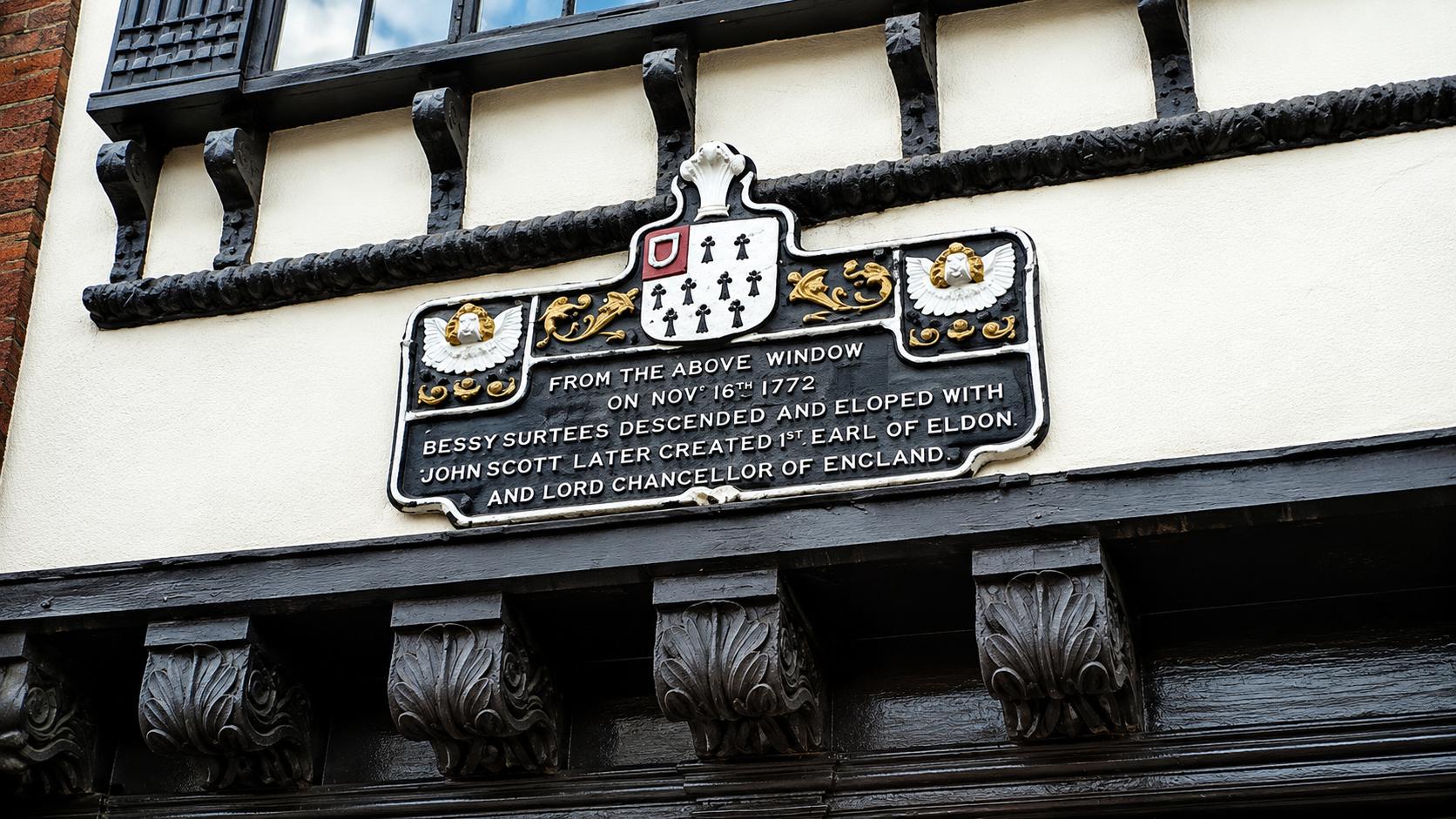
The Guildhall and some surviving buildings, including Bessie Surtees House, escaped destruction, which is why a small number of pre-fire structures survive on the Quayside today.
That rebuilding produced much of the Victorian commercial architecture that characterises the area now, and it is the direct legacy of the disaster.
It changed how dangerous goods were stored.
The disaster drew attention to the practice of storing large quantities of combustible and explosive chemicals in bonded warehouses within densely populated areas.
Regulation of the storage of dangerous substances developed through the later nineteenth century, and the Gateshead explosion is frequently cited among the events that prompted it.
Firefighting arrangements in both towns were also reviewed, contributing to the professionalisation of municipal fire services over the following decades.
Where to see the evidence.
Walking the Quayside today, the contrast is visible. East of the Guildhall, the surviving narrow chares including Broad Chare give a sense of the medieval layout.
The straight Victorian streets running up the bank from the river mark the rebuilt area, and the architecture of the buildings on them dates the reconstruction precisely.
On the Gateshead side, the Hillgate area was subsequently redeveloped further, and little of the pre-fire fabric survives.
A memorial and interpretation relating to the disaster exists on the Gateshead riverside, and the Tyne and Wear Archives hold contemporary material including reports, plans and relief committee records.
Newspaper accounts from October 1854 are available through the British Newspaper Archive and at Newcastle City Library, and they remain the most vivid source on what happened.
Share your thoughts.
Had you heard of the 1854 disaster before, or is it new to you?
Newcastle History
The Great Fire of Newcastle and Gateshead, 1854
An explosion on the Gateshead riverside in October 1854 devastated both banks of the Tyne, killed dozens and reshaped the Quayside permanently.
Advertisement



Comments (0)
You must be logged in to post comments.
Don't have an account? Register here
No comments yet. Be the first to share your thoughts!