
Political assassinations have been mercifully rare throughout British history, but each case has left a lasting impact on the country's democracy. From the fatal shooting of Prime Minister Spencer Perceval in 1812 to the murders of MPs Jo Cox and Sir David Amess, attacks on elected representatives have repeatedly raised questions about extremism, public safety and whether politicians can remain accessible without putting themselves at unacceptable risk.
Those concerns have returned to the forefront following the death of former Conservative MP and Reform UK spokesperson Ann Widdecombe. Counter Terrorism Policing is now leading the investigation after new evidence emerged, but detectives have not confirmed the motive or classified the killing as a political assassination. Nevertheless, the case has reignited debate over the safety of politicians and public figures across Britain.
Although the North East has never witnessed the assassination of a serving MP or Prime Minister, Newcastle and the wider region have experienced politically motivated violence linked to terrorism, making it part of Britain's wider history of political conflict.
The latest case keeping Britain on edge.
The death of Ann Widdecombe has dominated headlines throughout July after the former Cabinet minister was found dead at her Devon home.
Police initially said there was nothing to suggest a political motive, but the investigation took a dramatic turn when Counter Terrorism Policing assumed responsibility following the discovery of new evidence. A suspect has since been arrested on terrorism-related offences while detectives continue to establish whether ideology played any part in the killing.
Until investigators confirm a motive, it would be inaccurate to describe the case as a political assassination. However, the circumstances have inevitably drawn comparisons with previous attacks on British politicians and renewed concerns about the increasingly hostile environment surrounding public life.
Britain's only assassinated Prime Minister.
More than two centuries have passed since Britain witnessed the assassination of a serving Prime Minister.
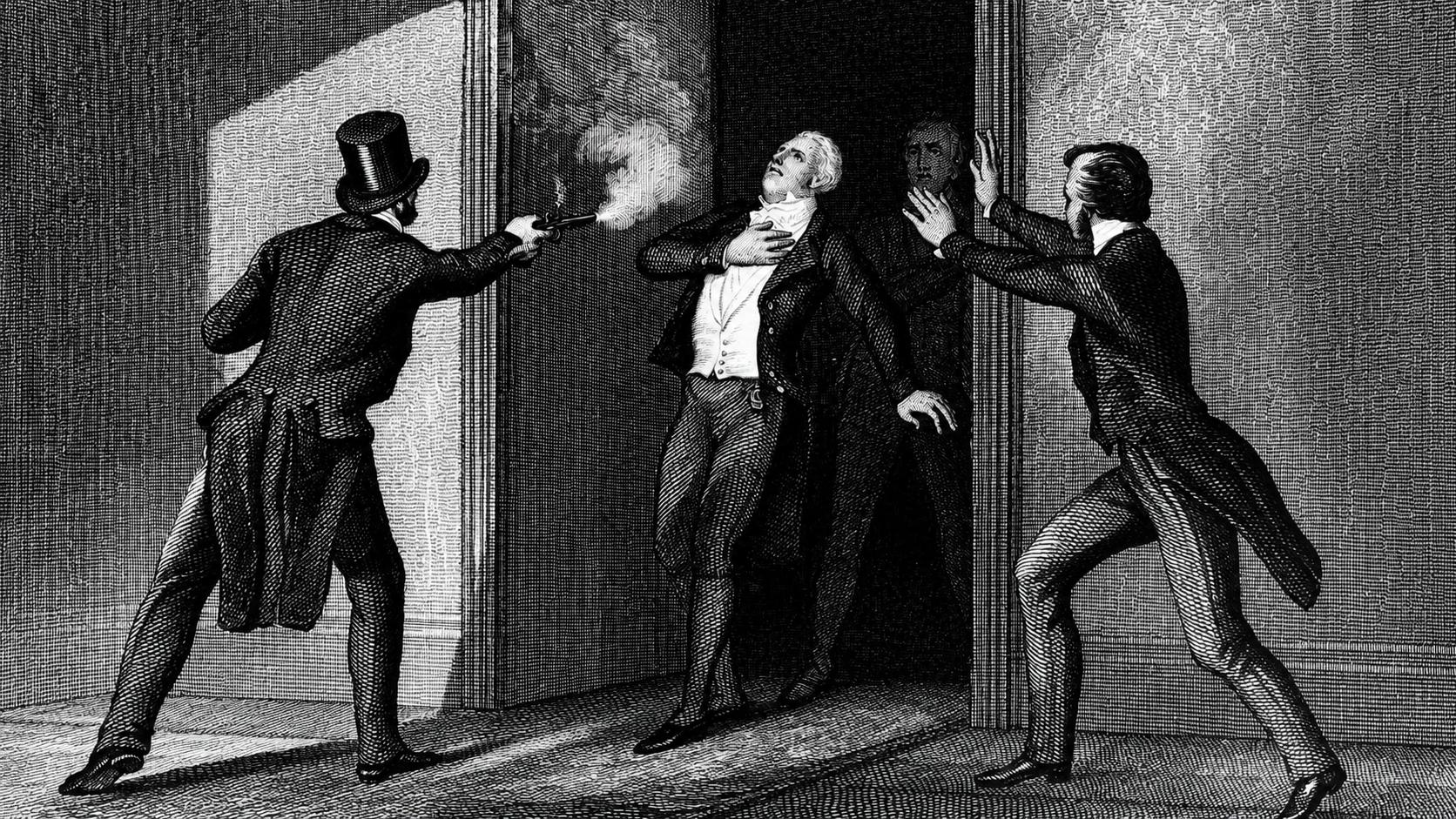
On May 11, 1812, Spencer Perceval was shot inside the House of Commons by Liverpool businessman John Bellingham. Unlike many modern attacks driven by extremist ideology, Bellingham's actions stemmed largely from personal grievances. After suffering financial losses overseas, he believed the British Government had failed to help him and blamed Perceval's administration for his circumstances.
Perceval remains the only serving British Prime Minister ever to be assassinated, making the attack one of the most extraordinary moments in British political history.
The murders that shocked modern Britain.
Political violence returned to the national spotlight in June 2016 when Labour MP Jo Cox was murdered while travelling to a constituency surgery in West Yorkshire.
Thomas Mair, who was later convicted of her murder, had long held far right extremist beliefs and deliberately targeted Cox because of her political views. Her death stunned the nation during the Brexit referendum campaign and prompted an immediate review of security for MPs.
Just five years later, Conservative MP Sir David Amess was stabbed to death while meeting constituents in Essex.
His killer, Ali Harbi Ali, was inspired by Islamist extremism and deliberately selected an MP as his victim. The murder once again demonstrated that Britain's tradition of accessible politicians could leave elected representatives vulnerable to determined attackers.
Assassination attempts that changed security forever.
Not every attack on British politicians has ended in death.
One of the most infamous attempts came during the 1984 Conservative Party Conference in Brighton when the IRA planted a bomb inside the Grand Hotel.
Prime Minister Margaret Thatcher escaped unharmed, but five people were killed and more than 30 others were injured. The bombing fundamentally altered security planning for party conferences and senior Government figures.
Another dramatic incident occurred in 1991 when IRA mortar shells were fired towards Downing Street while John Major's Cabinet was meeting. Although the attack failed to kill anyone, it highlighted the growing sophistication of terrorist groups operating against the British state.
Newcastle and the North East connection.
While the North East has escaped high profile political assassinations, it has not been untouched by politically motivated violence.
During the Troubles, IRA activity extended well beyond London and Northern Ireland. The North East saw attacks targeting commercial premises, industrial infrastructure and gas facilities during the late twentieth century.
Although these incidents were not aimed at assassinating politicians, they formed part of a wider campaign intended to pressure the British Government through violence and disruption.
Today, Newcastle regularly hosts visits by senior politicians from every major party. Security arrangements for those visits are shaped by lessons learned from attacks elsewhere in Britain.
Why are politicians targeted?
Every political killing has had its own unique motive.
Spencer Perceval's killer sought revenge over perceived personal injustice. Jo Cox's murderer was motivated by far right extremism. Sir David Amess was selected because of Islamist extremist ideology.
The motive behind Ann Widdecombe's death has not yet been established, despite the involvement of counter terrorism detectives. Investigators continue to examine every possible line of enquiry before reaching any conclusions.
Security experts say the internet has increasingly become a common factor in modern radicalisation, allowing extremist ideologies to spread rapidly and reach individuals who might previously have remained isolated.
The statistics behind rising threats.
While political murders remain exceptionally uncommon, threats directed at politicians have risen dramatically.
Government figures have previously shown hundreds of criminal offences committed against MPs over a five-year period, with the overwhelming majority involving threats, harassment or malicious communications. Independent surveys have also found that almost every MP has experienced abuse, while more than one in four have reported receiving death threats.
Those figures explain why security around constituency surgeries, party conferences and public appearances has been strengthened considerably since the murders of Jo Cox and Sir David Amess.
Democracy under pressure.
One of Britain's greatest democratic strengths has always been the accessibility of its elected representatives.
Unlike many countries, MPs regularly meet constituents face to face, attend community events and remain highly visible within the communities they represent.
Each political killing, attempted assassination or serious threat challenges that tradition. The investigation into Ann Widdecombe's death has once again highlighted the difficult balance between maintaining open democracy and protecting those who choose to serve in public life. Whatever the outcome of the investigation, it is likely to influence future discussions about political security for years to come.
Share your thoughts below.
Which political attack do you think changed Britain the most?
Crime News
The UK Political Killings That Changed Britain
Advertisement

Comments (0)
You must be logged in to post comments.
Don't have an account? Register here
No comments yet. Be the first to share your thoughts!