
Family history has never been easier to start and has never been easier to get wrong. The subscription websites will hand you a tree stretching back to the seventeenth century within an afternoon, and a substantial proportion of it will belong to somebody else's family entirely.
The North East is a rewarding region to research, with heavy industry, mining, shipbuilding and shipping generating enormous quantities of records, and with archives that hold considerably more than the online databases have digitised.
Start with the living, not the dead.
The first task is not online. It is talking to the oldest members of your family and writing down what they say, including the things they are not sure about.
Ask about names, nicknames, places, occupations, siblings, wars, migrations and family stories. Photograph documents and photographs while they are still in somebody's drawer, and record who is in each picture, because that knowledge disappears with a single death.
Work backwards from yourself, one verified generation at a time. Every generation should rest on a document rather than on an assumption, and the discipline of refusing to skip is what separates a real family tree from a plausible one.
The core records.
Civil registration of births, marriages and deaths in England and Wales began in 1837, and certificates can be ordered from the General Register Office. Birth certificates give parents' names, marriage certificates give fathers' names and occupations, and death certificates give cause of death and the informant, who is frequently a relative you did not know existed.
Census returns were taken every ten years from 1841 and are released after a century, giving households, ages, birthplaces and occupations. They are the backbone of nineteenth-century research.
The 1939 Register, taken at the outbreak of the Second World War, fills part of the gap left by the destruction of the 1931 census, and is invaluable for the twentieth century.
Before 1837, parish registers of baptisms, marriages and burials are the primary source, and many survive from the sixteenth century.
Wills, probate records, and the National Probate Calendar from 1858 provide detail about property and family relationships that nothing else offers.
The archives in and around Newcastle.
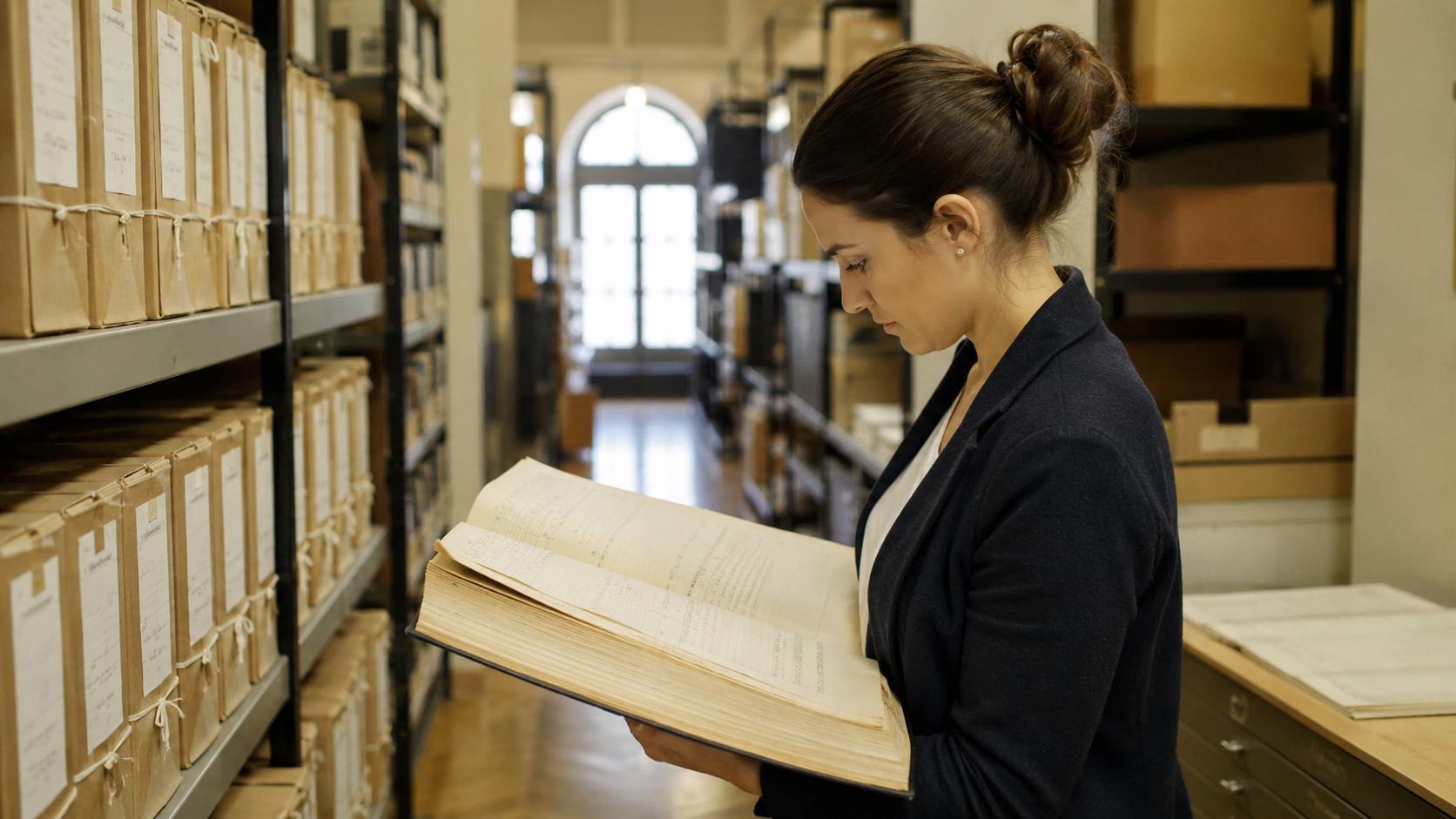
Tyne and Wear Archives holds the records for Newcastle, Gateshead, North and South Tyneside and Sunderland, and its collections include shipbuilding records, business archives, hospital records, school registers, poor law material and an enormous photographic collection.
Newcastle City Library's local studies collection holds directories, newspapers, maps, electoral registers and published family histories, and library membership gives free access to major subscription genealogy websites from library computers, which saves a considerable subscription cost.
Northumberland Archives holds the county's records, and Durham County Record Office covers County Durham. Durham University Special Collections holds the records of the Durham diocese, which is important for anyone researching the region before the modern county boundaries.
The Northumberland and Durham Family History Society and similar organisations hold transcriptions, indexes and expertise that no algorithm has.
The records unique to this region.
Mining records are extensive, including colliery employment records, accident reports and the records of the miners' unions and welfare organisations. The Durham Mining Museum's online resources are outstanding.
Shipbuilding and marine records cover crew lists, apprenticeship indentures and yard records, and merchant seamen have their own record series held nationally.
Keelmen, glassmakers, ropemakers and the trade guilds of Newcastle all generated records, and freemen's admission records are a genuine resource for anyone whose family were freemen of the city.
Migration into the region is a significant theme, particularly Irish migration during and after the famine and Scottish migration southwards, and Jewish, Italian, Yemeni and later communities all have their own documented histories in the region.
Common mistakes to avoid.
Do not accept another person's online tree as evidence. Errors propagate through these systems at speed, and a wrong connection made in 2009 will now appear in thousands of trees, which makes it look corroborated when it is simply copied.
Beware of the common name problem. Multiple men with the same name, born within a few years in the same parish, is normal rather than exceptional, and distinguishing them requires care.
Spelling was not standardised. Names appear differently in every record, particularly where the person was illiterate and a clerk wrote what he heard, and searching only for the modern spelling will miss most of the entries.
Ages in records are approximate, particularly on census returns and death certificates, where the informant was frequently guessing.
Be prepared for what you find. Illegitimacy, bigamy, workhouse admissions, criminal convictions, asylum records and children who died in infancy are all common, and the further back you go the more of it there is.
DNA testing, with caveats.
DNA can confirm or disprove documentary research and can break through brick walls, particularly by identifying relatives you did not know about.
It also regularly reveals that a documented parentage is not the biological one, and it does so without warning. Anyone testing should think in advance about how they would handle that, and about the fact that a test affects relatives who did not consent to it.
Ethnicity estimates should be treated with a good deal of scepticism, since they are based on comparison with reference populations and change as those databases change.
Getting started properly.
Visit the archive. Staff are helpful, most services are free to consult, and there is a great deal that is not online and never will be.
Record your sources as you go. A tree without sources is a story, and going back to check where something came from is far harder than noting it at the time.
Share your thoughts.
What is the most surprising thing you have found researching your family?
Lifestyle News
Tracing Your Family History in Newcastle's Archives
Advertisement




Comments (0)
You must be logged in to post comments.
Don't have an account? Register here
No comments yet. Be the first to share your thoughts!