
The River Tyne has always been both the lifeblood of the region and a barrier dividing its two banks. While the great bridges carry traffic high above the water, there is another, less celebrated way of crossing the river: beneath it. The Tyne Tunnels, burrowing under the riverbed, are a remarkable feat of engineering and an important part of the story of how the North East has kept itself connected.
The Need to Cross.
For centuries, getting from one side of the lower Tyne to the other, downstream of the bridges, meant taking a ferry. As the towns along the river grew and as motor traffic increased through the twentieth century, the need for a more reliable crossing became pressing. The ferries could be slow and were at the mercy of the weather and the tides, and a fixed crossing was needed to carry the growing numbers of workers, vehicles and goods that moved between the communities on either bank. The answer, rather than another high bridge, was to go underneath the river.
The Pedestrian Tunnel.
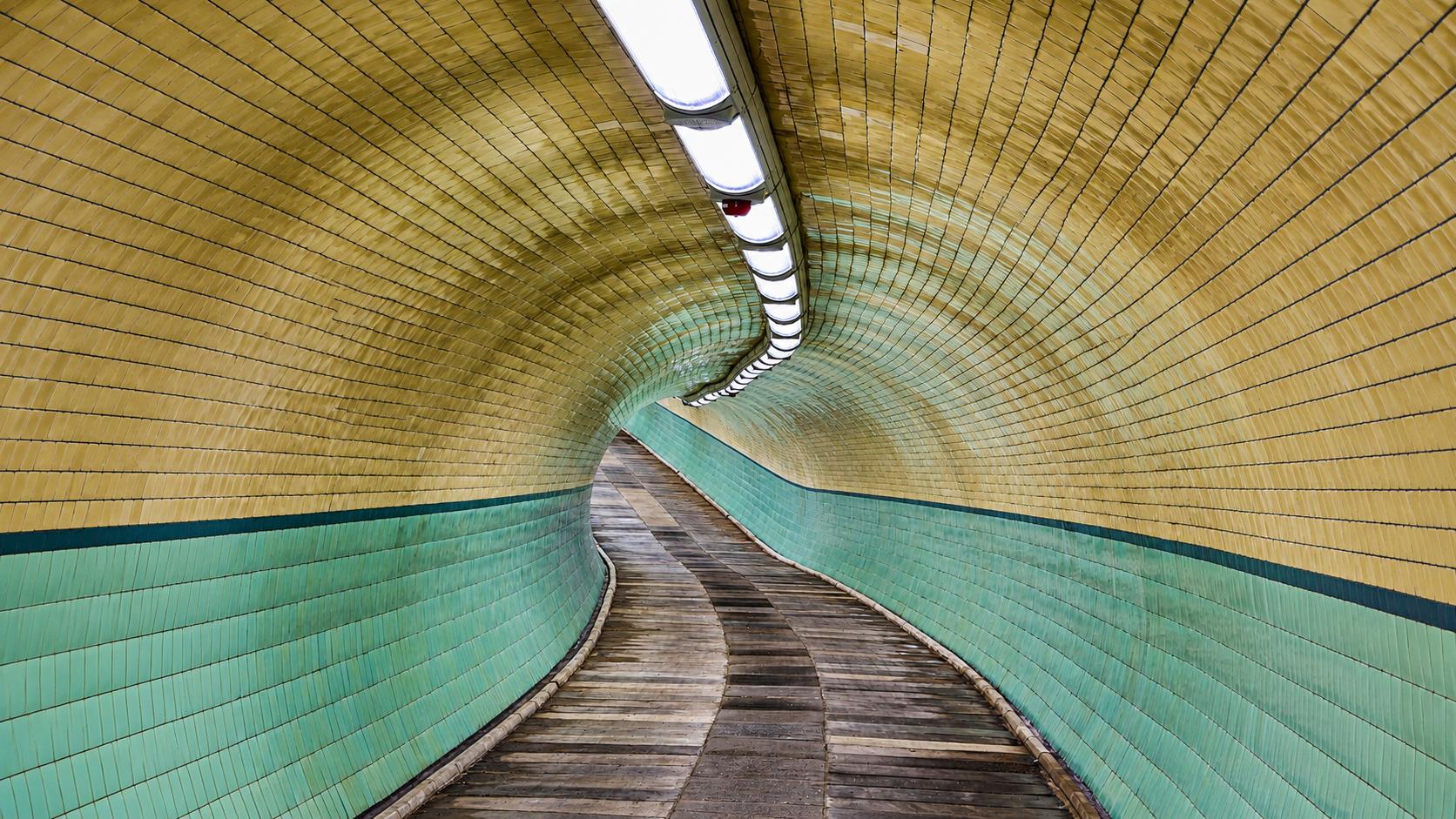
The first of the Tyne Tunnels was built for pedestrians and cyclists, opening in the early 1950s. It was a notable piece of engineering, allowing people to walk or cycle beneath the river in safety and comfort, whatever the weather above. One of its most memorable features was its escalators, which were among the longest of their kind in the world when they were installed, carrying people down to the level of the tunnel and back up again on the far side. These wooden escalators became a much-loved feature, familiar to generations who used the tunnel on their way to work and elsewhere.
A Crossing for Vehicles.
As motor traffic continued to grow, a tunnel for vehicles became essential, and a road tunnel beneath the Tyne was opened in the 1960s. This was a major undertaking, requiring the driving of a large tunnel deep below the riverbed strong enough to carry a constant stream of cars and lorries. The road tunnel transformed the movement of traffic in the area, providing a vital link that relieved congestion and connected the road networks on either side of the river. It quickly became an important route for both local journeys and longer-distance traffic passing through the region.
Engineering Beneath the River.
Building tunnels beneath a busy, tidal river is a considerable engineering challenge. The tunnels had to be driven through the ground far below the water, kept watertight and made strong enough to withstand the pressures upon them, all while the river continued its life above. The work demanded great skill and careful engineering, and the successful completion of the tunnels was a significant achievement. They stand as a reminder that the region's tradition of engineering excellence extended below ground and below water as well as to the great structures that rise above it.
Growing With Demand.
As the years passed and traffic continued to increase, the original road tunnel reached the limits of its capacity, and a further crossing was needed. In time a second road tunnel was added alongside the first, doubling the capacity for vehicles and allowing the crossing to handle the heavy modern flows of traffic. This expansion showed how the tunnels had become an indispensable part of the region's transport network, important enough to justify major new investment to keep them serving the needs of the area into the future.
A Vital Link.
Today the Tyne Tunnels remain a crucial part of the infrastructure of the North East, carrying large numbers of vehicles beneath the river every day and providing a route for pedestrians and cyclists as well. They connect communities, support the movement of goods and people, and help to keep the region's economy moving. Though they are less visible than the famous bridges, the tunnels are no less important, quietly performing their vital function out of sight beneath the water. They are a hidden but essential part of how the North East works.
An Underground Achievement.
The Tyne Tunnels are a fine example of the practical engineering that has shaped the modern North East. From the first pedestrian tunnel with its remarkable escalators to the modern road crossings carrying heavy traffic, they represent decades of effort to keep the two banks of the river connected. They may not have the fame of the bridges above them, but they are a genuine engineering achievement and an important part of the region's story. The next time anyone crosses beneath the Tyne, they might reflect on the skill and ambition that made it possible.
The Ferry and the Tunnel.
The story of the Tyne Tunnels is also, in a sense, the story of how the region's crossings have evolved to meet changing needs. For generations before the tunnels were built, the way across the lower Tyne was by ferry, and the ferries were an important part of life along the river, carrying workers and travellers between the banks.
The coming of the tunnels did not entirely end this tradition, but it transformed the way the great majority of people made the crossing, offering a faster and more reliable alternative that was not dependent on the weather or the tides. This shift reflected the wider modernisation of transport in the twentieth century, as fixed crossings and motor vehicles replaced older and slower ways of getting about.
The tunnels represented a major investment in the region's infrastructure, a recognition that reliable connections across the river were essential to the economy and to daily life. As traffic grew and the demands on the crossing increased, the tunnels were expanded and improved to keep pace, ensuring that the link beneath the river remained fit for purpose.
The continuing importance of the Tyne Tunnels, and the investment made in them over the decades, shows how vital it has always been for the region to keep its two banks connected, and how engineering has repeatedly risen to meet that need.
Share your experiences.
Have you used the pedestrian / cycle tunnels below the river Tyne?
Newcastle History
Under the River: The Story of the Tyne Tunnels
The story of the Tyne Tunnels, from the 1950s pedestrian tunnel with its famous escalators to the road tunnels carrying traffic beneath the river today.
Advertisement




Comments (0)
You must be logged in to post comments.
Don't have an account? Register here
No comments yet. Be the first to share your thoughts!