
Broadband providers talk about full fibre constantly in their advertising, but plenty of households across Newcastle and the wider North East remain genuinely unsure what the term actually means, and whether upgrading from a standard broadband connection would make any real, noticeable difference to their day-to-day internet use.
Full fibre, sometimes referred to as fibre-to-the-premises, means the fibre optic cable runs all the way from the local telephone exchange directly into your home, rather than switching to older, slower copper cabling for the final stretch of the connection, as is still the case with many standard broadband packages currently in use across the country.
That difference matters because copper cabling, the older technology still used for the final connection in many homes, is considerably slower and more prone to signal degradation over distance than fibre optic cable, meaning full fibre connections typically offer significantly faster and more reliable speeds, particularly for uploading data rather than simply downloading it.
Households with multiple people streaming, gaming or video calling simultaneously tend to notice the difference full fibre makes most clearly, since a standard connection can struggle considerably when several demanding tasks are competing for the same limited bandwidth at once, something full fibre's significantly higher overall capacity handles with far less strain.
Availability of full fibre broadband varies considerably across the North East, with Newcastle city centre and other more densely populated urban areas generally seeing rollout completed earlier than more rural parts of Northumberland and County Durham, where the lower population density makes the infrastructure investment required considerably harder for providers to justify economically.
For many typical households, a standard broadband connection may still comfortably handle everyday browsing, streaming and general use without any real day-to-day frustration, meaning full fibre is not necessarily an essential upgrade for absolutely everyone, particularly in smaller households with more modest overall internet demands.
Remote workers, gamers, and larger households with several people using the internet heavily and simultaneously tend to benefit most noticeably from upgrading, given full fibre's considerably higher overall capacity and its particular strength in upload speeds, which standard broadband connections often handle considerably less well by comparison.
Switching providers or upgrading to full fibre broadband is generally a relatively straightforward process once availability has been confirmed at your specific address, with most providers handling the technical installation directly and typically able to schedule an engineer visit within a matter of weeks rather than requiring any complicated action on the part of the customer themselves.
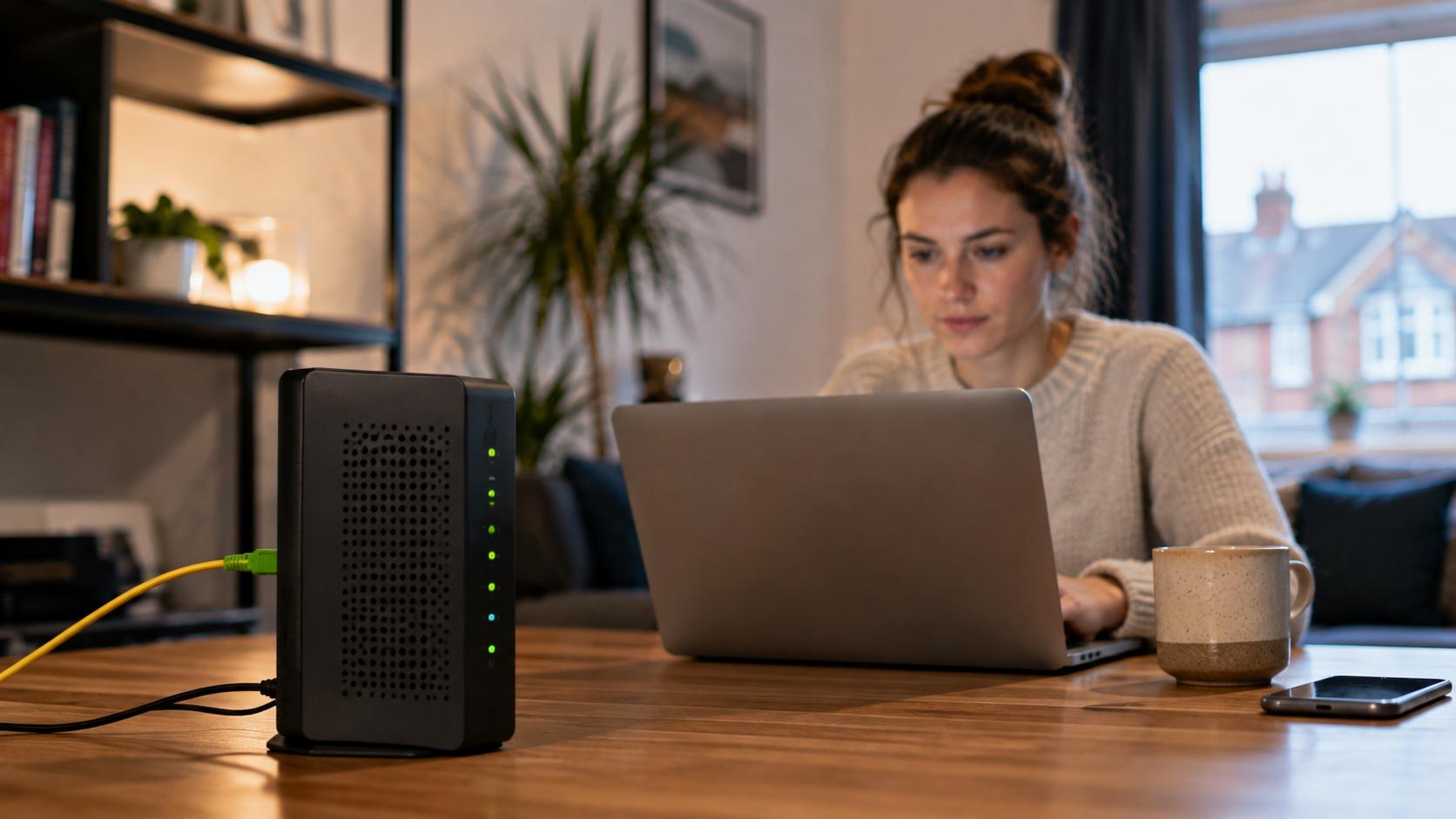
Working from home has made the question of broadband reliability considerably more significant for many North East households than it might once have been, with a stable, fast connection now genuinely essential rather than simply a nice convenience for anyone regularly relying on video calls or cloud-based work software throughout a normal working day.
Speed alone is not the only factor worth considering either, since reliability and consistency, avoiding sudden drops in connection quality during a video call or online game, can matter just as much to daily satisfaction as the raw headline download speed advertised on a provider's website or in-store promotional material.
If full fibre broadband has become available at your address, checking current pricing against your existing package is generally worthwhile, since increased competition among providers rolling out fibre infrastructure across the North East has, in many areas, brought full fibre pricing down to levels genuinely comparable with standard broadband packages. Taking the time to compare options properly now can save considerable money and frustration further down the line. For households weighing up their options, a quick availability check remains the simplest first step toward a genuinely faster, more reliable connection.
Join the conversation below.
Do you currently have full fibre broadband at home?
Tech News
What Is Full Fibre Broadband and Do You Need It?
Full fibre broadband has been rolling out steadily across Newcastle and the North East, but what actually separates it from a standard broadband connection?
Advertisement





Comments (0)
You must be logged in to post comments.
Don't have an account? Register here
No comments yet. Be the first to share your thoughts!