
Walk through the Bigg Market at two in the morning on a Sunday and then again at nine. The difference between those two versions of the same street is not an accident, and it is not the weather.
It is a shift pattern.
Newcastle runs a substantial night and early-morning cleansing operation, and almost nobody who benefits from it ever sees it happening. That is rather the point.
The city centre is cleaned before it opens.
The core commercial streets are swept and washed in the small hours, when there is nobody to walk into and no delivery vans to work around.
Mechanical sweepers handle the volume, running the kerb lines and pedestrian areas. Crews on foot deal with what the machines cannot: doorways, planters, bin surrounds, steps and the corners where litter collects.
Washing is a separate job from sweeping. Pressure washing lifts the residue that a brush leaves behind, which on a busy street means spilled drinks, food, grease and the general film that thousands of feet deposit.
Chewing gum is its own specialist problem, requiring dedicated equipment and a great deal of patience. A single piece takes minutes to remove properly, which explains why gum removal happens in campaigns rather than continuously.
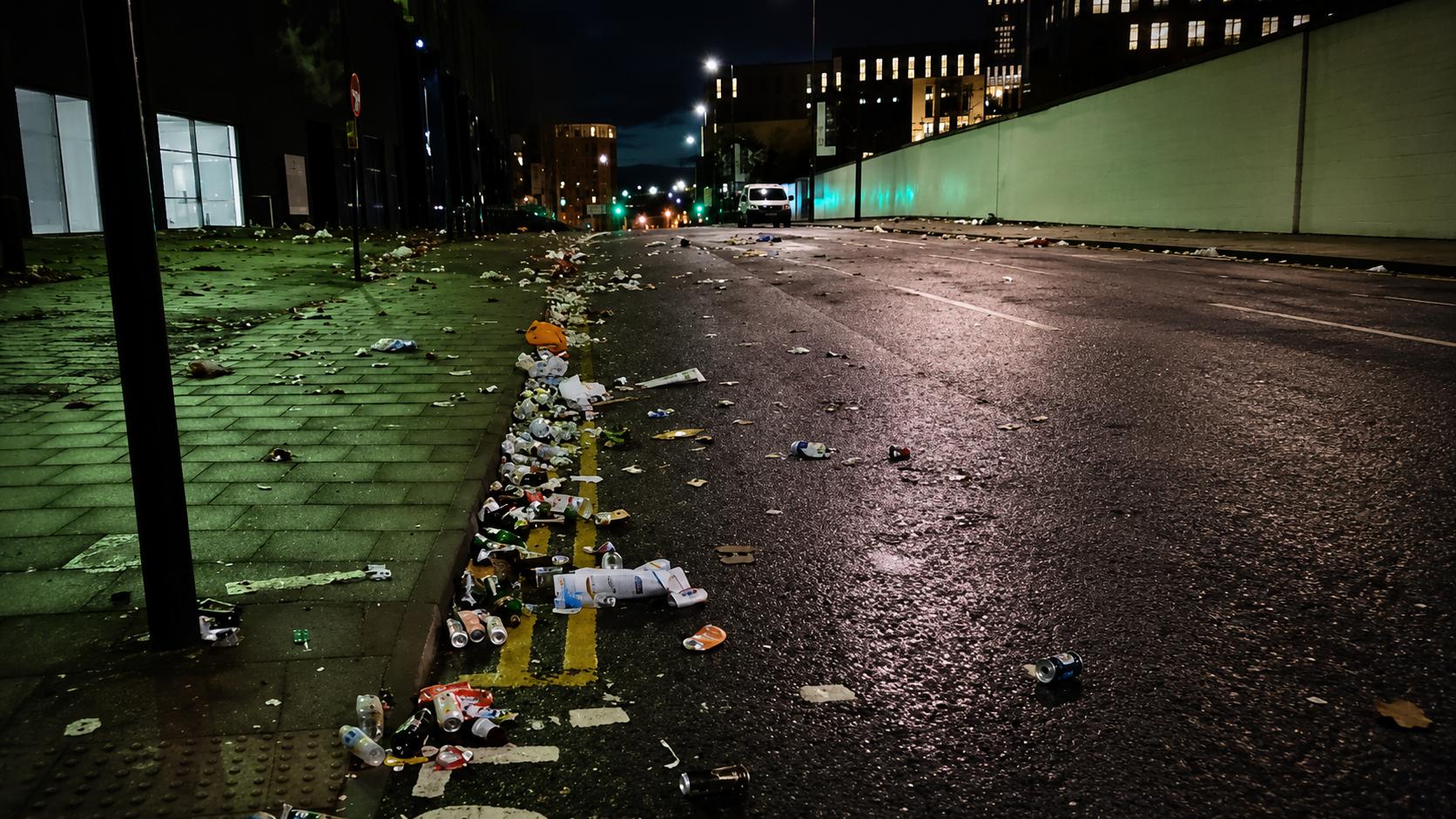
The night-time economy generates a specific kind of mess.
A city with a nightlife reputation the size of Newcastle's produces a predictable weekly cycle of waste. Glass, takeaway packaging, cans and the aftermath of people who did not make it home in good order.
Glass is the priority, because broken glass on a pedestrian street is a genuine injury risk rather than an aesthetic complaint.
There is also a public health element that rarely gets discussed politely, involving doorways, alleyways and the shortage of public toilets after the pubs close. Crews deal with it, and the ammonia smell in certain lanes on a warm morning is the evidence of what they are up against.
Bins are emptied around the clock in the centre.
City centre litter bins fill faster than anywhere else and are emptied on cycles measured in hours rather than days. On event weekends the frequency increases again.
Commercial waste is separate from household collection. Businesses must arrange and pay for their own trade waste, which is why you see stacks of bags appear at set times outside restaurants and bars.
Where that goes wrong, it goes wrong visibly. Bags put out early, split by gulls, are one of the most common complaints about the city centre and one of the easiest to fix through enforcement.
Beyond the centre, the job changes.
Residential cleansing runs on different rhythms. Streets are swept on scheduled cycles, with leaf fall in autumn creating a seasonal surge that can overwhelm the standard schedule.
Parked cars are the recurring obstacle. A mechanical sweeper cannot clean a kerb it cannot reach, which is why streets with heavy on-street parking often look worse than their cleaning frequency would suggest.
Fly-tipping is dealt with separately again, and typically responsively rather than on a schedule, because it appears without warning and can include hazardous material.
Alongside the council, others contribute. Business improvement districts fund additional cleaning within their boundaries, housing providers clean their own estates, and volunteer litter groups cover ground that no schedule reaches.
Weather changes everything.
Rain helps and hinders. It washes the surface but blocks gullies, and a blocked gully in a downpour puts water where it should not be.
Winter shifts priorities entirely, with gritting taking precedence over sweeping when ice is forecast. The same vehicles and, in many cases, the same staff cover both.
Leaves are the underestimated hazard. Wet leaf mulch on a pavement is slippery, and clearing it is a race against the next fall.
Why it is worth knowing.
Street cleansing is one of the few council services almost everyone uses every day without ever requesting it. It is also one of the first to feel budget pressure, because a reduced frequency does not produce an immediate crisis, only a slow decline.
That makes it a reasonable barometer. A city that keeps its streets clean under financial pressure is making a deliberate choice about how it wants to be seen.
Share your thoughts.
Which part of Newcastle do you think is kept cleanest, and which is let down?
Local News
Who Cleans Newcastle While the City Sleeps
Advertisement




Comments (0)
You must be logged in to post comments.
Don't have an account? Register here
No comments yet. Be the first to share your thoughts!