
Tattooing may feel like a modern trend, but its roots stretch back thousands of years. Today, tattoos are part of everyday life across Newcastle and the North East, with independent studios attracting customers from across the country. Yet Britain's relationship with body art began long before electric tattoo machines, Instagram portfolios and city centre studios.
As people celebrate National Tattoo Day on 17 July, it is the perfect opportunity to look back at how tattooing evolved from an ancient tradition into one of Britain's fastest-growing creative industries, with Newcastle continuing to play its own part in that story.
Tattooing dates back to Britain's earliest history.
Archaeological evidence suggests tattooing has existed for thousands of years across Europe. While the famous Ötzi the Iceman, discovered in the Alps, had more than 60 tattoos dating back over 5,000 years, Britain also has a long connection with body art.
When Roman forces arrived in Britain almost 2,000 years ago, they described native tribes, including the Picts further north, as people whose bodies were decorated with markings and pigments. Historians continue to debate whether these were permanent tattoos or painted designs, but body decoration was already an important part of life in ancient Britain.
The North East itself was once home to Hadrian's Wall and the Roman frontier, placing the region at the crossroads of cultures for centuries. Newcastle's history as one of Britain's oldest settlements reflects that rich heritage.
Sailors helped shape Britain's tattoo tradition.
Modern British tattoo culture owes much to sailors during the eighteenth and nineteenth centuries. As British ships travelled across the Pacific and Asia, many sailors returned home with tattoos inspired by cultures they had encountered overseas.
These designs quickly became symbols of adventure, military service and maritime life. Anchors, swallows, ships and nautical stars remain among Britain's most recognisable traditional tattoo designs today.
Contrary to popular belief, historians now argue that Britain's professional tattoo industry was shaped as much by Victorian fascination with Japanese tattooing as it was by Captain James Cook's voyages. During the late nineteenth century, tattooing became fashionable among aristocrats and even members of European royal families. Britain's first professional tattoo studio was opened by Sutherland Macdonald in London during the early 1880s.
From rebellion to mainstream culture.
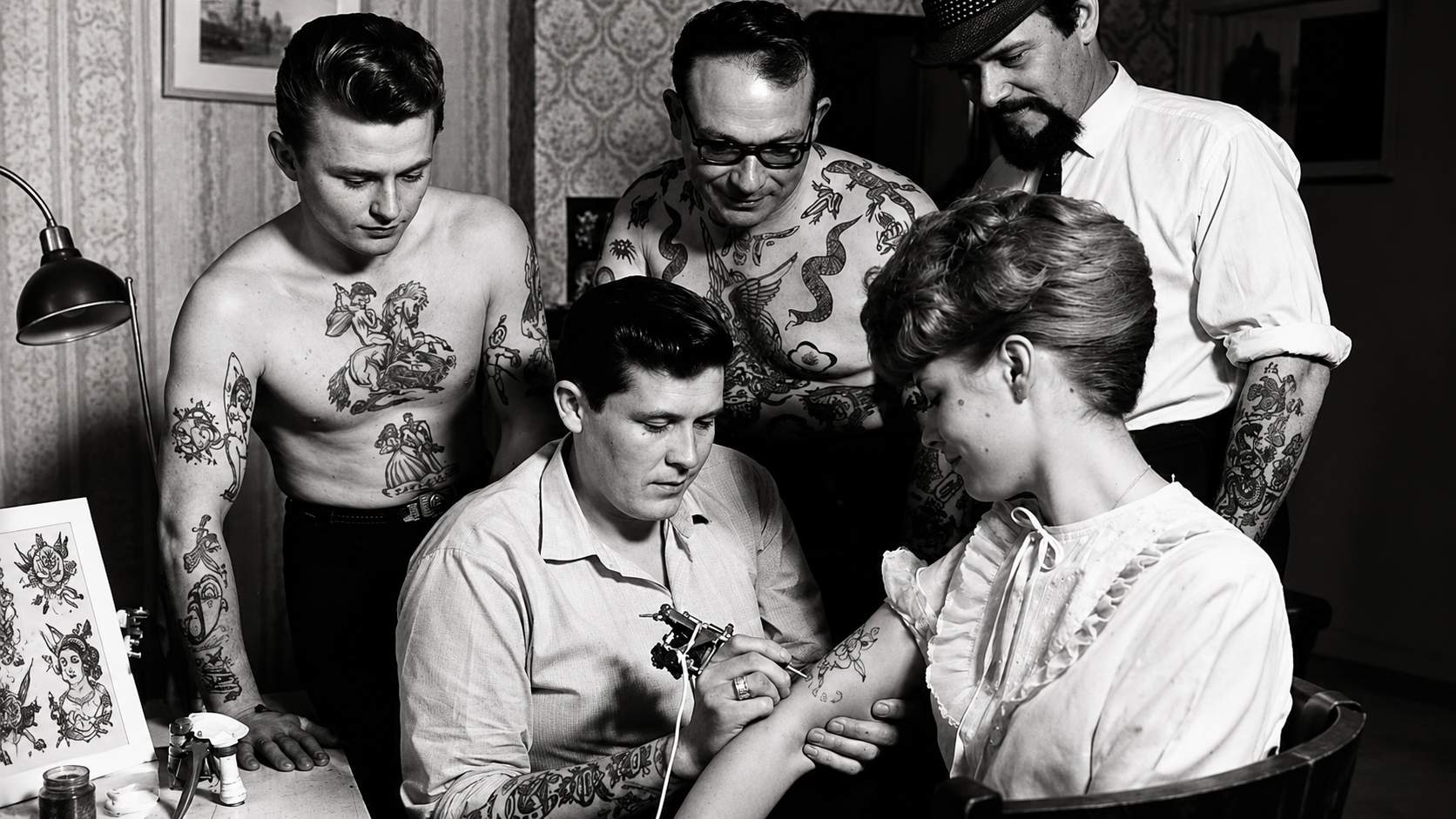
For much of the twentieth century, tattoos were often associated with servicemen, dock workers, bikers and musicians. That perception gradually changed as celebrities, athletes and television personalities helped bring tattooing into the mainstream.
Today, tattoos are more accepted than ever. Research suggests around 30 percent of UK adults aged 25 to 39 have at least one tattoo, while 21 percent of people aged 40 to 59 are also tattooed. Even among younger adults aged 18 to 24, approximately 13 percent already have tattoos.
Industry figures estimate that almost one in three UK adults now has at least one tattoo, representing around 14 million people. The British tattoo industry has also grown rapidly, with the market valued at more than £700 million, while the number of tattoo studios has more than doubled over the past decade.
Newcastle has become one of the North East's tattoo destinations.
Across Newcastle, Gateshead, Sunderland, Durham and Northumberland, tattoo studios have become part of the region's vibrant independent business scene. Artists specialising in realism, blackwork, Japanese, fine line and traditional styles now attract customers from across the UK.
The city's creative reputation continues to grow thanks to social media, tattoo conventions and guest artists who regularly visit local studios. Newcastle City Council also requires both tattoo artists and tattoo premises to be registered, helping maintain hygiene and safety standards for customers.
Many local artists now build international audiences online, proving that world-class tattooing is no longer limited to London's biggest studios.
Tattooing continues to evolve.
Tattoos today are rarely about rebellion. Instead, they celebrate family, personal achievements, remembrance, culture and identity. Every design tells a different story, whether it is a small floral outline, a detailed portrait or a sleeve completed over many years.
As National Tattoo Day is marked across Britain today, Newcastle's thriving tattoo community reflects just how far the art form has come. From ancient tribes and Victorian royalty to modern studios across the North East, tattooing has become one of Britain's most enduring forms of personal expression.
Share your recommendations.
Do you know a local tattoo artist that does great work?
Newcastle History
How Getting A Tattoo Became So Popular In Britain
Advertisement

Comments (0)
You must be logged in to post comments.
Don't have an account? Register here
No comments yet. Be the first to share your thoughts!