
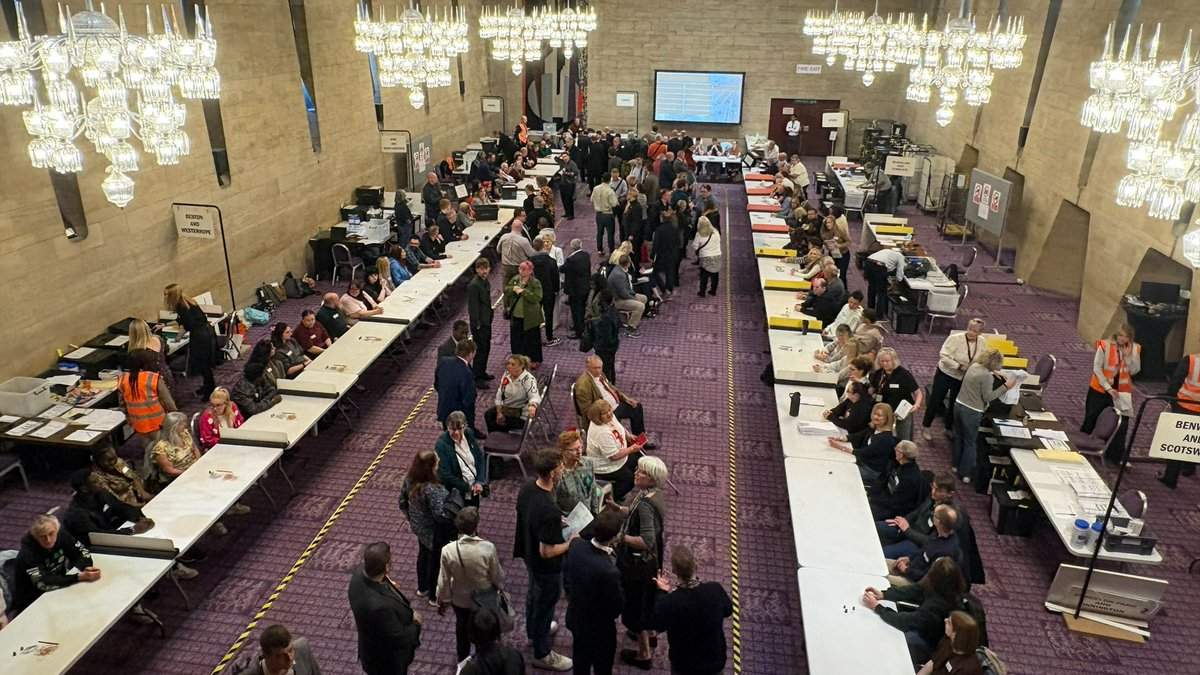
Many Newcastle residents cast their votes during the city-wide local elections in May 2026, so hearing that another council election is taking place in May 2027 has understandably caused some confusion.
Some people have questioned whether the 2026 election result has been overturned or whether the council is facing another unexpected political contest. In reality, neither is true.
The election scheduled for Thursday 6 May 2027 is part of Newcastle City Council's normal electoral system following a one-off set of boundary changes introduced before the 2026 elections. Rather than representing another full council election, it marks the return to the city's traditional election cycle.
Why every councillor was elected in 2026.
Normally, Newcastle City Council does not elect all of its councillors at the same time.
The council has 78 councillors, representing 26 wards, with three councillors serving each ward. Under the usual system, elections take place in three years out of every four, with one councillor from each ward elected each time.
However, before the 2026 local elections, the Local Government Boundary Commission for England completed an independent review of Newcastle's electoral boundaries.
The review introduced updated ward boundaries to reflect changes in population, helping ensure councillors represent roughly equal numbers of residents while maintaining local community identities. Parliament approved the changes, meaning every existing council seat had to be contested in May 2026 under the new ward structure.
So why is there another election in 2027?
Although every councillor was elected in 2026, they were not all elected to identical initial terms.
To re-establish Newcastle's long-standing election-by-thirds system, the three councillors elected in each ward were effectively assigned different lengths of their first term based on the number of votes they received.
The councillor in each ward who received the lowest winning vote total in the 2026 election will stand again in May 2027.
The councillor with the second-highest vote will return to voters in 2028, while the councillor receiving the highest vote will remain in office until 2030.
This staggered arrangement restores Newcastle's traditional electoral timetable after the one-off all-out election in 2026.
What does election by thirds actually mean?
Election by thirds is used by many metropolitan councils across England.
Instead of replacing an entire council every four years, only around one-third of councillors are elected during each election year. There is then one year without scheduled council elections before the cycle begins again.
Supporters argue this approach provides continuity because experienced councillors remain in office while allowing voters to regularly influence the political direction of the council.
It also means local issues can be debated more frequently instead of waiting four years for every seat to become available.
Why were the boundaries changed?
Boundary reviews are carried out independently rather than by the council itself.
The Local Government Boundary Commission periodically reviews councils across England to ensure electoral fairness as populations grow and communities change.
For Newcastle, the review concluded that the city should continue to have 78 councillors across 26 three-member wards, but with revised boundaries that better balance the number of electors represented by each councillor.
During the consultation process, the Commission received 143 responses from residents and organisations before publishing its final recommendations.
What can Newcastle voters expect next?
The next scheduled Newcastle City Council elections will take place on 6 May 2027, followed by elections in May 2028 and then May 2030, returning the city to its familiar electoral rhythm.
While national political issues often dominate headlines, local elections determine decisions affecting everyday life across Newcastle. Councillors make choices on housing, planning applications, road maintenance, waste collection, parks, local services and spending priorities.
Turnout at local elections is traditionally lower than at general elections across the UK, making every vote proportionally more significant in determining who represents each community.
A return to normal rather than another fresh start.
Although another election just one year after the all-out contest may seem unusual, it is simply part of restoring Newcastle's long-established electoral timetable following the boundary review.
For voters across the city, May 2027 should not be viewed as another unexpected election, but as the point where Newcastle resumes the election cycle it has used for decades. Understanding that process helps explain why residents are heading back to polling stations far sooner than many expected.
Have your say.
Are you happy with Newcastle's election-by-thirds system, or would you prefer every councillor to face voters at the same time?
Local News
Why Newcastle Votes Again In 2027
Advertisement

Comments (0)
You must be logged in to post comments.
Don't have an account? Register here
No comments yet. Be the first to share your thoughts!