
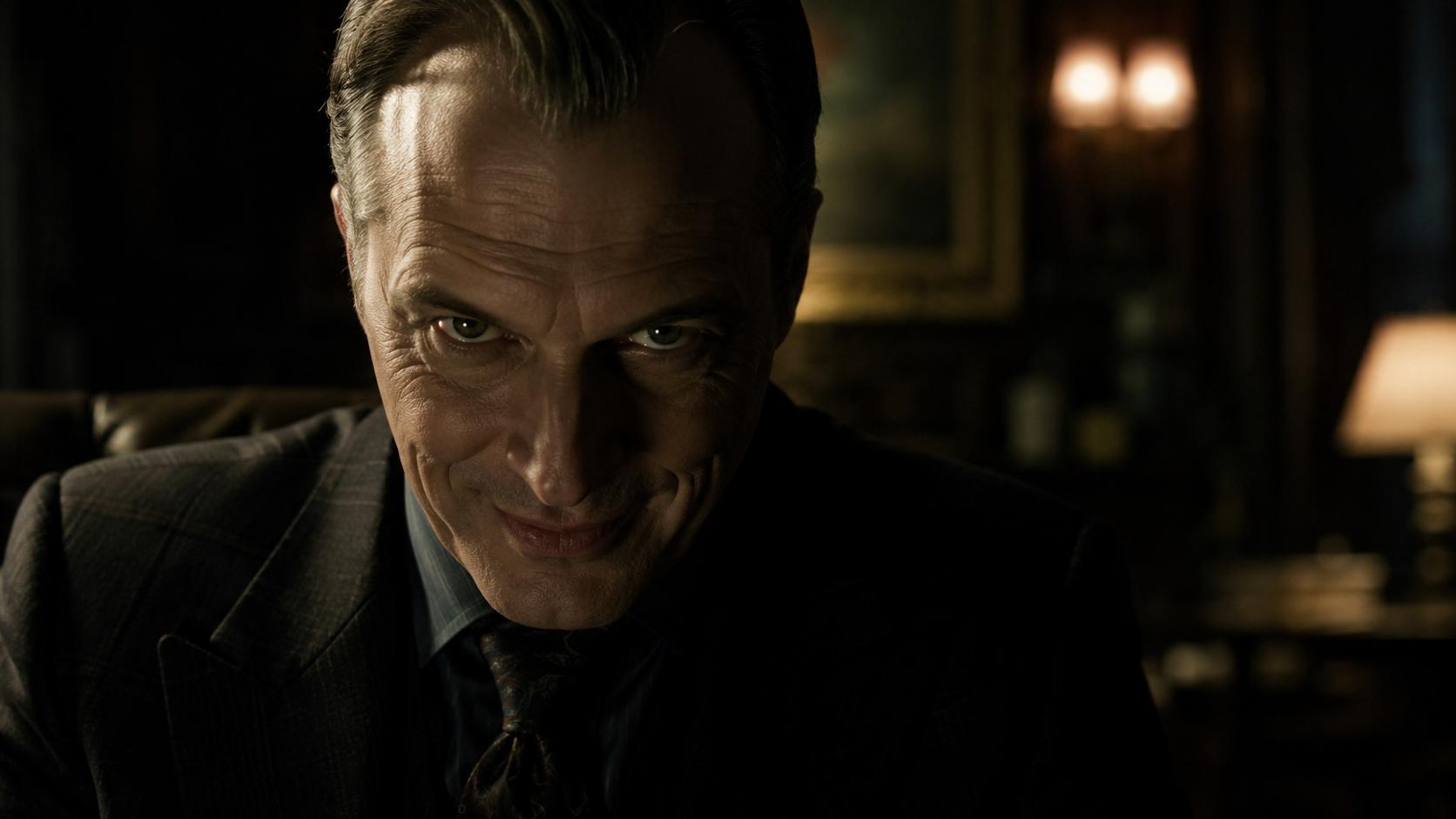
Ask anyone to name their favourite character from a film or novel and there is a strong chance they will name the villain.
It is one of the most consistent patterns in storytelling. The antagonist is frequently better written, better remembered and more quoted than the protagonist, and this has been true for centuries.
Here is why.
Villains want something, and want it badly.
The mechanical explanation is the strongest. A villain drives the plot, while a hero frequently reacts to it.
Wanting something specific and pursuing it ruthlessly makes a character active, and active characters are more interesting than passive ones. The antagonist creates the situation everyone else must respond to.
Writers know this, which is why the villain often gets the clearest motivation, the sharpest dialogue and the best entrance.
Literature has always understood the appeal.
Shakespeare built entire plays around this. Richard III opens by telling the audience directly that he intends to be a villain, and then makes them complicit by confiding in them throughout.
Iago in Othello is arguably the most studied antagonist in English drama precisely because his motivation is never fully explained, which makes him more disturbing rather than less.
Milton's Satan in Paradise Lost proved so compelling that critics have argued for centuries about whether the poem accidentally makes him the hero, a debate that shows no sign of resolution.
Transgression is safely enjoyable.
Fiction allows audiences to experience behaviour they would never contemplate, without consequence.
Villains break rules that the rest of us keep. They say what they think, take what they want and refuse to apologise. There is a genuine pleasure in watching that from a safe distance.
Psychologists have suggested that engaging with fictional villains may serve a function similar to other forms of controlled risk, allowing us to explore darker possibilities without acting on them.
The antihero took over television.
The most significant shift in recent decades has been the move from villain as opponent to villain as protagonist.
Beginning with a run of American dramas from the late 1990s onwards, television built extended series around characters who were unambiguously doing terrible things, and asked audiences to spend dozens of hours with them.
Long-form serialised storytelling made this possible. A film has two hours to make you care; a television series has fifty, which is enough time to build genuine understanding of someone whose actions you deplore.
The result changed expectations permanently. Audiences now expect moral complexity as standard, and straightforwardly good protagonists can seem thin by comparison.
Explanation is not the same as sympathy.
The rise of the villain origin story reflects the same appetite, with several major franchises devoting films to explaining how an antagonist became what they are.
Done well, this deepens a character. Done badly, it explains away the menace, replacing genuine threat with a grievance the audience is invited to endorse.
The best villains retain something unexplained. Total psychological accounting tends to reduce a figure of dread to a case study, and the fear goes with it.
The best villains believe they are right.
Very few people consider themselves villains, and the most convincing fictional ones share that.
A character who believes their actions are justified, necessary or even benevolent is far more unsettling than one who simply enjoys cruelty, because their logic is followable.
That is also why the most effective antagonists frequently articulate a position the audience partly agrees with, before demonstrating exactly what pursuing it without limit produces.
Performance carries enormous weight.
A great deal of villain appeal is down to acting. The role gives a performer licence to be theatrical in ways a lead rarely can.
Screen history is full of actors who elevated modest material through the sheer relish of their performance, and casting a serious actor against type in a villain role has become a reliable strategy.
Voice matters particularly. A calm, quiet antagonist is generally more frightening than a shouting one, a lesson learned repeatedly and forgotten just as often.
Redemption is the hardest trick.
Audiences enjoy a redemption arc, but they are quick to detect one that has not been earned.
A character who commits serious harm and is forgiven because the story requires a tidy ending tends to provoke irritation rather than satisfaction, and modern audiences are notably resistant to it.
The more successful approach acknowledges that some things cannot be undone, and finds a resolution that does not pretend otherwise.
The hero problem remains.
The persistent difficulty for writers is making virtue interesting. Goodness without struggle reads as dull, which is why the most memorable protagonists are usually flawed, conflicted or tempted.
The villain's advantage is structural rather than moral. They act, they want, they refuse to compromise.
Give a hero the same qualities and the balance shifts, which is exactly what the best writers have always done.
Share your thoughts.
Who is the most compelling villain you have encountered on screen or on the page?
Entertainment News
Why We Love a Good Villain
Audiences consistently remember the antagonist more vividly than the hero, and writers have understood why for at least four hundred years.
Advertisement


Comments (0)
You must be logged in to post comments.
Don't have an account? Register here
No comments yet. Be the first to share your thoughts!