
Bus provision across parts of the North East has thinned considerably over the past decade, particularly in rural Northumberland and County Durham and on evening and weekend services.
Where commercial routes have been withdrawn, a less visible network has expanded to fill some of the gap: community transport, run largely by charities and volunteers.
Here is what it covers and how to use it.
It is not the same as a bus service.
Community transport is provided by not-for-profit organisations, generally to people who cannot use conventional public transport.
That may be because no service exists where they live, because a disability or health condition makes an ordinary bus impractical, or because there is no route to the specific destination they need.
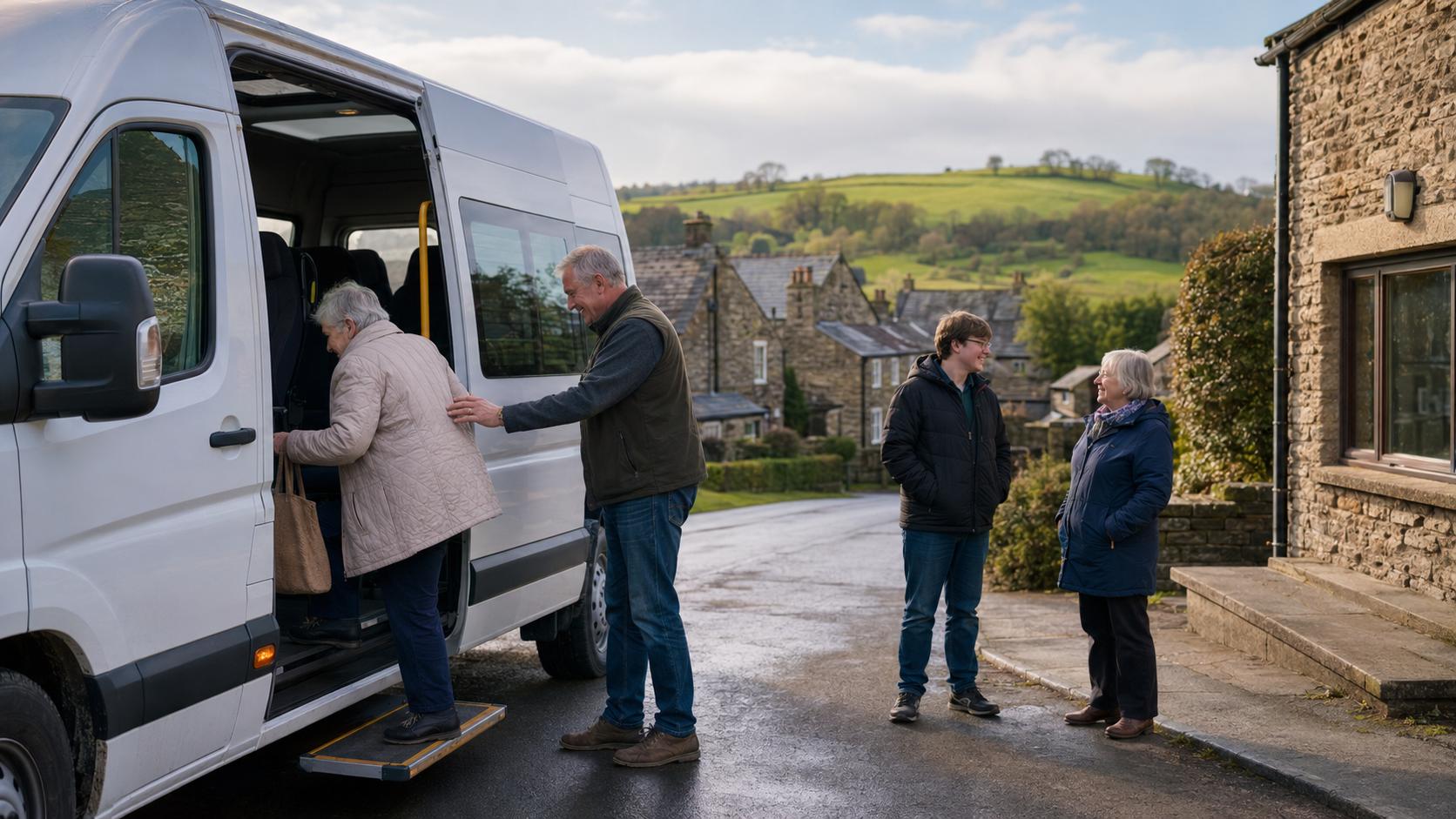
Services are usually door to door, and vehicles are typically minibuses fitted with tail lifts or low-floor access, or volunteers' own cars.
Dial-a-ride is the best-known model.
A dial-a-ride service operates on demand rather than to a fixed timetable. Passengers register in advance, then book individual journeys.
Bookings are usually required some days ahead, and journeys are grouped so that several passengers travelling in a similar direction share a vehicle. That is what keeps costs manageable and is why flexibility on timing helps.
Fares are charged but are generally modest, and some schemes accept concessionary passes or offer their own reduced rates.
Registration usually involves a short assessment of eligibility, which varies between schemes and is typically based on mobility, age or the absence of alternative transport.
Voluntary car schemes fill a different gap.
These use volunteer drivers using their own cars, and are most commonly used for medical appointments, hospital visits and essential trips.
Passengers pay a mileage-based contribution which covers the driver's expenses. Drivers are not paid, and are reimbursed at approved rates.
Volunteers are subject to checks, and schemes carry appropriate insurance arrangements. Drivers frequently accompany passengers into appointments where needed, which is something no bus can offer.
For patients attending regular treatment, these schemes are often the difference between keeping and missing appointments.
Group transport supports organisations.
Many community transport operators also provide minibuses for hire to community groups, clubs, schools and charities.
Some are driven by the operator's own drivers, and some are self-drive, with the hiring group providing a driver who holds the appropriate entitlement.
This is how a great many lunch clubs, youth groups, sports teams and day centres get their members to activities, and it is frequently the least visible part of the sector.
The legal framework matters.
Community transport operates under permits issued under the Transport Act 1985, commonly referred to as section 19 and section 22 permits.
A section 19 permit covers transport for members of a defined group rather than the general public. A section 22 permit covers community bus services available to the public, operated on a not-for-profit basis.
These permits allow organisations to operate without a full public service vehicle operator's licence, subject to conditions. Drivers must hold appropriate entitlement on their licence, which for minibuses depends on when the licence was issued and on the vehicle's weight.
Anyone volunteering to drive should confirm their entitlement rather than assuming.
Funding is the persistent difficulty.
Community transport organisations rely on a mixture of local authority contracts, grants, fares and charitable fundraising.
Reductions in local authority transport budgets have affected the sector directly, at the same time as demand has increased because of commercial route withdrawals.
Vehicle replacement is a particular pressure, since accessible minibuses are expensive and grant funding for capital purchases is limited.
Volunteer recruitment, especially drivers, is the other consistent constraint reported by operators.
How to find a service.
Local authorities maintain information on community transport operating in their area, and most publish contact details on their websites.
The Community Transport Association represents operators nationally and can help identify local provision.
Social prescribing link workers, GP surgeries, carers' centres and Age UK branches are all familiar with local schemes and can point people towards them.
Hospital transport is separate.
Non-emergency patient transport provided by the NHS is a distinct service with its own eligibility criteria, based on medical need rather than on the absence of alternatives.
It is arranged through the hospital or GP, and eligibility is assessed against national criteria. Not everyone who finds travel difficult will qualify.
The Healthcare Travel Costs Scheme provides help with travel costs for patients on qualifying benefits or low incomes, and is claimed at the hospital.
Volunteering is straightforward.
Most schemes need drivers, escorts and telephone booking volunteers, and commitments can be as little as a few hours a week.
Training is provided, expenses are reimbursed, and no specialist background is required for escort or office roles.
For anyone with time and a driving licence, it is among the most directly useful volunteering available, since the effect on an individual passenger is immediate and obvious.
Share your thoughts.
Has your local bus service been reduced, and what do people do instead?
Community News
Community Transport: Getting Around Without a Bus
Where commercial bus routes have been withdrawn, a network of volunteer drivers and community minibuses fills the gap.
Advertisement




Comments (0)
You must be logged in to post comments.
Don't have an account? Register here
No comments yet. Be the first to share your thoughts!