
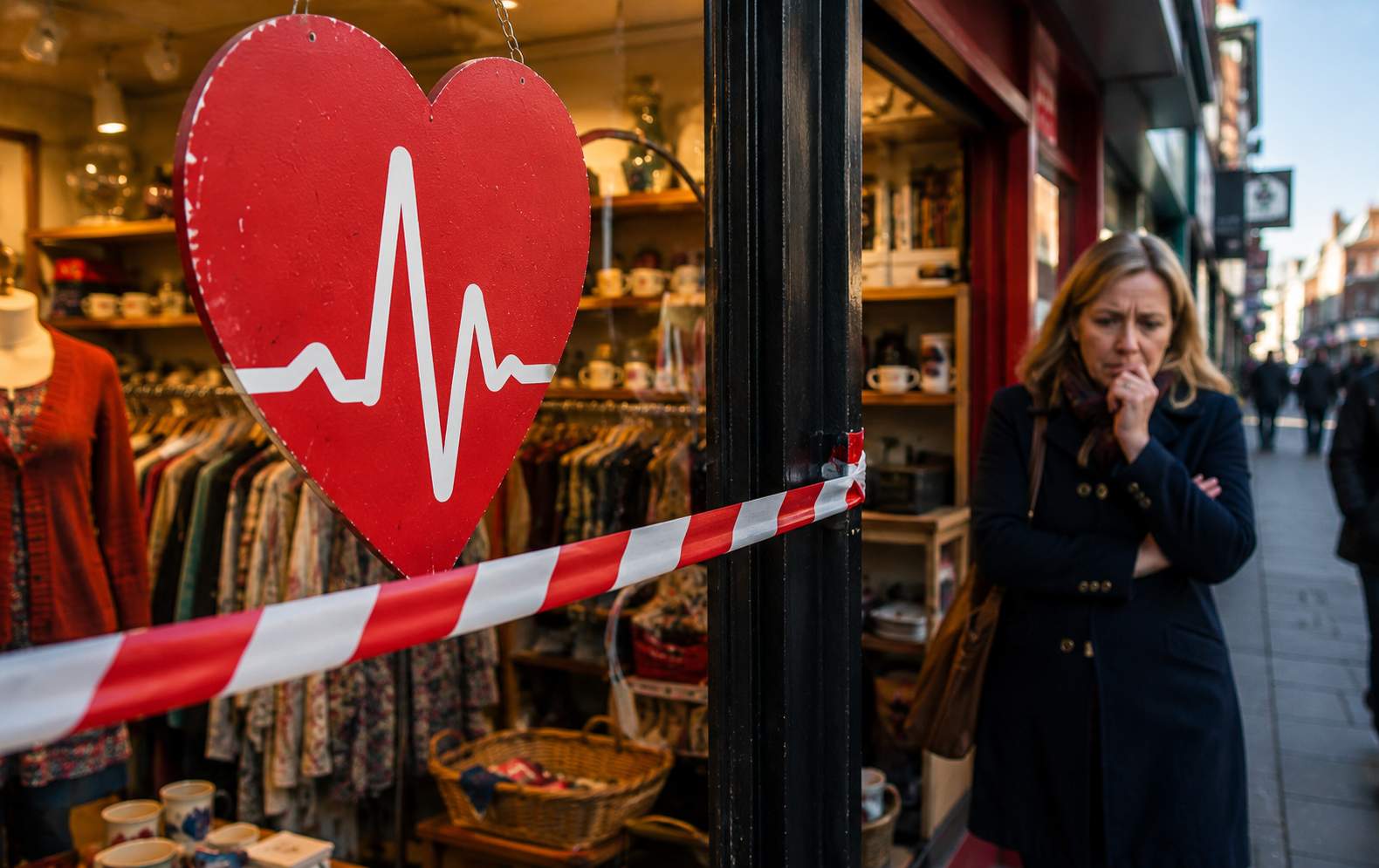
The British Heart Foundation has announced plans to close around 150 charity shops across the UK over the next two years, a move that has sparked concern among shoppers, volunteers and communities who rely on charity retail outlets on high streets across the country.
While the charity has not yet confirmed which specific locations will be affected, the announcement has inevitably raised questions in Newcastle and the wider North East, where British Heart Foundation shops have become familiar fixtures in many town and city centres.
The closures represent nearly a quarter of the charity's retail estate and come at a time when Britain's high streets continue to face significant challenges from rising costs, changing shopping habits and growing competition from online marketplaces.
For many people, charity shops are far more than places to find bargains. They provide affordable goods, support local communities, create volunteering opportunities and generate vital funding for medical research. That is why the British Heart Foundation's decision has attracted attention far beyond the retail sector.
Why Is The British Heart Foundation Closing Shops?.
According to the charity, the decision follows a detailed review of its retail operations and is designed to ensure its long-term financial sustainability.
The British Heart Foundation currently operates around 640 shops across England, Scotland, Wales and Northern Ireland. Under the proposed plans, approximately 90 stores will close by March 2027, with the remaining closures taking place by March 2028.
The charity insists that its overall financial position remains healthy, but says some stores are no longer financially sustainable due to rising operating costs and changing consumer behaviour.
Chief Executive Charmaine Griffiths described the retail environment as "exceptionally challenging" and said difficult decisions were necessary to protect the charity's core mission of funding life-saving cardiovascular research.
For many charities, retail income forms a significant part of overall fundraising efforts. When store profitability declines, organisations are forced to reconsider how resources are allocated.
What Could This Mean For Newcastle?.
Although the British Heart Foundation has not yet published a list of affected stores, the announcement will undoubtedly be watched closely by communities across Newcastle and the North East.
The city has a strong tradition of charity retailing. From Gosforth and Heaton to Byker and the city centre, charity shops have become an important part of local shopping habits.
For many Newcastle residents, charity shops provide affordable alternatives at a time when household budgets remain under pressure.
Students attending Newcastle University and Northumbria University often rely on second-hand furniture, clothing and household goods available through charity retailers.
Families looking to reduce spending increasingly turn to pre-owned goods, while environmentally conscious shoppers are embracing second-hand purchases as part of a more sustainable lifestyle.
If local stores were to be included in future closure plans, the impact could extend beyond simple retail transactions.
The Growing Challenges Facing Charity Retailers.
The British Heart Foundation is far from alone in facing difficulties.
Across the UK, retailers of all sizes are struggling with higher operating costs, increased wage bills, rising rents and ongoing inflationary pressures.
Recent retail industry figures suggest more than 13,000 UK stores closed in a single year, highlighting the continued pressures affecting Britain's town centres.
For charity retailers, the challenge can be even greater.
Unlike traditional retailers, charity shops depend heavily on donated stock. Changes in donation habits, competition from online resale platforms and fluctuations in footfall can all have a direct impact on financial performance.
Many people who once donated unwanted items to local charity shops are now choosing to sell them through online marketplaces such as eBay, Vinted, Facebook Marketplace and Depop.
This shift has reduced the supply of higher-value donations available to some charities while increasing competition for second-hand goods.
The Rise Of Online Resale Platforms.
One of the biggest changes affecting charity retail has been the rapid growth of online second-hand marketplaces.
Over the past decade, platforms dedicated to buying and selling used clothing, furniture and household goods have transformed consumer behaviour.
Many younger shoppers now browse online resale apps before visiting physical stores.
At the same time, donors are increasingly aware that items can often be sold directly rather than donated.
The British Heart Foundation itself has expanded its online retail operations, including sales through its website and eBay store. However, online growth has not entirely offset challenges facing physical locations.
As shopping habits continue evolving, charities are having to balance investment between high street locations and digital platforms.
Why Charity Shops Matter Beyond Retail.
The closure of any charity shop often has consequences that stretch far beyond commercial performance.
For many volunteers, charity shops provide social interaction, routine and a sense of purpose.
According to charity sector research, hundreds of thousands of volunteers support charity retail operations across the UK every year.
Many volunteers are retirees looking to stay active, students seeking experience or individuals returning to employment after periods away from work.
In Newcastle, charity shops frequently serve as community hubs where people meet, donate, browse and support local causes.
Removing these spaces can affect both community cohesion and charitable fundraising.
Heart Disease Remains One Of Britain's Biggest Health Challenges.
One reason the British Heart Foundation is determined to protect its finances is the ongoing scale of cardiovascular disease in the UK.
Heart and circulatory diseases are responsible for around one in four deaths in the UK, claiming approximately 170,000 lives every year.
Every day, hundreds of families across Britain lose loved ones to conditions including heart attacks, strokes and heart failure.
Funding research remains a central part of the British Heart Foundation's work.
The charity has invested billions of pounds into cardiovascular research over several decades, supporting breakthroughs that have helped improve survival rates and treatment options.
Leaders at the organisation argue that ensuring long-term financial sustainability is essential if those efforts are to continue.
The Wider Decline Of The British High Street.
The BHF announcement also reflects broader challenges facing high streets across Newcastle and the UK.
Consumers increasingly split spending between physical stores and online shopping.
Retailers face growing cost pressures while simultaneously competing against global digital platforms.
Banks, fashion retailers, supermarkets and hospitality businesses have all announced closures or restructuring programmes in recent years.
While some businesses continue investing in flagship stores and experiential retail spaces, many organisations are reducing their physical footprints to focus on locations generating stronger returns.
Charity retailers are not immune from these same economic realities.
Could More Charities Follow The Same Path?.
Industry observers believe the British Heart Foundation's announcement may not be the last major restructuring within the charity retail sector.
Cancer Research UK previously announced plans to close dozens of high street locations while investing in larger out-of-town superstores and alternative retail formats.
Other charities continue reviewing store networks as operating costs rise and consumer habits evolve.
Some experts believe the future may involve fewer but larger charity stores, combined with stronger online operations and more specialised donation centres.
That model could allow charities to reduce overheads while maintaining fundraising income.
What Happens Next?.
The British Heart Foundation says details of affected stores will be published once colleagues and volunteers have been informed.
Until then, uncertainty remains for communities wondering whether their local branch could be among those earmarked for closure.
For Newcastle shoppers and donors, the immediate message is clear. Existing stores remain open, donations are still needed and volunteers continue playing a crucial role in supporting the charity's work.
The coming months will reveal whether any North East locations are affected.
Regardless of which stores eventually close, the announcement highlights the rapidly changing nature of Britain's retail landscape and the growing pressures facing even some of the country's most recognised charitable organisations.
The challenge now will be ensuring that vital fundraising continues while adapting to the realities of modern consumer behaviour and a changing high street.
Would you be concerned if your nearest BHF store closed?
Business News
Could Newcastle BHF Shops Close? Charity Announces 150 Shop Shutdowns
Advertisement





Comments (0)
You must be logged in to post comments.
Don't have an account? Register here
No comments yet. Be the first to share your thoughts!