
Since its creation in 1948, the National Health Service has undergone decades of reform in an effort to meet changing healthcare demands, improve patient outcomes and cope with growing financial pressures. From the introduction of GP fundholding and NHS trusts to the latest plans to abolish NHS England, every government has left its mark on Britain's healthcare system.
For people living in Newcastle and the wider North East, many of these reforms have directly influenced how hospitals are managed, how GP services operate and how funding reaches frontline care. Institutions including the Royal Victoria Infirmary, Freeman Hospital and Newcastle's network of GP surgeries have all adapted to changing NHS structures while continuing to serve one of England's largest regional populations.
Today, the NHS in England employs more than 1.5 million people and treats millions of patients every week. With healthcare demand continuing to rise due to an ageing population and increasing rates of long-term illness, reform has remained a constant feature throughout its history.
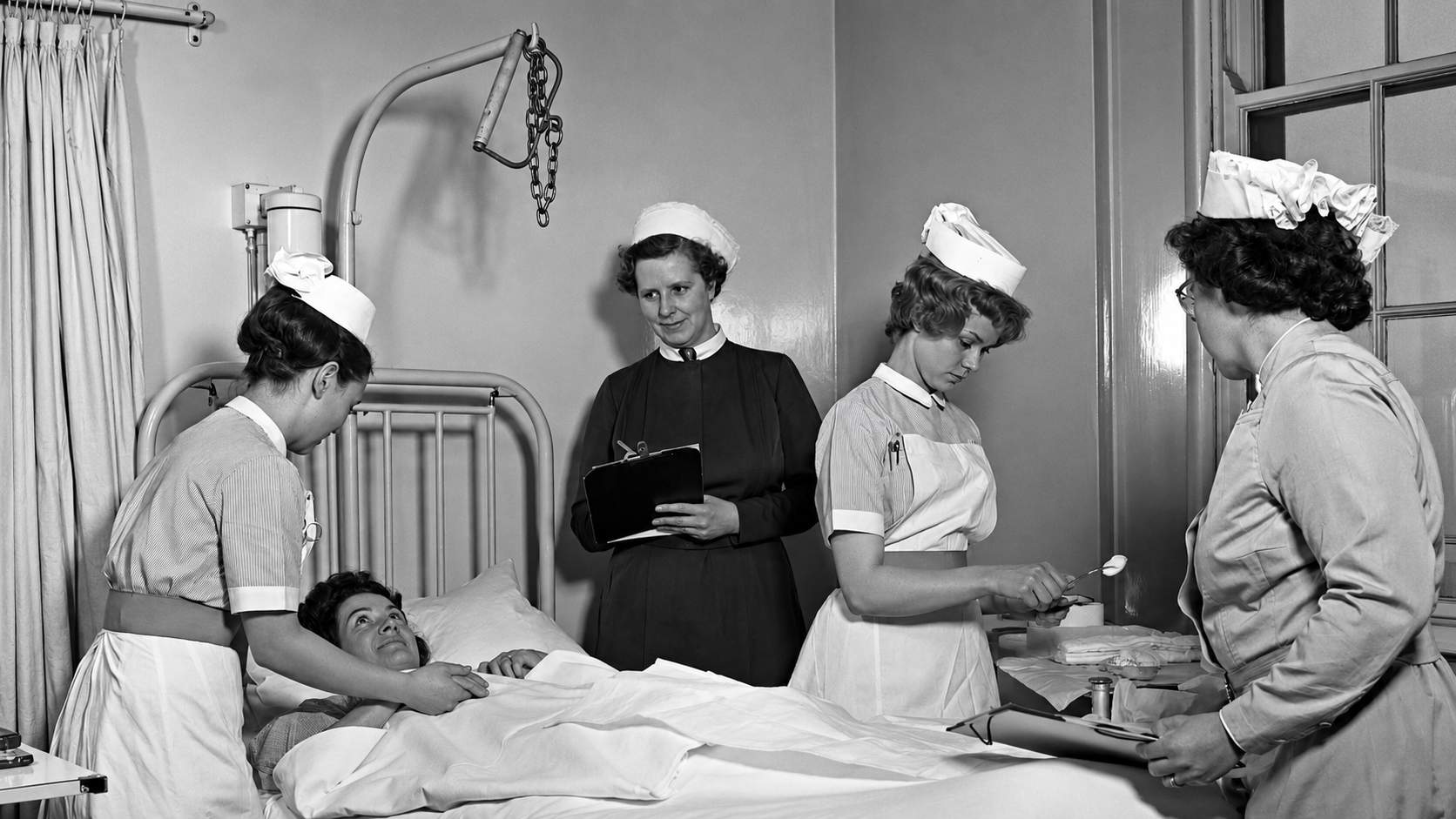
1948 - The NHS is born.
The NHS officially launched on 5 July 1948 under Health Secretary Aneurin Bevan, creating a healthcare system that was free at the point of use for everyone.
Before its introduction, many people paid directly for medical treatment or relied on charitable hospitals and voluntary insurance schemes. The creation of the NHS transformed access to healthcare across Britain.
In Newcastle, hospitals that had previously operated independently became part of the national service, helping establish the city as one of the country's leading centres for specialist medicine and medical research.
During its first year alone, more than 187 million prescriptions were issued in England and Wales, demonstrating the enormous demand for publicly funded healthcare.
1974 - A major NHS reorganisation.
The first significant structural overhaul arrived in 1974.
Hospital services, family practitioner services and local authority health responsibilities were brought together under newly created Regional Health Authorities and Area Health Authorities.
The Government hoped the changes would improve planning and coordination, although critics argued they created additional bureaucracy.
For the North East, regional management became increasingly important as healthcare planning expanded beyond individual hospitals towards coordinated regional services.
1990 - The internal market begins.
The National Health Service and Community Care Act 1990 introduced one of the biggest reforms in NHS history.
Hospitals became NHS trusts with greater operational independence, while GP fundholding allowed some practices to purchase services directly for their patients.
The reforms created what became known as the NHS internal market, separating organisations that commissioned healthcare from those providing it.
Supporters believed competition would improve efficiency, while opponents argued it increased administrative costs.
1997 - Labour focuses on investment.
Following the 1997 General Election, the new Labour Government increased NHS spending significantly while reducing emphasis on internal competition.
National waiting time targets were introduced, along with substantial investment in hospitals, staffing and equipment.
Between 2000 and 2010, NHS funding almost doubled in real terms.
For Newcastle, this period saw major investment in hospital facilities and improvements to specialist services, particularly through Newcastle upon Tyne Hospitals NHS Foundation Trust.
2004 - Foundation trusts arrive.
The Health and Social Care Act introduced NHS foundation trusts, giving successful hospitals greater financial and managerial independence.
Hospitals meeting performance standards could retain financial surpluses and make more local decisions.
Newcastle Hospitals later became one of England's largest and most respected foundation trusts, providing specialist treatment across the North East and attracting patients from across the UK.
Today, Newcastle Hospitals employs approximately 18,000 staff and treats hundreds of thousands of patients every year.
2012 - The biggest reform for a generation.
The Health and Social Care Act 2012 represented another fundamental restructuring.
Primary Care Trusts and Strategic Health Authorities were abolished, while Clinical Commissioning Groups assumed responsibility for commissioning most local healthcare services.
NHS England was also created to oversee the commissioning system and provide national leadership.
The reforms were intended to increase local decision making and improve patient choice, although they remained controversial due to their scale.
Across Newcastle and Northumberland, new commissioning arrangements reshaped relationships between hospitals, GPs and community services.
2022 - Integrated Care Systems take over.
Integrated Care Systems became statutory organisations in July 2022.
Integrated Care Boards replaced Clinical Commissioning Groups and brought together NHS organisations, councils and wider public services to improve cooperation.
The North East and North Cumbria Integrated Care Board now oversees healthcare planning for around three million people, making it one of England's largest integrated health systems.
The aim is to improve cooperation between hospitals, mental health providers, GP practices and local authorities rather than encouraging organisations to work independently.
2026 - NHS England set to be abolished.
The latest Health Bill proposes one of the most significant changes since 2012.
Under Government plans, NHS England would be abolished, with most of its responsibilities transferred directly to the Department of Health and Social Care.
Ministers argue the move will simplify national leadership, reduce duplication and strengthen accountability by creating a single national organisation responsible for healthcare oversight.
Many operational decisions would instead be delegated to Integrated Care Boards, giving local NHS leaders greater responsibility for delivering services that reflect regional priorities.
For Newcastle, this could mean more flexibility for local decision makers to address challenges including waiting lists, ageing populations and persistent health inequalities.
Why reform never stops.
Healthcare is constantly evolving.
Medical advances, changing population demographics and increasing demand mean governments regularly review how the NHS operates.
According to NHS England, hospitals in England provide millions of outpatient appointments every month, while GP practices deliver well over 300 million appointments annually. At the same time, an ageing population means more people are living with multiple long-term conditions requiring ongoing treatment rather than one-off care.
These pressures have encouraged successive governments to search for ways to improve productivity without compromising patient care.
The North East continues to face unique challenges.
Although Newcastle is home to internationally recognised hospitals and research institutions, the region continues to experience significant health inequalities.
Office for National Statistics data shows healthy life expectancy remains lower in several North East communities than the national average, while higher levels of deprivation contribute to increased rates of heart disease, respiratory illness and certain cancers.
This makes local decision making particularly important, allowing NHS organisations to tailor services around regional needs rather than relying entirely on national priorities.
Healthcare leaders hope greater local flexibility could support more preventative care, improve access to community services and reduce long-term pressure on hospitals.
The next chapter for the NHS.
The NHS has never remained static.
Every generation has witnessed reforms aimed at improving healthcare delivery, reducing bureaucracy or responding to changing public expectations. While opinions differ on whether each restructuring has achieved its objectives, the service has continued to evolve alongside advances in medicine and changing patient needs.
If Parliament approves the Health Bill 2026, the abolition of NHS England will become another defining moment in the history of Britain's healthcare system. Whether it delivers simpler management, stronger local decision making and better outcomes for communities such as Newcastle will become clear only over the years ahead, as the latest reforms move from legislation into everyday healthcare delivery.
Share your thoughts.
Which NHS reform do you believe has had the biggest impact on Newcastle and the North East?
Health News
Every NHS Reform Since 1948 Explained
Advertisement





Comments (0)
You must be logged in to post comments.
Don't have an account? Register here
No comments yet. Be the first to share your thoughts!