
A licensed venue in Newcastle can be trading normally on a Friday and closed by the following month. It happens rarely, but it does happen, and when it does the process that produced the result has usually been running quietly for some time behind the scenes.
Licensing is one of the least understood areas of local government despite affecting almost everyone's leisure time. It is not a matter of council officers deciding they dislike a venue. It is a statutory framework with defined objectives, defined participants and a formal appeal route, and understanding it explains a great deal about why some venues survive serious incidents and others do not.
Everything turns on four objectives.
The licensing regime in England and Wales is built on four statutory objectives, and every decision must be justified by reference to at least one of them. They are the prevention of crime and disorder, public safety, the prevention of public nuisance, and the protection of children from harm.
That list is exhaustive. A licensing committee cannot refuse or restrict a licence because there are already enough pubs, because the applicant is unpopular, or because councillors think a different kind of business would suit the street better. Objections that do not connect to one of the four objectives carry no weight, which is the single most common reason residents' objections fail.
Each venue holds a premises licence setting out what it may do, when, and under what conditions. Conditions are the detail that matters: door supervisor numbers, CCTV specifications and retention periods, last entry times, drinks promotions restrictions, noise limits, dispersal arrangements and requirements around glass, plastic and outdoor areas.
Every premises licence also names a designated premises supervisor, a personal licence holder responsible for day-to-day operation, and changes to that person must be notified.
Reviews are the mechanism that bites.
The route to losing a licence is a review. Any responsible authority, which includes the police, environmental health, trading standards, the fire service, planning, safeguarding and public health, can apply for one. So can any other person, which since a change in the law means individual residents and residents' groups can apply directly rather than needing to persuade a body to act for them.
A review application must set out the grounds by reference to the licensing objectives, and it triggers a public notice period during which others can make representations. The application then goes before the licensing sub-committee, a small panel of councillors who hear from the applicant, the licence holder and anyone who has made a representation.
The panel has a graduated set of options. It can decide to take no action. It can modify the conditions, which is by far the most common outcome and can involve significant new requirements. It can exclude a licensable activity, for example removing late-night refreshment or live music. It can remove the designated premises supervisor. It can suspend the licence for up to three months. Or it can revoke it entirely.
Revocation is the last resort and generally follows either a very serious single incident or a documented pattern of failure where earlier conditions have not produced improvement.
Summary reviews move fast.
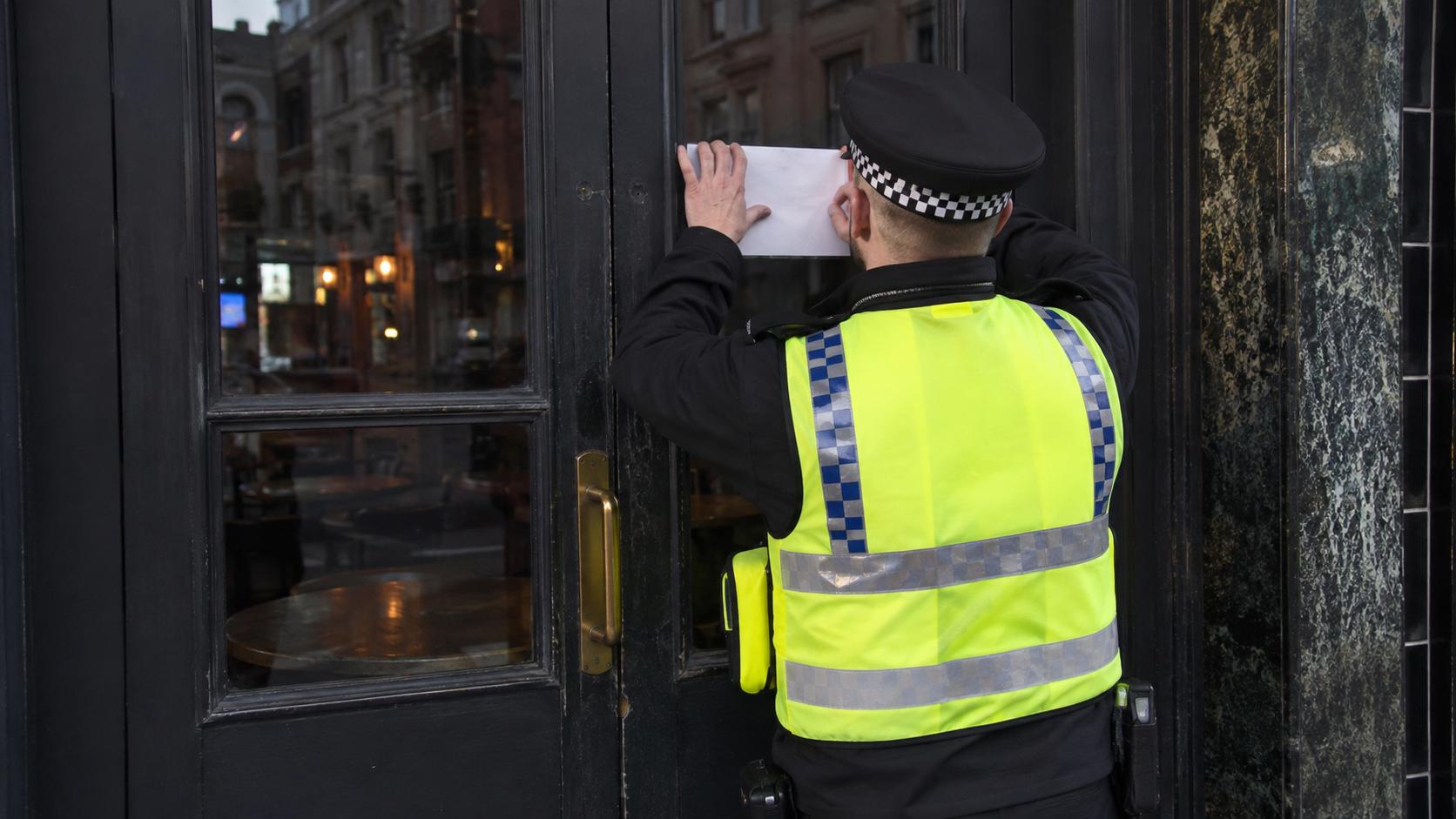
Where serious crime or serious disorder is involved, the police can apply for a summary review, which is a considerably faster process. The licensing authority must consider interim steps within forty-eight hours of receiving the application, and those steps can include immediate suspension of the licence pending the full hearing.
This is the mechanism behind venues that close abruptly after a stabbing, a serious assault or a drugs incident. The full review follows within weeks, but the interim step can take effect almost immediately.
Cumulative impact changes the starting point.
Licensing authorities can adopt a cumulative impact assessment for areas where the concentration of licensed premises is judged to be undermining the licensing objectives. Where one applies, the effect is to shift the presumption: new applications or significant variations in that area start from a position of refusal unless the applicant can demonstrate that their premises will not add to the problem.
Newcastle's city centre nightlife is concentrated in a relatively small area, which makes cumulative impact a live consideration in a way it is not in most towns. It is worth understanding that these assessments are reviewed periodically and are based on evidence including crime, ambulance and noise complaint data.
Test purchasing and underage sales.
Selling alcohol to someone underage is one of the fastest routes to trouble, and licensing authorities and police carry out test purchase operations using volunteers under eighteen. A failure typically produces a fixed penalty or prosecution for the individual who made the sale, and repeated failures produce a review of the premises licence.
The same applies to other age-restricted products where relevant, and to the sale of alcohol outside permitted hours.
Appeals go to the magistrates.
A licence holder unhappy with a decision, and equally an objector unhappy with one, can appeal to the magistrates' court within twenty-one days. The magistrates rehear the matter rather than simply reviewing the council's reasoning, and they can substitute their own decision.
Appeals are expensive and carry a costs risk, which is why many licence holders negotiate conditions with the police and environmental health before a hearing rather than fighting one. A substantial proportion of review applications are resolved by agreement, with the venue accepting conditions in exchange for the application being withdrawn or narrowed.
What residents should know.
Objections work best when they are specific, evidenced and tied to the objectives. Dates, times, noise diary entries, photographs and incident logs carry weight. Generalised statements about the area being ruined do not.
Licensing decisions and hearing papers are public, and anyone can see what is being applied for near them. Registering an interest early is considerably more effective than complaining after a licence has been granted.
Share your thoughts.
Does Newcastle get the balance right between a thriving nightlife and the residents who live alongside it?
Crime News
How a Newcastle Pub or Club Loses Its Licence
Advertisement




Comments (0)
You must be logged in to post comments.
Don't have an account? Register here
No comments yet. Be the first to share your thoughts!