
Thousands of struggling families across Newcastle are relying on food banks to survive as rising living costs continue to push more households into financial hardship.
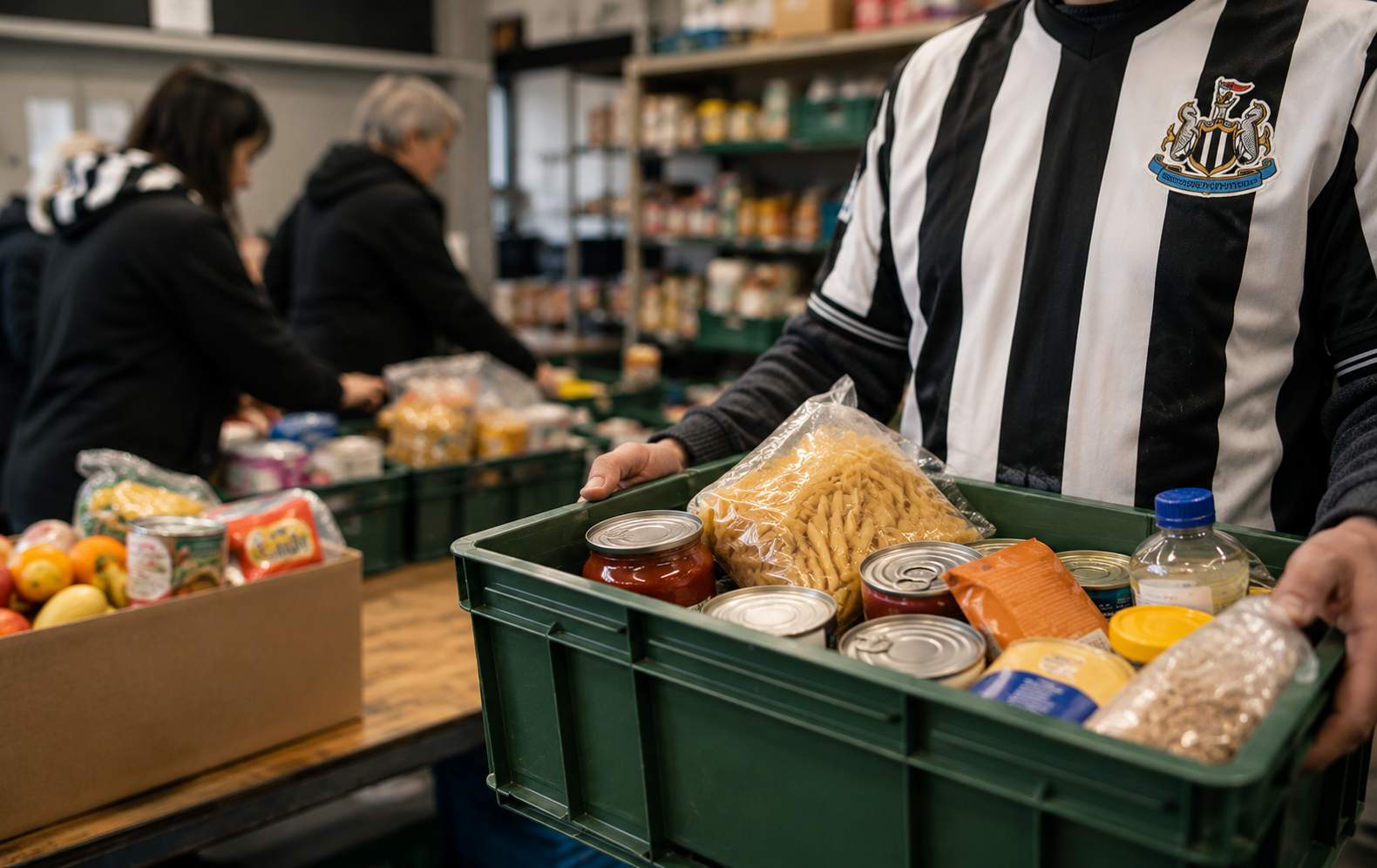
Volunteers at Newcastle United Fans Foodbank have now raised more than £140,000 to help feed vulnerable residents across the city, but campaigners warn the growing level of demand highlights a far deeper problem facing communities throughout the North East.
The fundraising total, boosted by donations from supporters outside St James’ Park and matched by Newcastle United co-owner Jamie Reuben, is enough to cover an entire year’s worth of food costs for Newcastle Foodbank.
While volunteers described the achievement as incredible, they also admitted the reality behind the figures is deeply worrying.
The charity currently supports up to 1,200 people every single week, including children, pensioners and working families who simply cannot afford enough food.
Campaigners say Newcastle’s food poverty crisis is no longer limited to the unemployed or homeless. Increasingly, families with jobs are turning to food banks because wages, benefits and pensions are failing to keep up with rising prices.
Newcastle Families Struggling to Afford Basic Food.
Across Newcastle, more residents are facing impossible decisions between heating their homes, paying rent or buying enough food.
Volunteers working on the frontline say the cost of living crisis has fundamentally changed who uses food banks.
Many people arriving for emergency support are in work, while others are pensioners, disabled residents or parents already receiving benefits.
Rising supermarket prices have made everyday essentials increasingly unaffordable for households already under pressure from rent increases, energy bills and council tax costs.
Campaigners say many people seeking support are embarrassed because they never imagined they would need help feeding their families.
Newcastle Foodbank volunteers have reported seeing more first-time users over the past year as financial pressures continue to intensify across the city.
Local charities also warn that food insecurity is becoming normalised among children in parts of Newcastle where poverty levels remain stubbornly high.
Some schools across the region are already providing breakfast clubs and emergency food parcels because teachers know pupils are arriving hungry.
Community groups say this should not be happening in one of the world’s wealthiest countries.
Football Fans Raise Huge Amount for Newcastle Foodbank.
Against that difficult backdrop, Newcastle United supporters have once again stepped up to support struggling residents.
Volunteers from Newcastle United Fans Foodbank spent the season collecting donations outside St James’ Park on matchdays, continuing a campaign that has become part of the club’s wider community identity.
This year alone, fans raised around £73,000 through bucket collections and donations.
That figure was then matched by Newcastle United co-owner Jamie Reuben, taking the overall total beyond £140,000.
Co-founder Bill Corcoran praised supporters for their generosity and commitment to helping vulnerable people across the city.
He said the money raised would comfortably cover the £118,000 Newcastle Foodbank spent on food over the previous year.
However, he stressed that while the fundraising achievement is remarkable, the continued need for food banks remains deeply troubling.
“We can’t have starvation going on in this city unchallenged,” he said.
Corcoran also thanked the thousands of Newcastle supporters who have continued backing the initiative year after year.
Next season will mark the group’s 10th campaign supporting the food bank.
While organisers are proud of what has been achieved, many admit they wish food banks were no longer needed at all.
Benefits and Wages Failing to Keep Up.
Campaigners across Newcastle say one of the biggest drivers behind food poverty is the growing gap between incomes and living costs.
Many residents receiving Universal Credit or other benefits say payments no longer cover basic essentials.
Charities argue support levels have failed to keep pace with inflation, particularly after major rises in food and energy prices over recent years.
At the same time, low-paid workers are also struggling.
Even households with full-time employment are increasingly relying on food banks because wages are not stretching far enough to cover rent, transport and supermarket bills.
For families with children, the situation can become even more severe during school holidays when free school meals are unavailable.
Community leaders say demand for emergency food support now reflects wider failures within the economy and welfare system.
Food banks were originally designed as short-term emergency help, but many charities now support people for extended periods because underlying financial problems remain unresolved.
Rising Global Tensions Could Push Prices Higher.
Volunteers have also warned international events could place even more pressure on struggling households in Newcastle.
Concerns have been raised about global instability, including conflict involving Iran and disruption around the Strait of Hormuz, potentially increasing fuel and transport costs worldwide.
If global supply chains are affected, charities fear food prices in UK supermarkets could rise further during the coming months.
For families already struggling to cope, even small increases in grocery bills could have serious consequences.
Food bank organisers say they are particularly worried about winter demand later this year if prices continue rising while incomes remain largely unchanged.
Many charities are already preparing for the possibility of another difficult period across Newcastle and the wider North East.
Food Banks Becoming Lifeline for Communities.
Despite the difficult circumstances, food banks across Newcastle continue to play a vital role supporting vulnerable residents.
Volunteers provide not only food parcels but also emotional support, advice services and a sense of dignity for people facing hardship.
Community organisations say many residents would face genuine hunger without their help.
The atmosphere at Newcastle Foodbank is often described as compassionate rather than transactional, with volunteers understanding the emotional strain many visitors experience.
However, campaigners insist charities should not be expected to carry the burden alone.
Many believe stronger action is needed from government to tackle the root causes of poverty, low pay and rising living costs.
Others argue supermarkets and energy companies should also do more to help struggling communities.
The debate around food poverty is likely to remain a major issue across Newcastle as demand for support continues rising.
Newcastle Communities Continue Supporting Each Other.
Despite the challenges, the response from Newcastle residents has shown the strength of community spirit across the city.
Football supporters, local businesses and volunteers have all contributed towards helping vulnerable families during difficult times.
Campaigners say the generosity shown by Newcastle United fans proves people still care deeply about protecting neighbours from hunger and hardship.
Yet many also believe the continued existence of food banks on such a large scale raises uncomfortable questions about modern Britain.
For some volunteers, the biggest success would ultimately be reaching a point where emergency food aid is no longer necessary.
Until then, Newcastle’s food banks continue operating on the frontline of a growing social crisis affecting thousands of families every week.
Do you think enough is being done to tackle food poverty in Newcastle and across the North East? Share your thoughts in the comments below.
Local News
Newcastle Food Banks Under Pressure as Food Poverty Deepens.
Advertisement




Comments (0)
You must be logged in to post comments.
Don't have an account? Register here
No comments yet. Be the first to share your thoughts!