
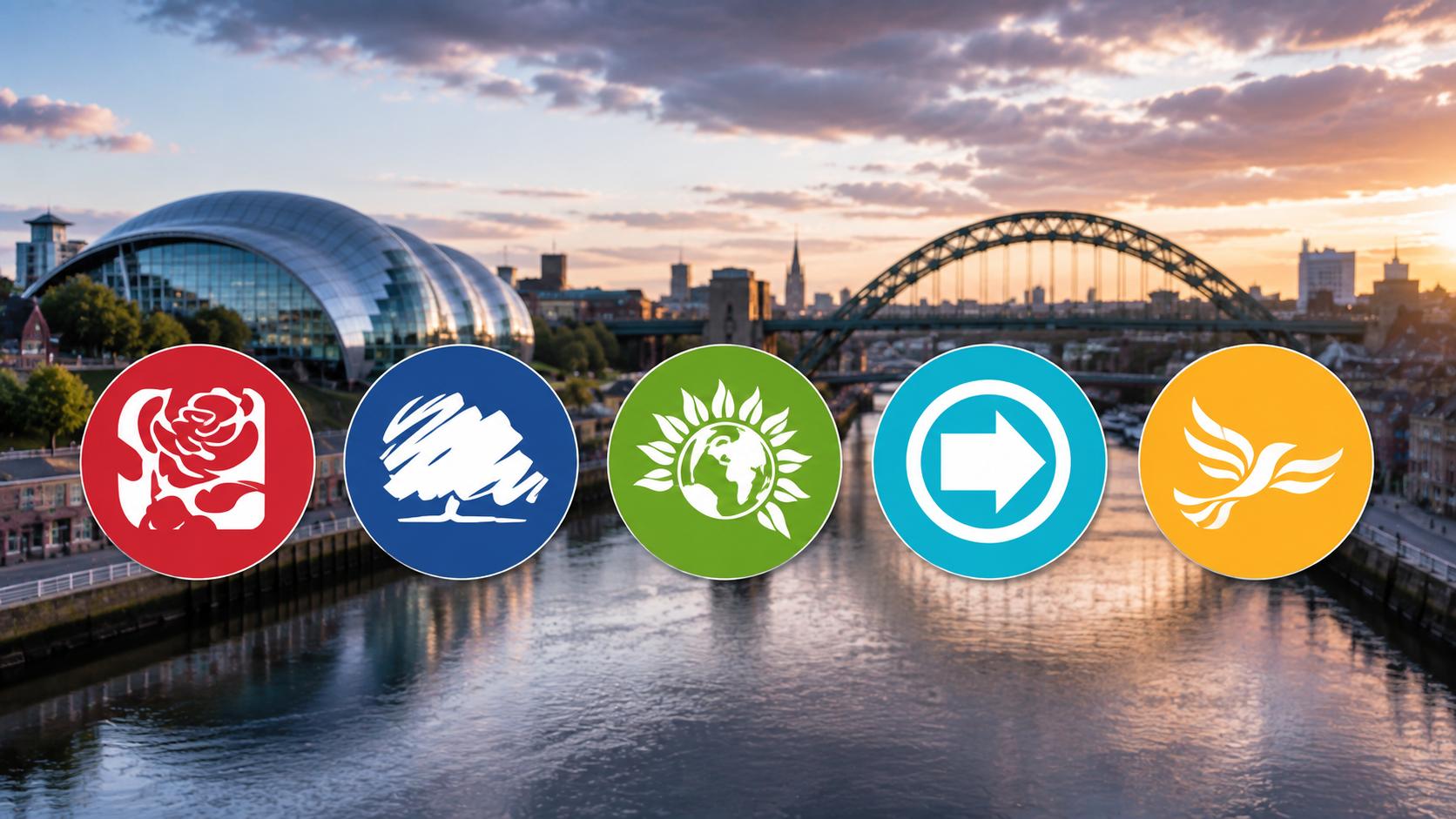
Labour has historically been the dominant political force in Newcastle city politics, with deep roots stretching back to the city's industrial trade union movement and figures like T. Dan Smith who led the council through its most transformative post-war decades. Labour's traditional base has centred on the city's working-class communities, though its overall level of electoral dominance has fluctuated considerably in more recent local elections.
The Liberal Democrats have long represented Newcastle's most consistent electoral challenge to Labour, historically drawing particular strength from areas including Jesmond and other more affluent parts of the city. The party's local strength has traditionally rested on a reputation for detailed local campaigning and constituency casework, alongside broader national policy positions favouring electoral reform, civil liberties and, historically, closer engagement with the European Union.
The Green Party has built a growing local presence across Newcastle in recent years, winning council seats in wards including parts of the city where environmental and climate concerns resonate particularly strongly with local voters. Nationally, the party campaigns on environmental protection, action on climate change and a broader social justice agenda, positions that have increasingly translated into genuine electoral success within specific Newcastle wards.
The Conservative Party maintains a considerably smaller presence within Newcastle city politics specifically compared with its position in some more rural parts of Northumberland and County Durham, though it remains an active political force locally, generally emphasising lower taxation, reduced regulation and a broadly smaller role for the state in economic and social affairs across its typical policy platform.
Reform UK has emerged as a genuinely significant new force across North East politics in recent years, gaining council seats and growing support across the wider region, including within Newcastle itself, with policy positions generally centred on reduced immigration, scepticism toward net-zero climate policies, and a broader critique of what the party describes as establishment politics across both traditional major parties.
Independent candidates have also gained meaningful ground in Newcastle local elections recently, with voters increasingly willing to back candidates specifically focused on local issues over national party allegiance. This growth in independent representation reflects a wider national trend, with local campaigners often citing frustration with national party politics as a significant factor driving voters toward independent local alternatives instead.
Newcastle City Council operates under a Leader and Cabinet model, meaning the party or coalition holding the largest number of council seats typically forms the administration and selects a council leader to head it, with other parties and independents then forming the opposition. Council control has shifted at various points across recent years as the traditional balance of political power across Newcastle has continued to evolve.
Newcastle's political geography has also shifted over time through boundary changes, with the city divided across several distinct parliamentary constituencies whose specific names and boundaries have periodically been redrawn to reflect population changes, meaning residents should always check their current specific constituency rather than assuming historic boundaries from previous decades still apply exactly as they once did.
Smaller parties and independent single-issue candidates also regularly stand in Newcastle elections, sometimes focused on genuinely hyper-local concerns specific to a single ward, and while these smaller campaigns rarely secure overall council control, they can still meaningfully influence local debate and occasionally hold the balance of power in specific wards where the larger parties' support runs particularly close.
Understanding this changing local political landscape matters for any Newcastle resident wanting to engage properly with local democracy, since council control genuinely shapes decisions on local services, housing, planning and council tax that directly affect residents' everyday lives.
Checking each party's specific local manifesto commitments ahead of any election remains the most reliable way to understand exactly what a vote for each option would actually mean in practice.
National party membership figures and local polling can shift considerably between elections, meaning the balance of power among Newcastle's parties should never simply be assumed to remain fixed from one election to the next. Staying informed through local news coverage remains the most reliable way to track exactly how that balance continues to shift.
Newcastle's political story, much like the wider North East, continues to be shaped by exactly this kind of steady, ongoing change. That evolving balance is precisely what makes Newcastle's local politics genuinely worth following closely.
Share your views.
Which political party do you feel best represents Newcastle?
Political News
Newcastle's Main Political Parties: Who They Are and What They Stand For
Newcastle's political landscape has shifted considerably in recent years, with newer parties challenging the traditional dominance long enjoyed by Labour across the city.
Advertisement


Comments (0)
You must be logged in to post comments.
Don't have an account? Register here
No comments yet. Be the first to share your thoughts!