
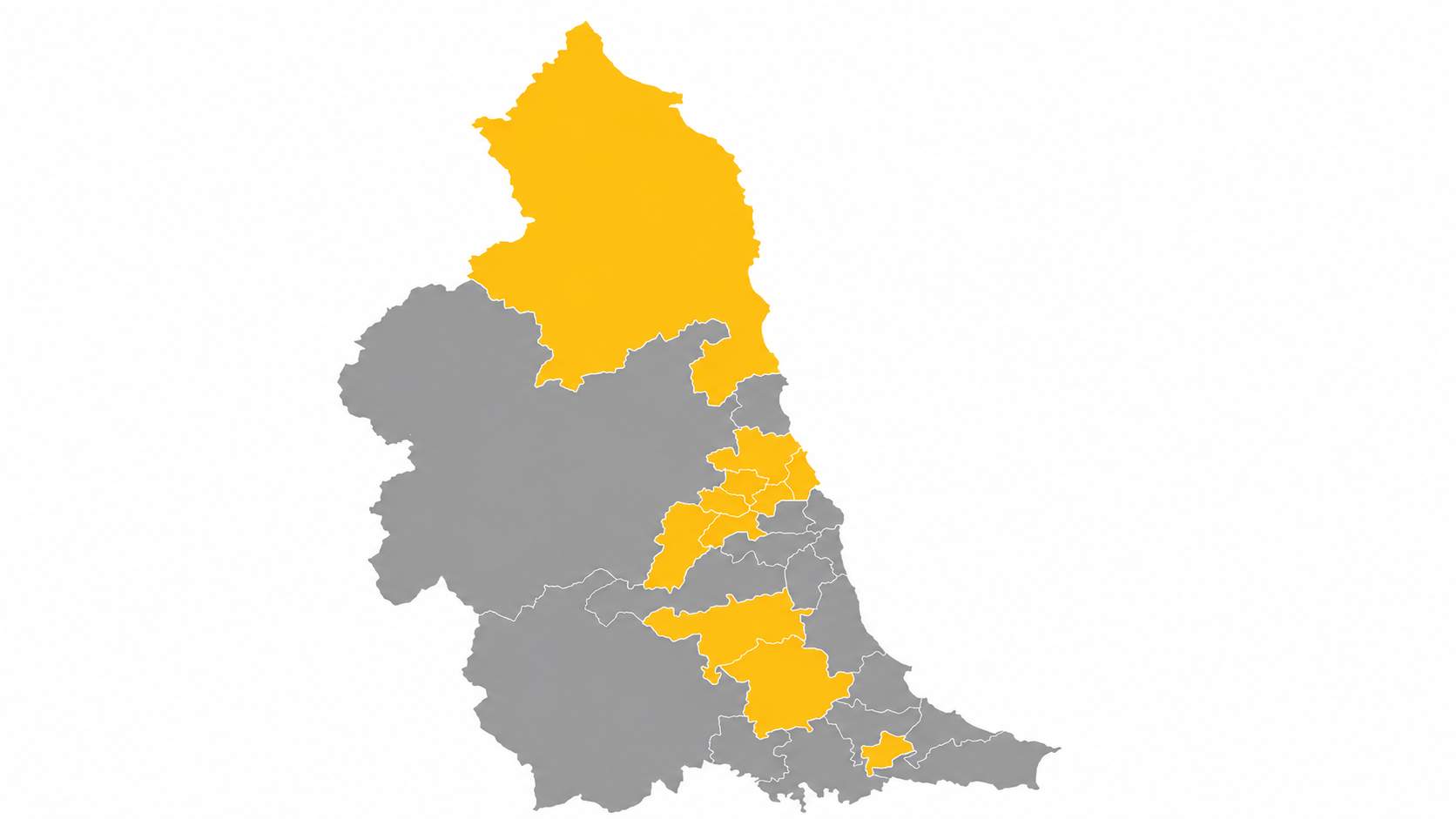
Barely three months have passed since voters across much of the North East went to the polls, but a number of councillors elected in May have already stopped representing the parties whose names appeared alongside theirs on the ballot paper.
From Newcastle to Gateshead, Sunderland and South Tyneside, at least five councillors elected on May 7, 2026 can currently be identified as having either resigned their council seat completely or ceased representing the political party for which they were elected.
The departures are particularly striking because of how dramatically the May elections changed the political landscape of the North East. Reform UK made major gains, while Newcastle returned an unusually divided council containing large Liberal Democrat, Green and Reform groups.
Two of the five changes have occurred in Newcastle itself.
Newcastle councillors among the first changes.
Newcastle elected all 78 councillors under new ward boundaries in May. The result produced an exceptionally fragmented council, with the Liberal Democrats winning 25 seats, Reform UK 24, the Greens 24, independents three and Labour just two. No party reached the 40 seats required for an overall majority.
One of the first changes came in Arthur's Hill.
Mohammed Suleman was elected as one of three Green councillors for the ward, receiving 1,220 votes. However, council change records subsequently recorded him moving from the Green Party to independent status on May 17, less than two weeks after polling day. Newcastle council documents later listed Suleman as Independent/Unaligned.
That means the original Newcastle election result had already changed before the new administration had settled into its first full months.
A second and more significant vacancy followed in July when Reform UK's Amy Hunter resigned as a councillor for Throckley, Walbottle and Newburn.
Hunter had received 1,297 votes in May, joining fellow Reform candidates Richard Barnes and Michael Fitzpatrick in taking all three seats in the ward. Her resignation created an outright vacancy rather than simply changing the political balance. Reports at the time said her health and work commitments had changed abruptly.
Gateshead councillor lasted less than two weeks.
One of the quickest departures happened just across the River Tyne in Gateshead.
Danielle Cavanagh was elected for Reform UK in High Fell with 1,098 votes on May 7. Yet less than two weeks later, her resignation was announced.
Reform said Cavanagh's business commitments had expanded significantly during the latter stages of the election campaign and that she could no longer give the councillor role the time it required.
Her departure triggered a High Fell by-election on July 9. Reform retained the seat, but only narrowly. Its candidate received 564 votes compared with Labour's 559 - a margin of just five votes. Reform took 40.1 per cent of the vote, down 4.9 percentage points compared with the May contest.
That five-vote margin provides an interesting indication of just how competitive some North East wards can become when an unexpected vacancy sends voters back to the polls.
South Tyneside resignation followed Reform landslide.
South Tyneside produced one of the most dramatic results anywhere in the region in May.
Reform won 41 of the council's 54 seats, while the Greens secured 10, independents two and Labour was reduced to just one councillor. Overall turnout was 43.8 per cent.
But one of those newly elected Reform councillors did not remain in office for long.
Alex Clarke was elected in Harton with 1,136 votes, alongside Reform colleagues Shaun Barclay and Jim Mouat. Clarke subsequently resigned from South Tyneside Council in June. He said the councillor's job had been "mis-sold" to him and claimed he had understood that the commitment would involve attending only a small number of meetings. His departure followed separate controversy concerning comments attributed to him on a podcast.
South Tyneside Council confirmed that his resignation resulted in a Harton by-election being called for August 6.
Sunderland councillor now listed as independent.
Sunderland provides the fifth confirmed case.
Glenn Gibbins was elected for Reform UK in Hylton Castle in May. Sunderland City Council's own membership records show that his Reform representation ran from May 11 until July 29.
From July 30, his political affiliation changed to independent. Unlike Cavanagh, Clarke and Hunter, Gibbins remained a councillor.
The change followed Gibbins being charged with an offence under the Communications Act 2003 relating to an allegedly grossly offensive social media post. He has been charged, not convicted, and criminal proceedings are ongoing.
Council records provide a particularly clear timeline in his case, showing Reform UK representation ending on July 29 and independent representation beginning the following day.
Five councillors and three vacant seats.
Taken together, the figures show five councillors elected in May who subsequently stopped representing the party they stood for.
Three - Danielle Cavanagh in Gateshead, Alex Clarke in South Tyneside and Amy Hunter in Newcastle - resigned their council seats completely.
Two - Mohammed Suleman in Newcastle and Glenn Gibbins in Sunderland - remained councillors but became independents.
That means 60 per cent of the five cases resulted in a council vacancy, while 40 per cent involved councillors continuing in office without their original party affiliation.
Four of the five were elected as Reform UK candidates, while one was elected for the Green Party.
It is worth keeping those figures in perspective. Newcastle alone elected 78 councillors in May, while South Tyneside returned 54. Five departures or changes therefore represent only a small proportion of the hundreds of councillors serving across the wider region. What makes them politically noteworthy is the speed with which they occurred following a local election that dramatically reshaped several North East councils.
Why changing party does not automatically trigger an election.
There is also an important distinction for voters.
When a councillor resigns their actual council seat, a vacancy can normally result in a by-election. However, simply leaving a political party does not automatically mean voters get another say.
A councillor can generally leave the party under whose banner they were elected and continue serving as an independent, or potentially join another political group, until the next scheduled election.
That distinction explains why Newcastle's Mohammed Suleman and Sunderland's Glenn Gibbins can continue serving their wards despite no longer representing the parties they represented following May's election.
With North East politics experiencing one of its biggest periods of change in decades, the movements will inevitably fuel a wider debate about whether voters primarily elect an individual councillor or the party name printed next to them on the ballot paper.
Share your thoughts.
Should party-switching trigger a by-election?
Political News
North East Council Shake-Up Just Months After Election
Advertisement


Comments (0)
You must be logged in to post comments.
Don't have an account? Register here
No comments yet. Be the first to share your thoughts!