
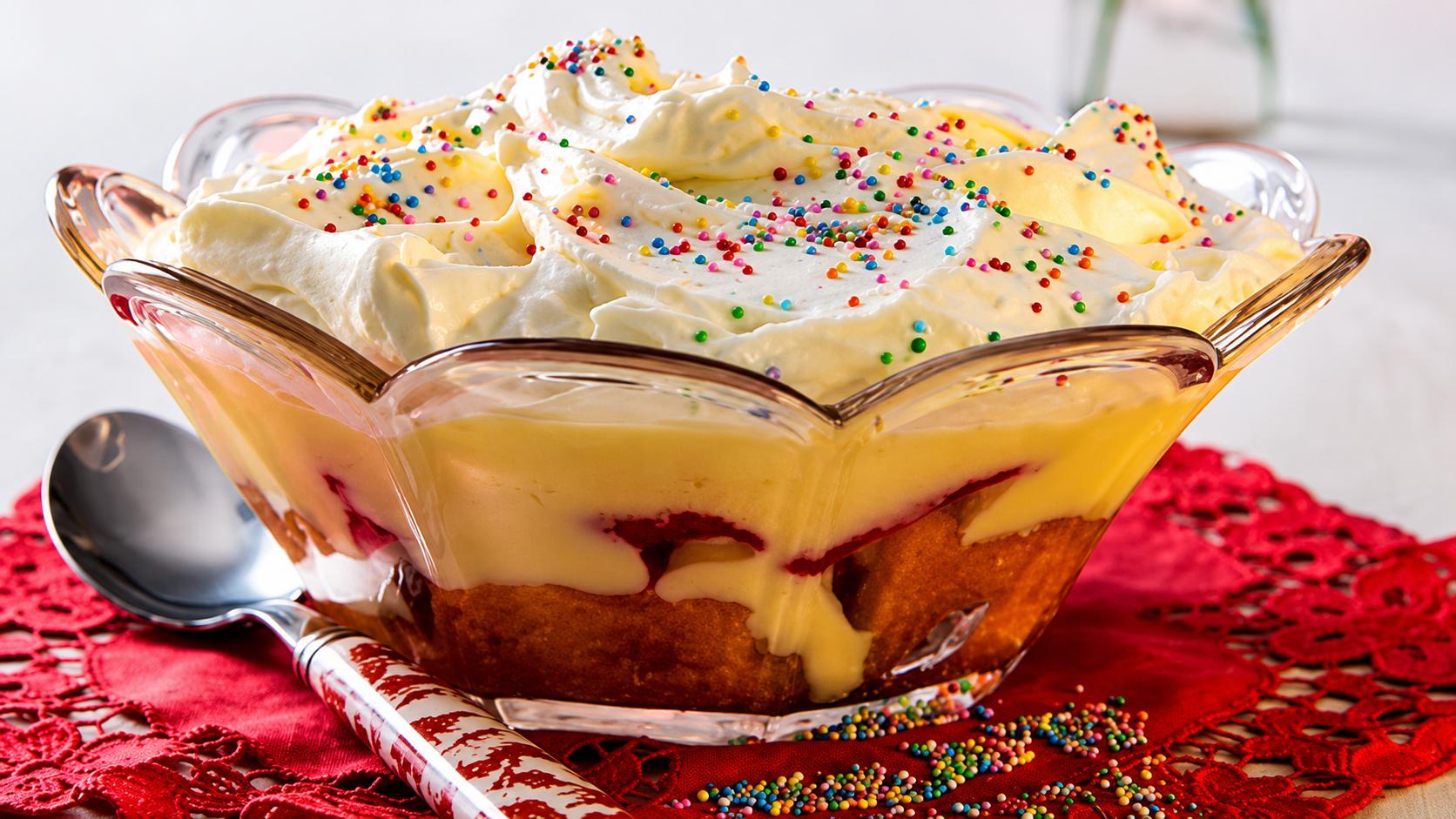
Sherry trifle, the classically British layered dessert combining sponge cake, fruit, custard, jelly and cream, typically soaked in sherry, has held a genuinely cherished place on British dinner tables for centuries, particularly associated with festive celebrations including Christmas, though it remains popular as a dessert choice throughout the entire year.
From Simple Flavoured Cream to Layered Dessert.
The earliest documented trifle recipes date back to the sixteenth century, though these early versions bore relatively little resemblance to the elaborately layered dessert recognised today, initially consisting of little more than thick cream flavoured with sugar, rosewater and ginger, considerably simpler than the multi-layered creation that eventually developed over the following centuries.
By the eighteenth century, trifle had evolved considerably, with recipes increasingly incorporating sponge cake or biscuits soaked in alcohol, typically sherry or a similar fortified wine, layered alongside custard and jelly, gradually establishing the essential structure recognised as a proper trifle today, reflecting the dish's genuine evolution into a considerably more elaborate, layered dessert over successive generations.
Why Sherry Became Essential.
The specific inclusion of sherry became particularly associated with the dish during the Victorian era, when trifle increasingly became a centrepiece dessert for special occasions and formal dinner parties, with the sherry-soaked sponge providing a genuinely distinctive flavour that helped distinguish proper trifle from other, simpler layered cream desserts of the period.
Building the Perfect Layers.
Trifle's construction traditionally follows a specific, carefully layered order, beginning with sponge cake or biscuits soaked in sherry, followed by fruit, typically including berries, a layer of jelly, a generous layer of custard, and finally topped with whipped cream, sometimes decorated further with flaked almonds or additional fruit for visual appeal.
A Christmas Table Fixture.
The dessert's particular association with Christmas specifically developed considerably over the twentieth century, with trifle becoming an established, expected feature of the traditional British Christmas dinner spread in many households, often prepared the day before to allow the various layers proper time to set and the flavours to fully develop overnight.
Regional and family variations of trifle have proliferated extensively across Britain, with some households substituting different fruits, adjusting the amount of sherry used, or incorporating chocolate, different flavoured jellies, or alternative sponge bases, meaning genuinely every family across the country tends to have its own particular, closely guarded version of the classic recipe.
Despite considerable shifts in British dessert trends over recent decades, sherry trifle remains a genuinely beloved fixture of British celebration food, particularly at Christmas, continuing to grace tables across Newcastle and the wider country as a nostalgic, deeply traditional dessert that connects diners directly to generations of shared British festive celebration.
Trifle Beyond Christmas.
While most strongly associated with Christmas specifically, trifle has increasingly reappeared on menus throughout the year, particularly during summer months in lighter, fruit-forward variations that take advantage of seasonal berries, proving the dessert's genuine versatility beyond its traditional festive role.
Restaurants and cafés across Newcastle regularly feature their own seasonal takes on trifle, reflecting continued genuine demand for the dessert well beyond December, even as its deepest cultural association remains firmly tied to the traditional British Christmas dinner table.
Worth Making a Day Ahead.
Experienced cooks generally recommend preparing trifle at least a day before serving, allowing the layers proper time to set and the flavours to fully combine, a small but genuinely important piece of practical advice passed down through generations of British home bakers. Few desserts carry quite so much genuine festive nostalgia for British families.
Some families maintain genuinely strict, closely guarded opinions on whether jelly truly belongs in a proper trifle at all, a surprisingly passionate ongoing debate that continues dividing British households every single Christmas without any real sign of a definitive resolution. Whatever the final recipe, most families agree the argument itself has become as much a part of the tradition as the dessert.
That kind of gentle, ongoing evolution has helped trifle remain a genuinely relevant part of British dessert culture.
Share your views.
Does your family trifle include jelly or not?
Food & Drink News
Sherry Trifle: The History of a Beloved British Dessert Tradition
Trifle has graced British dinner tables for centuries, evolving from a simple flavoured cream into the elaborately layered dessert now considered an essential festive tradition.
Advertisement


Comments (0)
You must be logged in to post comments.
Don't have an account? Register here
No comments yet. Be the first to share your thoughts!