
Pet owners are increasingly looking for new ways to keep their animals entertained, stimulated, and happy while spending time at home. Whether it is a dog left alone during working hours or a cat spending most of its day indoors, boredom can quickly become a problem if pets do not receive enough mental and physical stimulation.
Veterinary experts and animal behaviourists warn that boredom is more than just an inconvenience. It can contribute to behavioural problems, anxiety, excessive barking, destructive chewing, scratching, overeating, and even depression-like symptoms in some animals.
As pet ownership continues to rise across the UK, more owners are recognising the importance of enrichment activities that help pets stay engaged throughout the day.
According to recent estimates, there are approximately 13.5 million dogs and more than 12 million cats living in UK households, making pets an important part of family life for millions of people. With so many animals spending significant time indoors, preventing boredom has become an increasingly important aspect of responsible pet care.
The good news is that many effective enrichment activities require little money, minimal equipment, and can easily be introduced into everyday routines.
Why Boredom Can Affect Pet Behaviour.
Animals naturally seek stimulation through exploration, problem-solving, play, and social interaction.
In the wild, dogs and cats spend significant amounts of time searching for food, investigating environments, and responding to new experiences. Domestic pets often have their basic needs met quickly, which means they may have excess energy and curiosity without appropriate outlets.
The PDSA Animal Wellbeing Report has repeatedly highlighted concerns around pet behavioural issues linked to insufficient exercise, lack of stimulation, and inadequate environmental enrichment.
Behaviour specialists often describe boredom as one of the most overlooked causes of unwanted pet behaviour. While owners may assume their pets are simply being naughty, many animals are actually seeking mental engagement.
Providing structured enrichment activities can help redirect this energy in positive ways while improving overall wellbeing.
Create Food Puzzle Challenges.
One of the easiest ways to stimulate a pet's mind is by turning mealtime into a problem-solving activity.
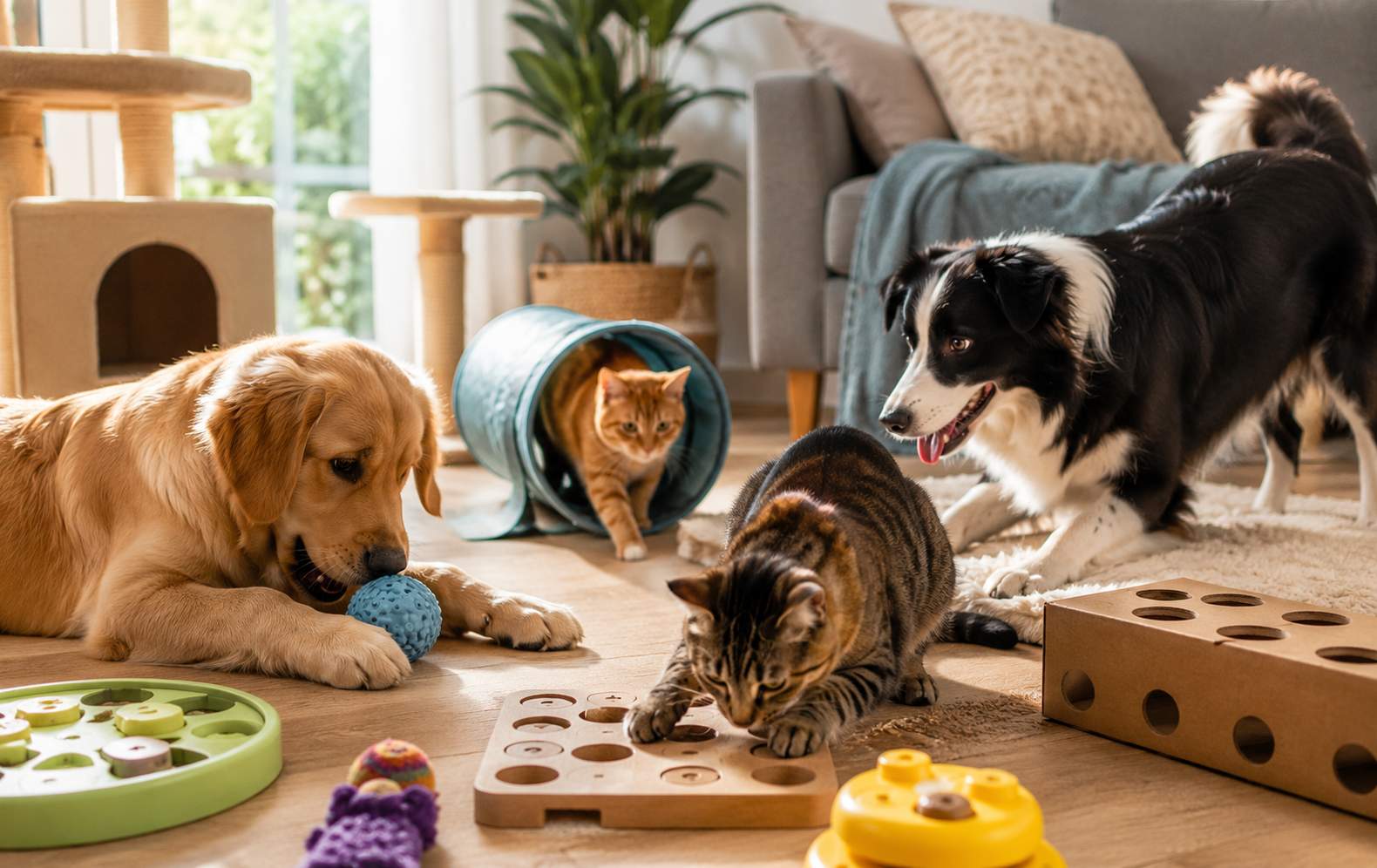
Food puzzle toys, treat dispensers, snuffle mats, and hidden food games encourage pets to work for rewards rather than receiving them immediately from a bowl.
Studies published in animal behaviour journals have shown that food-based enrichment can significantly increase engagement and reduce boredom-related behaviours.
For dogs, owners can hide treats around different rooms and encourage scent-based searching activities. For cats, food puzzles can replicate natural hunting instincts by requiring them to work for their meals.
Many pet owners are surprised by how long these activities can occupy animals compared with standard feeding routines.
Even simple homemade puzzles using cardboard boxes, paper tubes, or folded towels can provide valuable mental stimulation.
Rotate Toys Instead of Leaving Them Out.
A common mistake many owners make is leaving every toy available at all times.
Animal behaviour experts say pets can become desensitised to toys that are constantly accessible. Rotating toys every few days helps maintain novelty and keeps pets interested.
The concept is similar to children rediscovering old toys after they have been stored away for a period of time.
By introducing different toys on a rotating schedule, owners can create the impression of something new without spending additional money.
For dogs, this may include chew toys, tug toys, puzzle toys, balls, and comfort items.
For cats, rotating interactive toys, feather wands, tunnels, and climbing accessories can help sustain engagement.
The changing environment helps stimulate curiosity and encourages exploration.
Teach New Tricks and Commands.
Training is one of the most effective forms of mental enrichment available.
Many people associate training with puppies, but behavioural specialists stress that animals of all ages can continue learning throughout their lives.
Research from veterinary behaviour organisations has shown that short, positive training sessions help improve cognitive function while strengthening the bond between pets and owners.
Dogs can learn new commands, tricks, scent work activities, or obstacle challenges.
Cats can also be trained using reward-based methods and often respond surprisingly well to activities such as target training, simple tricks, and interactive games.
Training sessions do not need to last long. Five to ten minutes per day can provide substantial mental stimulation while helping pets build confidence and focus.
Regular learning opportunities also help reduce boredom by introducing new challenges.
Build Indoor Obstacle Courses.
Indoor obstacle courses can provide both physical and mental exercise, particularly during poor weather conditions.
Simple household items such as cushions, chairs, blankets, cardboard boxes, and cones can be used to create engaging challenges for pets.
Dogs can practise weaving through objects, jumping over low obstacles, crawling under furniture, or navigating simple agility-style courses.
Cats often enjoy climbing, balancing, exploring tunnels, and investigating elevated spaces.
Animal enrichment experts say obstacle courses encourage problem-solving while allowing pets to burn energy safely indoors.
The activity can also help improve coordination, confidence, and responsiveness to commands.
Changing the layout regularly helps maintain interest and prevents the activity from becoming repetitive.
Many owners find these games particularly useful during winter months when outdoor exercise opportunities may be more limited.
Schedule Interactive Play Sessions.
One of the simplest and most effective ways to prevent boredom remains dedicated playtime with owners.
Research consistently shows that social interaction plays an important role in pet wellbeing. While toys and puzzles are valuable, many animals thrive on direct engagement with people.
Dogs often benefit from games such as fetch, tug, hide-and-seek, scent work, and interactive retrieval challenges.
Cats typically enjoy activities that mimic hunting behaviours, including chasing feather toys, laser games used responsibly, and interactive wand toys.
According to veterinary professionals, even 15 to 20 minutes of focused interactive play each day can help reduce boredom, improve behaviour, and strengthen the human-animal bond.
These sessions provide both physical exercise and emotional enrichment.
The Growing Importance of Pet Mental Health.
Awareness of pet mental health has increased significantly in recent years.
The RSPCA and other animal welfare organisations have increasingly highlighted the importance of enrichment and emotional wellbeing alongside traditional care requirements such as feeding and exercise.
Many pet owners now recognise that wellbeing involves more than physical health alone.
Behavioural issues linked to boredom remain one of the most common reasons owners seek professional advice. Excessive barking, chewing furniture, scratching carpets, digging, and inappropriate toileting are often symptoms of unmet stimulation needs rather than deliberate disobedience.
Addressing boredom early can help prevent these issues from becoming long-term habits.
Technology Is Helping Keep Pets Engaged.
Modern technology is also playing a growing role in pet enrichment.
Interactive cameras, automated treat dispensers, smart toys, and remote monitoring systems allow owners to engage with pets even when they are away from home.
Industry reports suggest spending on pet technology products continues to increase globally as owners seek new ways to improve animal wellbeing.
While technology should not replace exercise or human interaction, many experts believe it can provide useful supplementary stimulation.
For households where pets spend periods alone during the day, these tools may help reduce boredom and provide additional enrichment opportunities.
Small Changes Can Deliver Big Benefits.
One of the most encouraging aspects of pet enrichment is that meaningful improvements often come from simple adjustments rather than expensive purchases.
Rotating toys, introducing puzzles, providing training opportunities, encouraging exploration, and increasing interactive play can significantly improve a pet's daily experience.
Animal behaviourists frequently emphasise that enrichment should be viewed as an ongoing part of pet care rather than an occasional activity.
Just as people benefit from variety, learning, and stimulation, pets also thrive when their environments provide opportunities to think, explore, and engage with the world around them.
For owners looking to improve their pet's quality of life, preventing boredom is one of the most effective places to start.
The rewards often extend beyond happier pets. Many owners find enrichment activities strengthen relationships, reduce behavioural issues, and create more enjoyable experiences for everyone involved.
What activities keep your pets entertained at home? Have you discovered any enrichment ideas that work particularly well for your dog or cat?
Lifestyle News
The Easy Activities Helping Newcastle Pets Stay Happy and Healthy
Advertisement





Comments (0)
You must be logged in to post comments.
Don't have an account? Register here
No comments yet. Be the first to share your thoughts!