
Newcastle is a city filled with stories, and many of them are written directly onto its street signs. From grand Georgian avenues to narrow medieval lanes, the names of Newcastle’s streets offer a glimpse into centuries of trade, industry, politics and local life. While thousands of people walk through the city every day, few stop to think about how these roads first earned their names.
Some streets were named after powerful families, others after famous buildings or trades that once dominated the area. A handful even preserve pieces of Newcastle’s medieval past that would otherwise have disappeared completely.
Grey Street and the Earl Behind the Name.
One of Newcastle’s most famous roads, Grey Street, was named after Charles Grey, the 2nd Earl Grey and former British Prime Minister. Although many people know Earl Grey because of the tea blend that carries his name, his connection to Newcastle runs much deeper.
The street was developed during the 1830s as part of Richard Grainger’s ambitious redesign of Newcastle city centre. Architect John Dobson helped create the elegant curved street that is now regularly ranked among Britain’s most beautiful roads.
Grey was honoured largely because he championed the Great Reform Act of 1832, which changed the British electoral system. Naming such an impressive street after him reflected the city’s pride in political reform during that period.
Grainger Street Was Named After Newcastle’s Builder.
Grainger Street owes its name to Richard Grainger, the developer who transformed Newcastle during the Victorian era. Before his large-scale rebuilding projects, much of the city centre was overcrowded and outdated.
Grainger worked alongside architects including John Dobson to create many of Newcastle’s best-known streets and buildings. Grainger Market, Grainger Street and nearby Clayton Street all emerged from this redevelopment period.
Without Grainger’s influence, central Newcastle would likely look completely different today. His impact on the city was so significant that several streets still carry reminders of his legacy nearly two centuries later.
Bigg Market Has Medieval Roots.
Some Newcastle street names date back hundreds of years. Bigg Market is one of the oldest examples still in everyday use.
The word “Bigg” does not refer to size. Instead, it comes from a type of barley once sold there during medieval times. Markets in Newcastle were often named after the goods traders specialised in, which helped customers navigate the busy commercial centre.
Nearby streets followed similar patterns. Cloth Market became associated with textile trading, while the Groat Market took its name from an old coin once commonly used in England.
These historic market names reveal how Newcastle operated as a major trading hub long before modern shopping centres appeared.
The Side Reflects Newcastle’s Medieval Layout.
One of Newcastle’s most unusual street names is simply called The Side. Running downhill toward the Quayside, it formed part of the medieval route connecting the castle to the River Tyne.
Historians believe the name developed because the road ran along the side of the steep hill beneath Newcastle Castle. Over time, the short description simply became the official name.
The steep streets around this area still preserve much of Newcastle’s medieval street pattern, even though many original buildings disappeared during later redevelopment.
Quayside Comes From Newcastle’s Shipping Past.
The Quayside is now known for restaurants, bars and modern apartments, but its name reflects Newcastle’s industrial and maritime heritage.
The word “quay” refers to a structure where ships load and unload cargo. For centuries, Newcastle’s Quayside served as a crucial centre for coal exports, shipbuilding and international trade.
The River Tyne played a major role in the city’s growth, and many nearby streets still hint at occupations linked to the waterfront. Areas surrounding the Quayside once housed sailors, merchants, warehouse workers and dock labourers.
Even as the area has modernised, the historic name remains closely tied to Newcastle’s identity.
Pilgrim Street Was Once Part of a Religious Route.
Pilgrim Street is believed to have been used by religious travellers heading toward shrines and holy sites during medieval times.
Newcastle sat along important travel routes linking northern England and Scotland, making it a regular stopping point for pilgrims. The street eventually became one of the city’s busiest commercial roads, but its original religious connection remained in the name.
Today, Pilgrim Street continues to evolve through major regeneration projects, blending Newcastle’s past with its future.
Dean Street Honours a Local Clergyman.
Dean Street was named after Dr Hugh Moises, who served as a church dean and educational figure in Newcastle during the 18th century.
Many streets across Britain were named after religious leaders or influential local figures, and Newcastle followed that tradition. The street became associated with wealthier residents during the Georgian period due to its proximity to the city centre and fashionable developments nearby.
Its historic buildings still reflect the prosperity Newcastle experienced during that era.
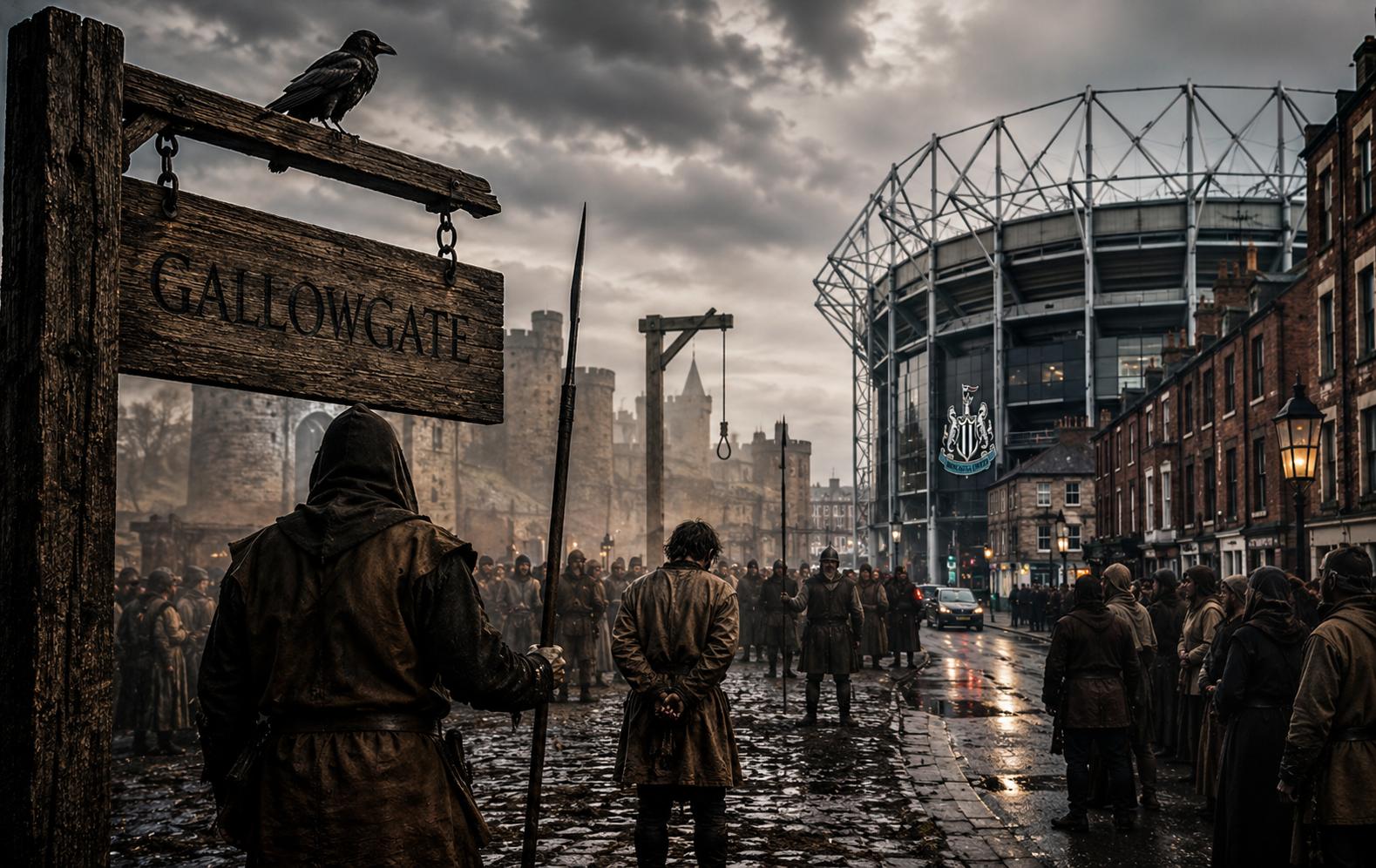
Gallowgate Has One of Newcastle’s Darkest Origins.
Among Newcastle’s oldest and most recognisable street names, Gallowgate carries a far darker meaning than many other roads in the city.
The name comes from the word “gallows”, referring to the place where public executions were once carried out. During medieval times, prisoners were marched along this route toward the town gallows, which historically stood outside the city walls near the area now associated with St James’ Park.
The second part of the name, “gate”, comes from the old Viking word “gata”, meaning road or street. This Norse influence appears in several northern English street names and reflects the region’s historical Scandinavian connections.
Over the centuries, Gallowgate transformed from a grim execution route into one of Newcastle’s busiest streets. Today, it is best known as the home of Newcastle United’s stadium, with thousands of football supporters filling the area on matchdays.
Newcastle Street Names Preserve Lost History.
What makes Newcastle’s street names particularly fascinating is how they preserve details that may otherwise have vanished from memory. Old industries, forgotten trades and influential residents still survive through everyday road signs.
Modern developments continue to reshape parts of the city, but the names themselves often remain untouched. In many cases, they act as small historical records hidden in plain sight.
Whether it is the political legacy behind Grey Street, the medieval trade links of Bigg Market or the industrial importance of the Quayside, Newcastle’s roads tell the story of how the city developed over centuries.
For locals and visitors alike, understanding the origins behind these names adds another layer to exploring Newcastle upon Tyne. Every sign carries part of the city’s identity, connecting modern Newcastle with the generations that came before.
What Newcastle street name surprises you the most? Share your favourite historic road or hidden local story in the comments below.
Know another unusual Newcastle street name with an interesting history? Join the conversation and help uncover more of the city’s forgotten past.
Newcastle History
The Forgotten Horror Behind Newcastle’s Most Recognisable Street Name
Advertisement


Comments (0)
You must be logged in to post comments.
Don't have an account? Register here
No comments yet. Be the first to share your thoughts!