
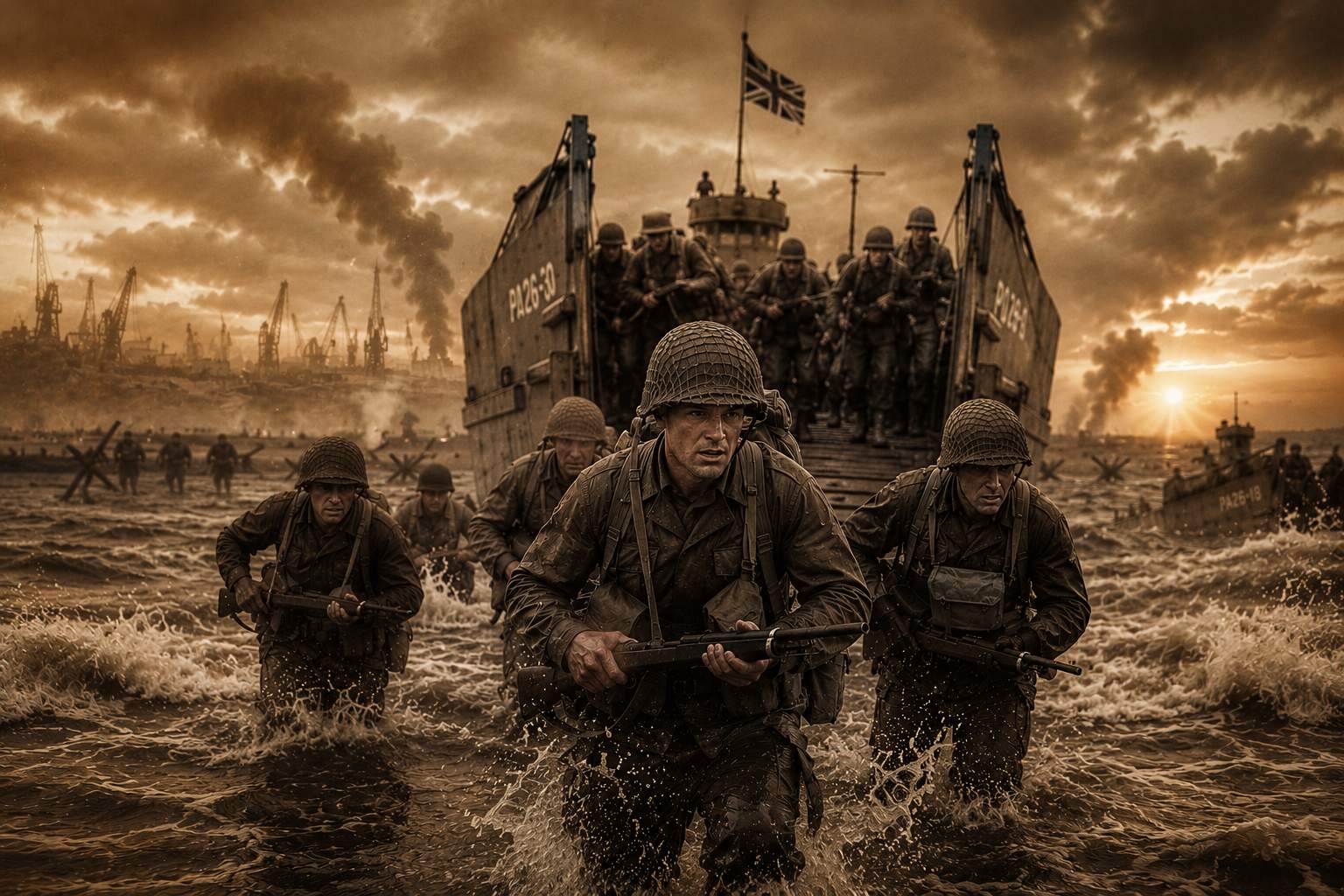
On June 6, 1944, thousands of young men stepped into history as Allied forces launched the Normandy landings, the largest amphibious invasion ever attempted. Known simply as D-Day, the operation marked the beginning of the liberation of Western Europe from Nazi occupation and changed the course of the Second World War forever.
More than eight decades later, D-Day continues to captivate historians, veterans' families and younger generations eager to understand one of the most significant military operations in modern history. While the beaches of Normandy remain the focal point of remembrance, Britain's industrial cities, including Newcastle and the wider North East, played a crucial role in making the invasion possible.
From shipbuilding and military production to the service and sacrifice of local men, Newcastle's contribution formed part of a wider national effort that helped secure one of the Allies' most important victories.
The Day That Changed Europe.
The Normandy landings began shortly after midnight on June 6, 1944, when airborne troops were dropped behind enemy lines to secure bridges, roads and strategic positions ahead of the main assault.
As dawn approached, thousands of ships crossed the English Channel carrying troops destined for five beaches along the Normandy coast: Utah, Omaha, Gold, Juno and Sword. The operation was codenamed Operation Neptune and formed the opening phase of the wider campaign known as Operation Overlord.
The scale of the invasion remains astonishing even by modern standards. Nearly 160,000 Allied troops landed in Normandy on D-Day itself, while more than 156,000 soldiers, sailors and airborne troops participated directly in the operation.
The invasion involved approximately 7,000 ships and landing craft, supported by more than 11,000 aircraft. It remains the largest seaborne invasion in military history.
The Human Cost Behind The Victory.
The statistics surrounding D-Day are staggering, but behind every number was a human story.
By midnight on June 6, Allied casualties had exceeded 10,000, including more than 4,400 confirmed deaths. American forces suffered some of the heaviest losses, particularly on Omaha Beach, where fierce German resistance turned the shoreline into one of the bloodiest battlegrounds of the invasion.
German casualties are estimated to have ranged between 4,000 and 9,000 killed, wounded or captured during the first day of fighting.
Many of the soldiers who landed were barely out of their teens. Some had never seen combat before. Others had spent years preparing for the moment they would finally return to mainland Europe and challenge Nazi Germany directly.
The bravery displayed on the beaches and in the skies above Normandy remains one of the defining examples of courage under fire in modern military history.
Newcastle's Contribution To The War Effort.
Although Newcastle lies hundreds of miles from Normandy, the city and surrounding North East region played a vital role in supporting Britain's war effort.
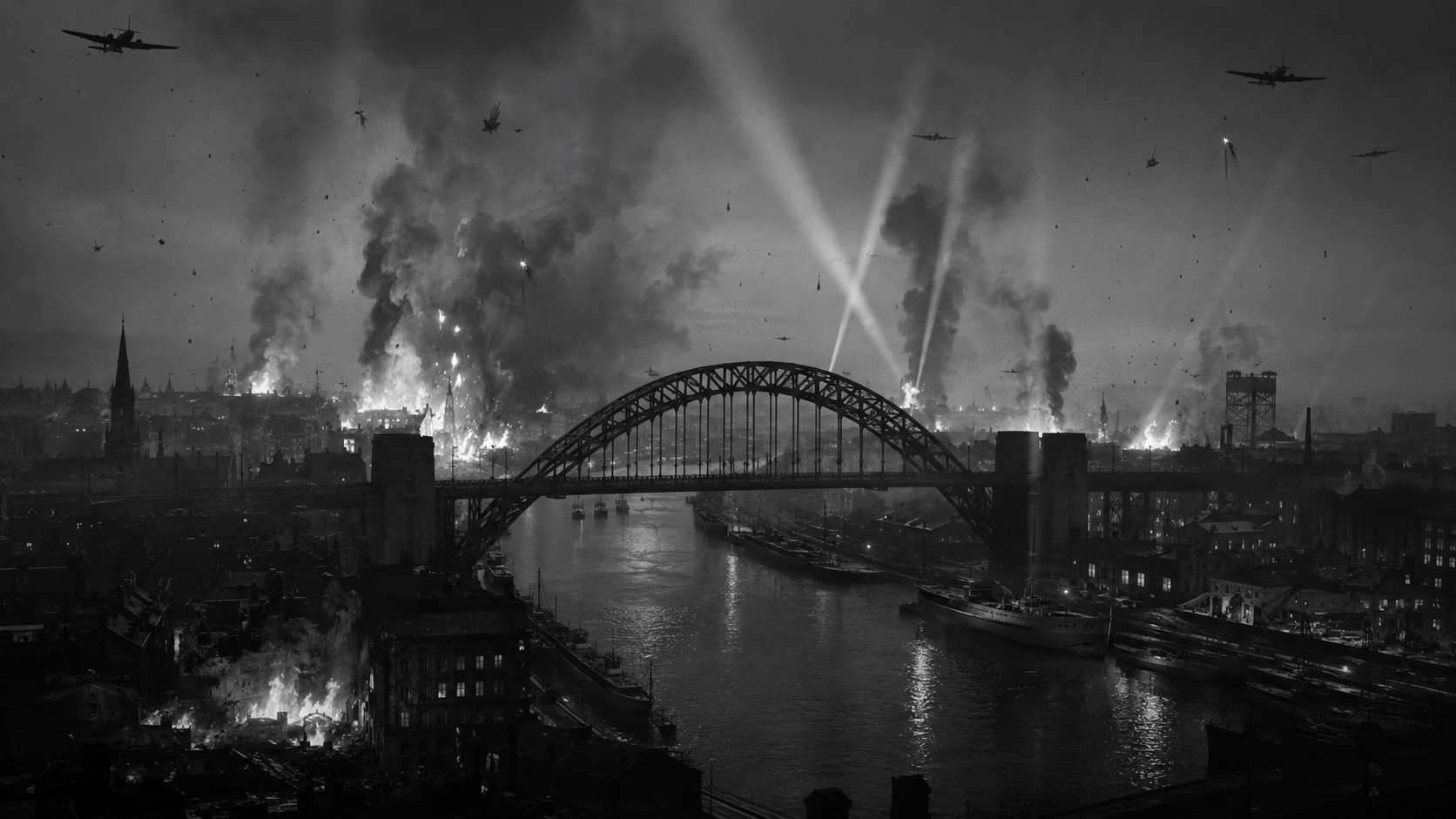
During the Second World War, Tyneside was one of Britain's industrial powerhouses. Shipyards along the River Tyne built and repaired vessels critical to Allied operations. Engineering firms manufactured equipment, machinery and military supplies needed across Europe and beyond.
Thousands of workers, many of them women, laboured around the clock to keep production lines moving. Their efforts ensured troops received the equipment, transport and logistical support necessary for major operations such as D-Day.
The North East was also home to military training facilities and coastal defences designed to protect Britain from potential invasion. While attention often focuses on southern England's preparations for D-Day, northern industrial regions provided the infrastructure that made such a vast undertaking possible.
Without cities like Newcastle sustaining wartime production, Operation Overlord would have been impossible to execute on the scale required.
North East Men Who Served In Normandy.
The Normandy campaign was not only supported by Newcastle's industries. Men from Newcastle, Gateshead, Sunderland, Northumberland and County Durham also served in large numbers across the armed forces.
Many joined famous regiments associated with northern England, while others served in specialist units, the Royal Navy or the Royal Air Force.
Some landed directly on the Normandy beaches. Others flew missions over occupied France or served aboard ships crossing the Channel.
For countless North East families, D-Day was not merely a historic event taking place overseas. It was a moment when sons, brothers, husbands and fathers faced extraordinary danger.
Memorials across the region continue to honour those who never returned home.
Extraordinary Numbers Behind Operation Overlord.
One reason D-Day continues to fascinate people today is the sheer scale of planning involved.
Consider these remarkable facts:
Approximately 156,000 Allied troops landed on D-Day.
More than 6,900 vessels took part in Operation Neptune.
Around 11,590 Allied aircraft supported the operation.
More than 23,000 airborne troops were deployed before the beach landings began.
Allied aircraft flew over 11,000 missions on June 6 alone.
The invasion involved troops from at least 15 nations.
Military planners spent months organising every detail. Weather forecasts, deception operations, logistics and intelligence gathering all played critical roles in the invasion's success.
One famous deception campaign, Operation Fortitude, convinced German commanders that the main invasion would occur near Calais rather than Normandy. This helped prevent German reinforcements from reaching the beaches quickly.
Interesting D-Day Facts Many People Do Not Know.
Beyond the well-known images of soldiers storming the beaches, D-Day contains many lesser-known stories that continue to surprise historians.
One fascinating detail is that Allied officers carried specially prepared guidebooks and maps of France to help navigate once ashore. Some military planners even relied on pre-war Michelin guides because of their highly accurate road information.
Another little-known fact is the scale of the airborne assault. Paratroopers landed in darkness, often scattered miles from their intended drop zones. Despite the confusion, many small groups successfully completed their objectives and disrupted German defences.
Many soldiers also carried personal good luck charms, photographs and letters from home. These small items offered comfort during what many expected could be their final day alive.
Why D-Day Still Matters Today.
As the number of surviving veterans continues to decline, preserving the memory of D-Day becomes increasingly important.
The Normandy landings were more than a military operation. They represented a collective effort involving millions of people across factories, shipyards, military bases and communities throughout Britain and the Allied world.
For Newcastle residents, D-Day serves as a reminder that victory was achieved not only on distant battlefields but also through the dedication of workers and families on the home front.
The story also highlights the importance of international cooperation. American, British, Canadian and Allied forces worked together toward a common objective, demonstrating what can be achieved when nations unite against tyranny.
In an era where global challenges continue to shape international relations, the lessons of D-Day remain highly relevant.
Remembering The Legacy Of Normandy.
Every year, ceremonies take place across Britain, France and beyond to honour those who participated in the Normandy campaign.
Visitors continue to travel to the beaches where history unfolded, standing on the same sand crossed by young soldiers in 1944. Memorials, museums and cemeteries ensure future generations can learn about the sacrifices made there.
For Newcastle and the wider North East, remembrance carries particular significance. The region's industries, communities and servicemen all contributed to the success of one of the most ambitious military operations ever undertaken.
D-Day was not solely a Normandy story. It was also a Newcastle story, a British story and ultimately a story of ordinary people achieving extraordinary things during one of history's darkest periods.
The courage displayed on June 6, 1944 continues to inspire generations, reminding us that freedom often comes at a tremendous cost and that the sacrifices made by those who served should never be forgotten.
What do you think is the most remarkable fact about D-Day and the Normandy landings?
Newcastle History
The Hidden Newcastle Connection To D-Day Few People Know About
Advertisement

Comments (0)
You must be logged in to post comments.
Don't have an account? Register here
No comments yet. Be the first to share your thoughts!