
Keelmen were the skilled boatmen who operated the flat-bottomed keel boats used to ferry coal from Tyneside's staithes out to the larger colliers waiting further downriver, a role that made them absolutely essential to the North East's coal export trade for centuries. Bound closely to the Hostmen, the powerful merchants who controlled the coal trade, keelmen occupied a position of genuine economic importance combined with very limited personal bargaining power.
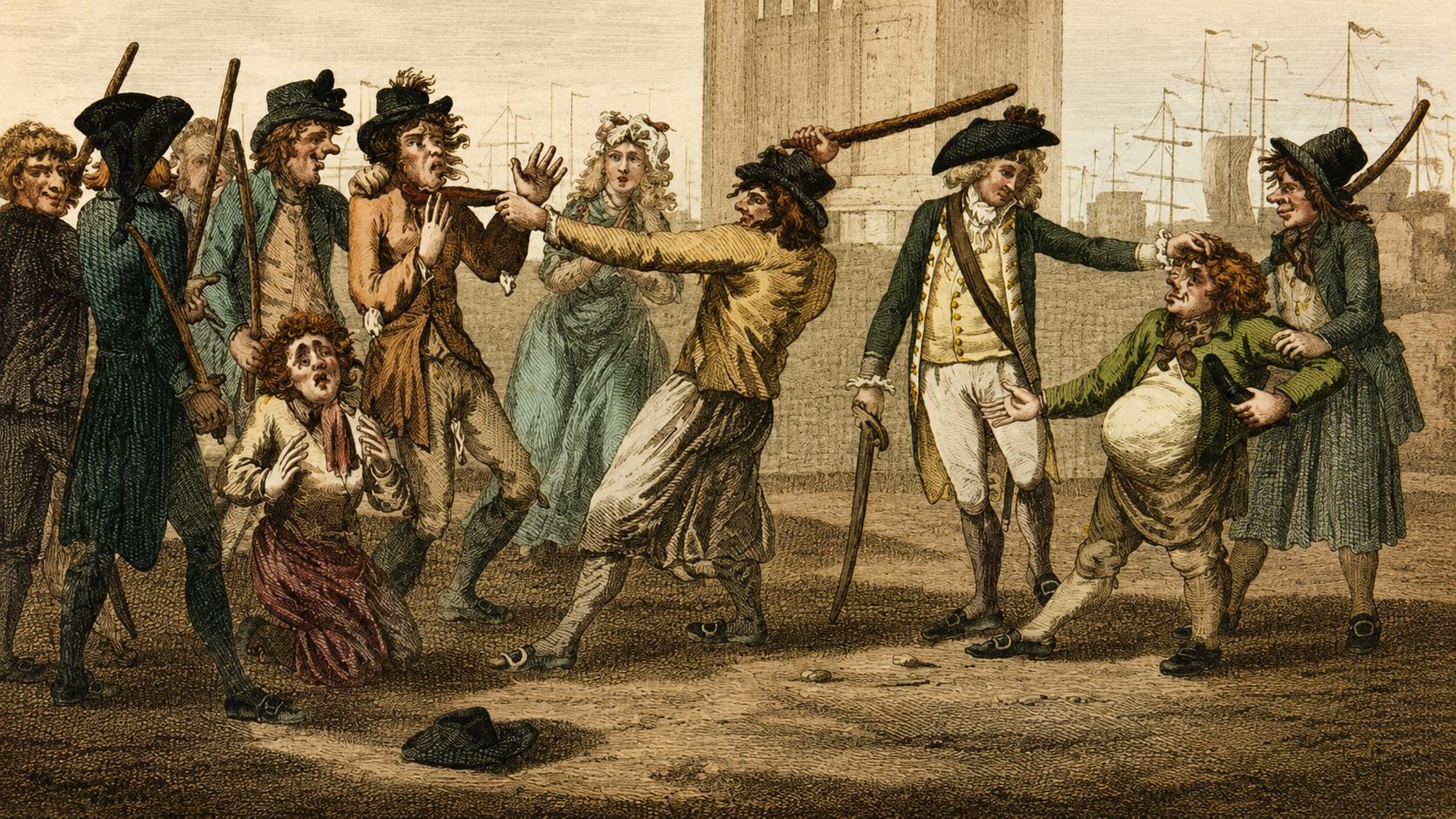
That imbalance produced a genuinely remarkable pattern of recurring unrest. Historical records document keelmen's strikes, mutinies and riots occurring in 1654, 1660, 1671, 1708, 1710, 1719, 1738, 1740, 1744, 1749, 1750, 1771, 1794, 1803, 1809, 1819 and 1822, making Tyneside's keelmen among the most consistently organised and combative workforces anywhere in pre-industrial Britain, repeatedly willing to halt the region's most economically vital trade in pursuit of fairer treatment.
Many disputes centred on the practice known as "overmeasure", where keel owners illegally enlarged the holds of their boats to force keelmen to carry considerably more coal than their standardised, and correspondingly paid, keel-load. Strikes specifically targeting this practice broke out in 1719 and again in 1744, with keelmen refusing to work until owners agreed to properly limit cargo loads back to their legally agreed capacity.
The 1740 unrest, driven primarily by soaring grain prices following a disastrous harvest and a brutal winter that had frozen the Tyne and halted coal shipments entirely, saw keelmen join pitmen and ironworkers in raiding grain stores and ships along the Quayside before ultimately storming and wrecking Newcastle's Guildhall itself, one of the most dramatic single episodes across the keelmen's entire two-century history of organised unrest.
The 1750 dispute again centred on overmeasure grievances, alongside anger over "can-money", the deeply resented practice of paying part of keelmen's wages in drink that had to be consumed specifically at designated "can-houses", pubs effectively controlled by their own employers. In response to that strike, the Hostmen published the names of eight hundred striking keelmen, formally warning other employers against offering them any further work.
Military intervention became a recurring feature of these disputes over the following decades, with soldiers repeatedly called upon to help quell striking or rioting keelmen, particularly whenever their action succeeded in genuinely blocking navigation along the Tyne and threatening to bring the region's entire coal export trade to a complete standstill, a disruption authorities and merchants alike were rarely willing to tolerate for long.
Later disputes, including significant unrest in 1794 and 1809, increasingly centred on resistance to new coal staithes, fixed loading structures that gradually reduced the keelmen's traditional role in the coal trade as technology slowly began rendering their work obsolete. Though the shallow waters of the Tyne meant staithes could never entirely eliminate the need for keels, the keelmen correctly recognised staithes as an existential long-term threat to their livelihoods.
The keelmen's dispute with the Hostmen extended well beyond wages and cargo limits into questions of basic welfare too, and the workforce's collective strength was significant enough that when disputes turned genuinely serious, authorities regularly found the keelmen capable of effectively halting all navigation along a stretch of river that the entire regional economy depended upon, giving them a level of practical leverage rarely available to other pre-industrial workforces of the period.
Records held today by Tyne and Wear Archives, including registers of names involved in the 1740 riot and minutes from Keelmen's Society meetings, provide historians with an unusually detailed picture of how this workforce organised itself collectively across nearly two centuries, offering genuine insight into one of Britain's longest-sustained traditions of organised industrial action well before the modern trade union movement had properly taken shape nationally.
The keelmen's long tradition of collective action left a lasting institutional legacy too, including the Keelmen's Hospital, built through the workforce's own collective contributions to support sick and elderly keelmen and their families. Their nearly two-hundred-year history of strikes and riots stands as one of the clearest examples anywhere in Britain of a single industrial workforce sustaining genuinely organised collective action across so many consecutive generations. The keelmen's sustained pattern of collective bargaining through direct action predates the modern British trade union movement by well over a century, making Tyneside a genuinely significant early site of organised labour history.
Share your views.
Were you aware of the keelmen's long history of striking?
Political News
The Keelmen's Riots: When Tyneside Workers Took on the Establishment
For nearly two centuries, the keelmen who moved Newcastle's coal along the Tyne repeatedly downed tools and took to the streets, making Tyneside one of Britain's most persistent centres of industrial unrest.
Advertisement


Comments (0)
You must be logged in to post comments.
Don't have an account? Register here
No comments yet. Be the first to share your thoughts!