
By early 1740, Newcastle and the wider Tyneside area faced a genuine food crisis. Continuous rain during the previous autumn had ruined much of the region's harvest, while a severe winter had frozen the Tyne and disrupted the coal trade that much of the local workforce depended upon for wages. As grain and bread prices climbed sharply, ordinary keelmen, pitmen and ironworkers found themselves squeezed from every direction at once.
Local anger intensified considerably because significant quantities of corn and rye were still being exported out of the Tyne from Newcastle and Gateshead even as local people struggled to afford basic food, a situation widely viewed by the crowd as a fundamental violation of what historians call the "moral economy", the shared expectation that local food should be available to feed local people before being sold elsewhere for greater profit.
Protests began peacefully in May 1740, with crowds, notably including significant numbers of local women, blocking the movement of grain through the town and attempting direct negotiations with magistrates and merchants over food prices. In one especially striking episode, women reportedly intercepted wagons of wheat disguised as cheese being secretly moved out of the town for export, physically fighting off the farmers attempting to transport it before triumphantly carrying the grain back into Newcastle.
Tensions escalated sharply through the following weeks. Keelmen and ironworkers joined the protests in growing numbers, merging the original food price grievances with wider anger over wages and working conditions on the river. Attempts at negotiation with local magistrates repeatedly broke down, with merchants and "cornfactors" accused of stubbornly refusing to lower prices despite the genuine desperation increasingly visible across the town.
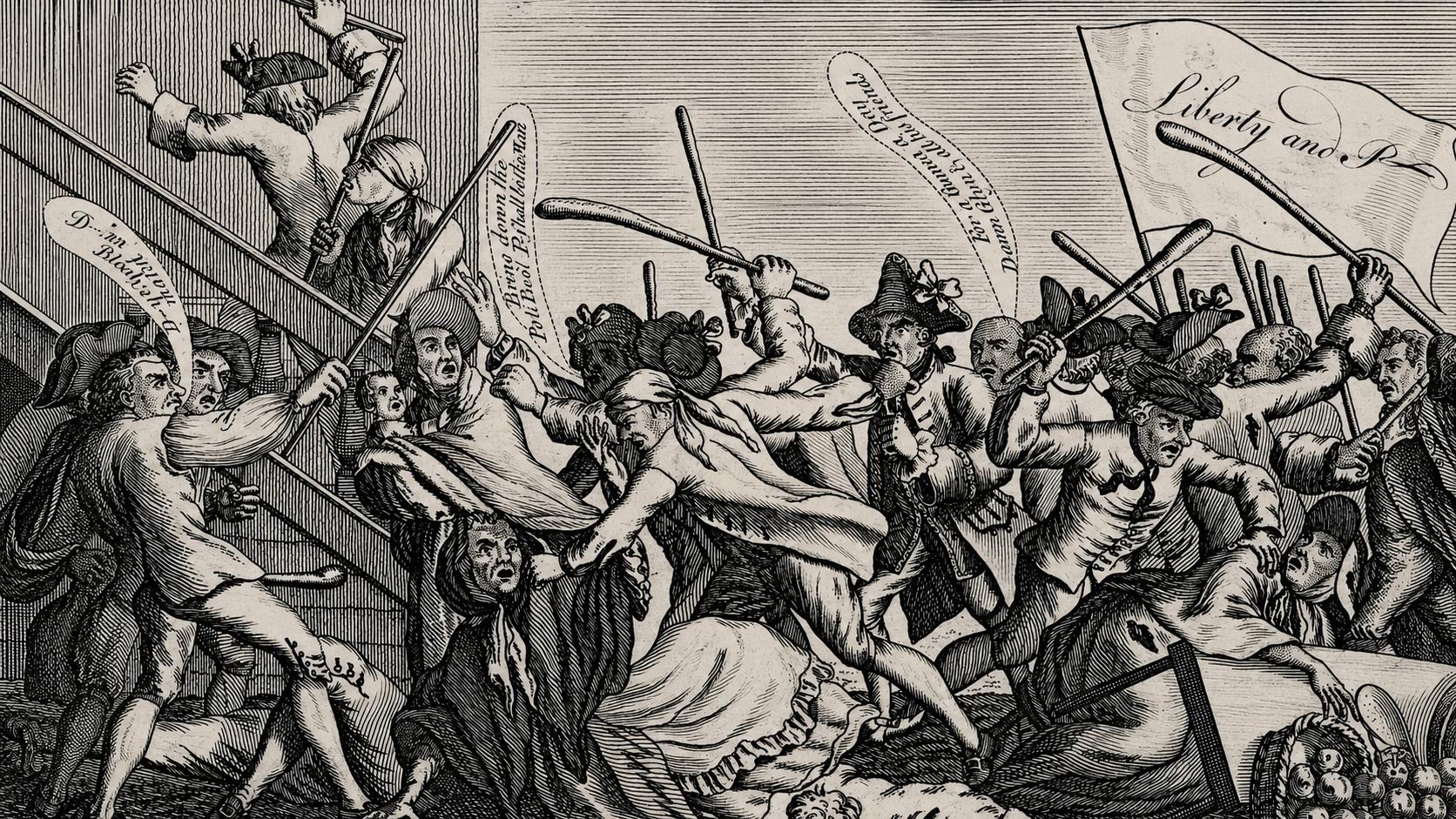
Matters reached breaking point on 26 June 1740. A crowd of keelmen, ironworkers and ordinary townspeople marched on Newcastle's Guildhall, the grand seat of the town corporation's civic and political authority, and systematically wrecked it. Contemporary accounts describe the mob smashing woodwork and windows, tearing paintings from the walls, and ransacking the building's archives, seizing money from the treasury estimated at around fourteen hundred pounds.
Contemporary observers were reportedly stunned by the sheer scale and ferocity of the destruction, since the preceding weeks of protest, while tense, had remained relatively organised and largely non-violent. The assault on the Guildhall represented a direct attack on the physical symbol of the corporation's wealth and political authority, transforming what had begun as a food price dispute into a genuine, if short-lived, insurrection against local government itself.
Authorities responded with considerable force. Alderman Ridley called out the militia, and when this initial response proved insufficient, a newly raised company of armed local gentlemen was formed to help restore order across the town. Negotiations eventually resumed between the authorities, crowd representatives and cornfactors, gradually calming the immediate unrest, though underlying tensions over food prices and wages persisted considerably longer.
The disruption to Newcastle's coal trade that winter genuinely compounded the underlying food crisis too, with the frozen Tyne halting shipments for weeks and further reducing the wages keelmen and other river workers depended upon just as food prices climbed to their most severe levels, creating the specific combination of economic desperation that historians studying the period consistently identify as the direct trigger for the eventual violence.
Contemporary accounts of the earlier May disturbances describe a genuinely striking scene, with a group of local women intercepting farmers attempting to move grain out of the town under cover, physically overwhelming them despite being significantly outnumbered, before triumphantly parading the recovered corn back into Newcastle amid what one contemporary source described as "great acclamations of joy" from the surrounding crowd.
The 1740 Guildhall riot remains one of the most dramatic episodes of popular political violence in Newcastle's entire history, a genuinely striking example of ordinary working people directly confronting local political authority over the fundamental issue of access to food.
It stands alongside the region's long history of keelmen's strikes and riots as clear evidence that Tyneside's tradition of organised popular protest runs considerably deeper than its better-known nineteenth and twentieth-century chapters.
Historians studying eighteenth-century food riots consistently cite the Newcastle Guildhall disturbance as one of the most destructive single incidents of its kind recorded anywhere in Georgian England. The episode remains a defining case study whenever historians discuss the fragile relationship between food prices and local political order.
Have your say.
Had you ever heard of Newcastle's 1740 Guildhall riot?
Political News
The Night Newcastle's Guildhall Was Wrecked: The 1740 Corn Riots
When grain prices soared and food was shipped out of Newcastle while locals went hungry, the city's crowd turned on its own council chamber in one of the most violent political riots in North East history.
Advertisement



Comments (0)
You must be logged in to post comments.
Don't have an account? Register here
No comments yet. Be the first to share your thoughts!