
England is the only part of the United Kingdom where most adults pay for prescriptions. Scotland, Wales and Northern Ireland abolished the charge years ago, which means a patient in Berwick and a patient in Coldstream, half an hour apart, have entirely different experiences at the pharmacy counter.
Given that, it is worth knowing that a substantial number of people in England pay considerably more than they need to, simply because they have never heard of the certificate that would cap what they spend.
How the charge works.
In England a flat charge applies to each prescribed item rather than to each prescription form. Somebody collecting four different medicines pays four charges, and somebody whose single medicine is issued as two items pays twice.
The charge is the same regardless of what the medicine costs the NHS, which means it can exceed the actual cost of a cheap generic and represents a fraction of the cost of an expensive one.
Charges are reviewed periodically, so the current figure is worth checking on the NHS website rather than relying on what you paid last year.
The prepayment certificate is the fix.
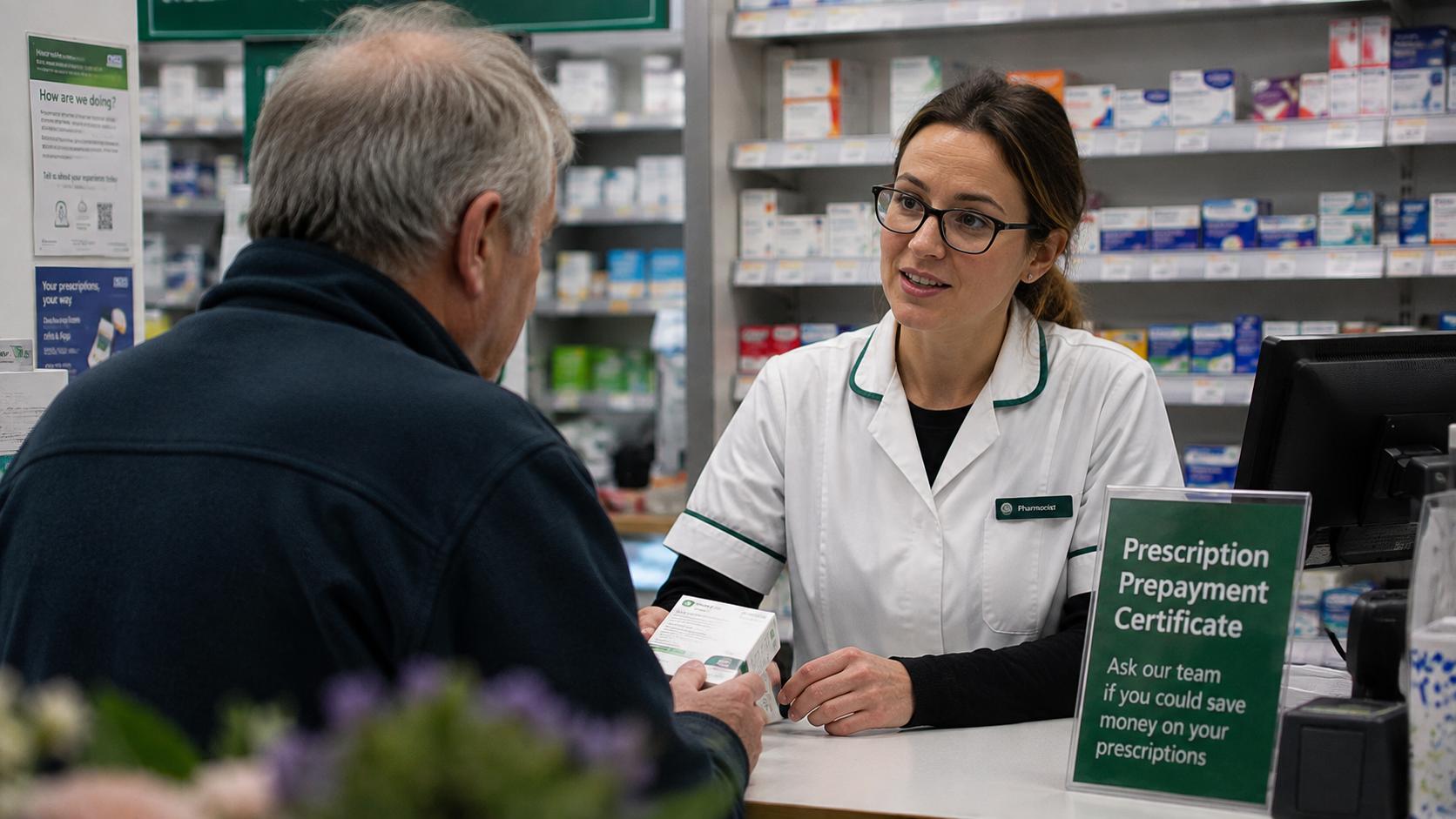
A prescription prepayment certificate, usually shortened to PPC, is effectively a season ticket. You pay a fixed sum and then pay nothing further for prescriptions during the period it covers, however many items you receive.
Two versions exist. A three-month certificate and a twelve-month certificate, with the twelve-month version offering much better value per month and available to pay by instalments.
The arithmetic is simple. The three-month certificate saves money for anyone needing roughly four or more items across those three months. The twelve-month certificate saves money for anyone needing roughly a dozen or more items across the year, which includes almost anybody on a single regular medication.
Somebody taking two ongoing medicines is paying twenty-four charges a year without one. The certificate costs a fraction of that.
There is a separate certificate for HRT.
A specific certificate covering hormone replacement therapy was introduced, costing considerably less than the standard annual certificate and covering an unlimited number of HRT items for a year.
It applies only to specified HRT products, and anyone taking other regular medication as well may find the standard certificate better value overall. It is worth doing the comparison rather than assuming.
Many people do not have to pay at all.
Before buying a certificate, check whether you are exempt, because a significant proportion of people paying are entitled not to.
Exemption applies to those aged under sixteen, those aged sixteen to eighteen in full-time education, and those aged sixty and over. It applies during pregnancy and for twelve months after giving birth, with a maternity exemption certificate.
A medical exemption certificate covers a defined list of conditions including diabetes requiring medication, epilepsy requiring continuous anticonvulsant therapy, certain thyroid conditions, permanent fistula, a continuing physical disability preventing you from leaving home without help, and people undergoing treatment for cancer or the effects of cancer treatment. The list is specific and has been criticised for not having been meaningfully updated in decades, leaving many long-term conditions off it.
Exemption also applies to people receiving certain benefits, including income-based jobseeker's allowance, income-related employment and support allowance, income support, pension credit guarantee credit, and universal credit where earnings fall below a threshold. Tax credit exemption certificates and NHS low income scheme certificates cover others.
War pension exemption applies for treatment of the accepted disability.
Claiming an exemption you are not entitled to results in a penalty charge, so check rather than guess.
The low income scheme is widely missed.
The NHS Low Income Scheme provides full or partial help with prescription charges, dental charges, eye tests, glasses and travel costs to hospital for people whose income and savings fall within set limits.
It applies to people in work as well as those on benefits, and eligibility depends on income against a calculation of requirements including rent and dependants. A great many people who would qualify have never applied because they assume it is only for those on benefits.
Applications are made using form HC1, available from pharmacies, GP surgeries and online.
Other charges to be aware of.
NHS dental charges operate in bands, and the same exemption categories broadly apply.
Free NHS sight tests are available to a wider group than prescription exemptions, including everyone over sixty, people with diabetes or glaucoma, close relatives of people with glaucoma over forty, and people registered sight impaired.
Hospital travel costs can be reclaimed by people on qualifying benefits or the low income scheme, which for patients attending frequent appointments at the RVI or Freeman can amount to a significant sum.
Where to check.
The NHS website sets out current charges, exemption categories and how to apply for certificates, and prepayment certificates can be bought online in a few minutes.
Pharmacy staff deal with this every day and will tell you plainly whether a certificate would save you money.
Share your thoughts.
Did you know about the prepayment certificate, or have you been paying item by item?
Health News
The Prescription Prepayment Certificate Most Patients Never Claim
Advertisement




Comments (0)
You must be logged in to post comments.
Don't have an account? Register here
No comments yet. Be the first to share your thoughts!