
For thousands of commuters across Newcastle and the North East, a delayed Metro service is more than just an inconvenience. It can mean missing a train connection, arriving late for work or spending far longer travelling than expected.
Following recent disruption caused by a failed engineering vehicle at Pelaw Junction, many passengers questioned whether the Tyne and Wear Metro suffers more delays than other UK light rail systems. It is a fair question, but answering it is not straightforward because every operator measures reliability differently.
Some publish detailed punctuality reports every quarter, while others focus on customer satisfaction or service availability. However, by comparing the available data, investment programmes and infrastructure, a clearer picture begins to emerge.
How Newcastle measures delays.
Nexus defines a Metro train as being on time if it arrives no more than three minutes late or up to 30 seconds early. That is a wider tolerance than some other UK operators use.
Recent published Metro performance posters show punctuality fluctuating between 81 percent and 89 percent across four-week reporting periods during 2025. Those figures represented an improvement compared with the same periods in 2024, although they do not necessarily reflect cancelled services in the same way as some other operators report them.
The North East Evidence Hub also monitors Metro reliability alongside passenger satisfaction and patronage, providing a broader picture of network performance rather than simply trains arriving on time.
Manchester Metrolink publishes the most transparent data.
If there is one network Newcastle can learn from, it is Manchester Metrolink.
Metrolink operates 99 stops, making it Britain's largest light rail network outside London, carrying around 46 million passengers annually. Unlike many operators, Transport for Greater Manchester publishes quarterly reports showing punctuality, cancellations, incomplete journeys and the reasons behind disruption.
A tram is classed as punctual if it departs within two minutes of its advertised frequency, a tighter definition than Newcastle's.
Passengers can also see whether delays were caused by infrastructure failures, vehicle faults, road traffic collisions or external incidents. This level of transparency helps build confidence, even when disruption occurs.
Manchester still experiences engineering works, signalling issues and vehicle failures, proving that even Britain's biggest tram network cannot avoid delays altogether.
Docklands Light Railway sets the benchmark.
London's Docklands Light Railway remains the busiest light rail network in Britain, carrying almost 98 million passenger journeys each year.
Although Transport for London measures performance differently from regional systems, the DLR consistently records some of the strongest reliability figures in UK urban transport.
Several factors contribute to that success.
The network is fully segregated from road traffic, reducing the chance of collisions and congestion.
Modern signalling allows trains to operate at very high frequencies.
Continuous investment ensures ageing infrastructure is replaced before reliability begins to decline.
The result is a network that has become the benchmark for urban light rail reliability.
Nottingham continues to benefit from newer infrastructure.
Nottingham Express Transit is considerably smaller than Newcastle's Metro, serving around 15.7 million passengers each year across two lines.
Because much of its infrastructure dates from the early 2000s, NET generally faces fewer age-related engineering challenges than the Tyne and Wear Metro.
That does not mean delays never happen.
Engineering work, overhead line faults and occasional tram defects still affect services, but the network benefits from having significantly newer infrastructure than Newcastle.
Recent operational appointments have also focused heavily on improving reliability and passenger safety.
Sheffield and the West Midlands face similar challenges.
Sheffield Supertram carries around 9.1 million passengers each year, while West Midlands Metro carries approximately 8.8 million.
Both networks have experienced disruption linked to infrastructure renewal programmes, particularly where older track requires replacement.
West Midlands Metro has benefited from a substantial programme of expansion and investment over recent years, introducing modern CAF trams and extending routes across Birmingham.
Sheffield has focused on track renewal and fleet refurbishment, helping improve long-term reliability while accepting that engineering work inevitably creates short-term disruption.
Like Newcastle, these operators have had to balance maintaining daily services with upgrading ageing infrastructure.
Why Newcastle experiences more engineering delays.
One factor separates Newcastle from many comparable systems.
The Tyne and Wear Metro opened in 1980, making much of its original infrastructure more than 45 years old.
Although track, signalling and overhead lines have been progressively replaced, large sections still require ongoing renewal.
Many recent Metro disruptions have involved overhead line equipment, signalling faults or engineering vehicles working on the network.
When failures occur at strategic locations such as Pelaw Junction, delays quickly spread because the junction connects services towards both Sunderland and South Shields.
This is a challenge many newer tram systems simply do not face.
Investment should improve reliability.
The biggest change for Metro passengers is already under way.
Nexus has completed delivery of 46 new Stadler trains as part of a £362 million fleet replacement programme, replacing the original Metrocar fleet that served the region for more than four decades.
The new trains feature improved diagnostics, greater reliability, better accessibility and modern passenger information systems.
Combined with ongoing signalling, power supply and track upgrades, the investment is designed to reduce failures over the coming decades.
Manchester, Birmingham and Nottingham have all demonstrated that newer fleets generally require less maintenance and experience fewer in-service breakdowns.
Reliability is not just about punctuality.
Passengers judge reliability differently from transport planners.
Someone travelling to Newcastle city centre cares less about whether a train arrived two minutes late than whether they reached work on time.
This is why customer satisfaction remains an equally important measure.
Research led by Newcastle University found that reliability, accessibility, journey time and value for money remain among the strongest influences on overall passenger satisfaction with the Tyne and Wear Metro.
Good communication during disruption also plays a major role.
Operators that provide accurate live updates, replacement transport and realistic journey advice often receive higher satisfaction scores, even when delays occur.
The comparison at a glance.
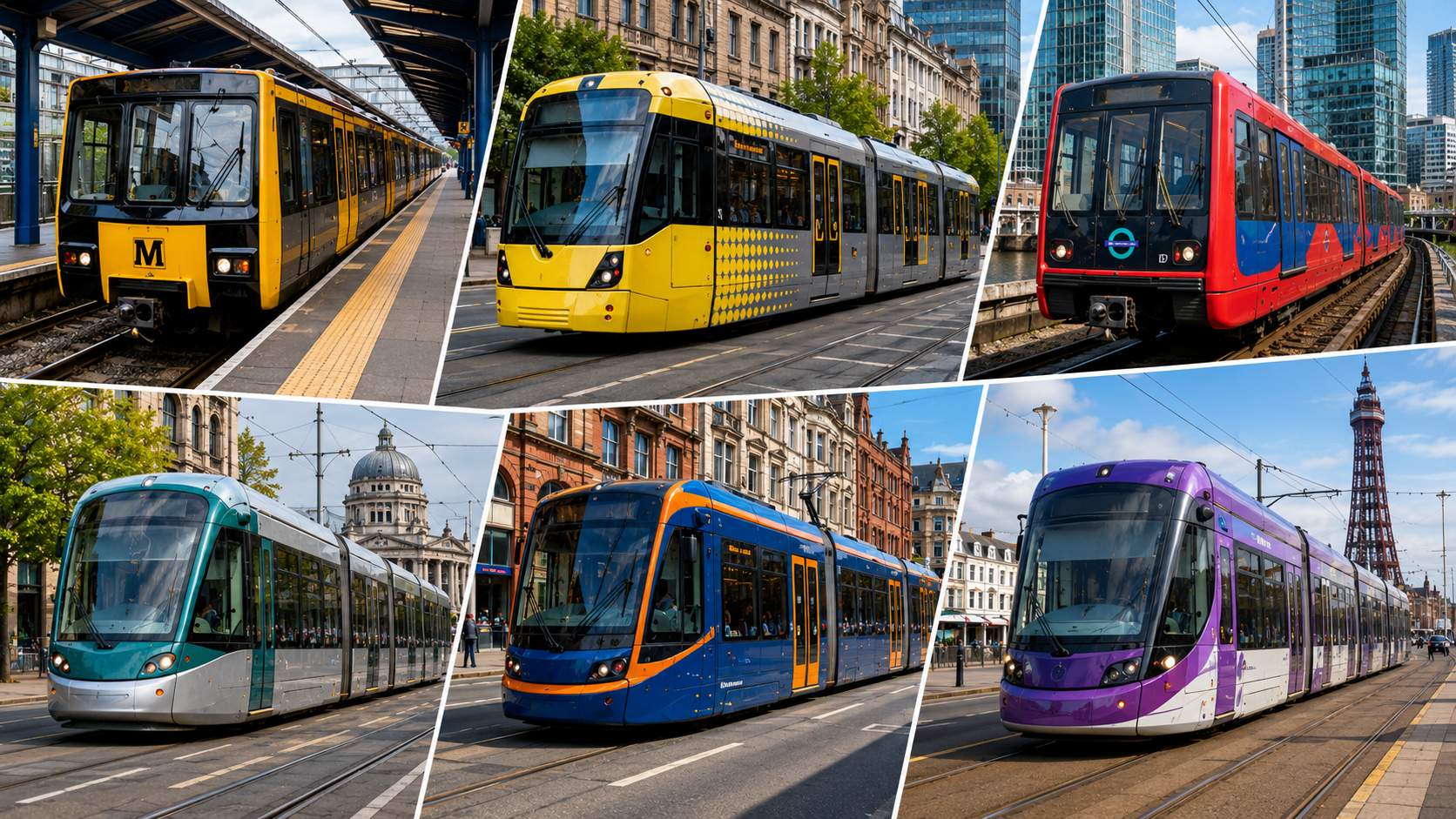
Comparing Britain's major light rail systems shows there is no perfect network.
The Docklands Light Railway leads for operational consistency thanks to modern automated infrastructure.
Manchester Metrolink sets the standard for transparency by publishing detailed reliability reports and cancellation data.
Nottingham benefits from newer infrastructure that reduces age-related faults.
West Midlands Metro continues improving through investment and expansion.
Sheffield balances reliability with significant infrastructure renewal.
Newcastle's Metro remains one of Britain's busiest light rail systems, carrying 32.2 million passengers annually, but it also faces perhaps the greatest challenge because of the age of its original infrastructure.
The encouraging news for North East commuters is that the largest investment programme in the Metro's history is now being delivered. As new trains replace the ageing Metrocars and infrastructure upgrades continue, reliability should steadily improve.
Until then, passengers are likely to continue experiencing occasional disruption, particularly during major engineering work. The difference is that each completed upgrade brings the network one step closer to matching the reliability standards achieved by Britain's newest light rail systems.
Have your say.
How do you rate the Newcastle Metro network for reliability?
Travel News
The UK Cities Keeping Public Transport Delays to a Minimum
Advertisement



Comments (0)
You must be logged in to post comments.
Don't have an account? Register here
No comments yet. Be the first to share your thoughts!