
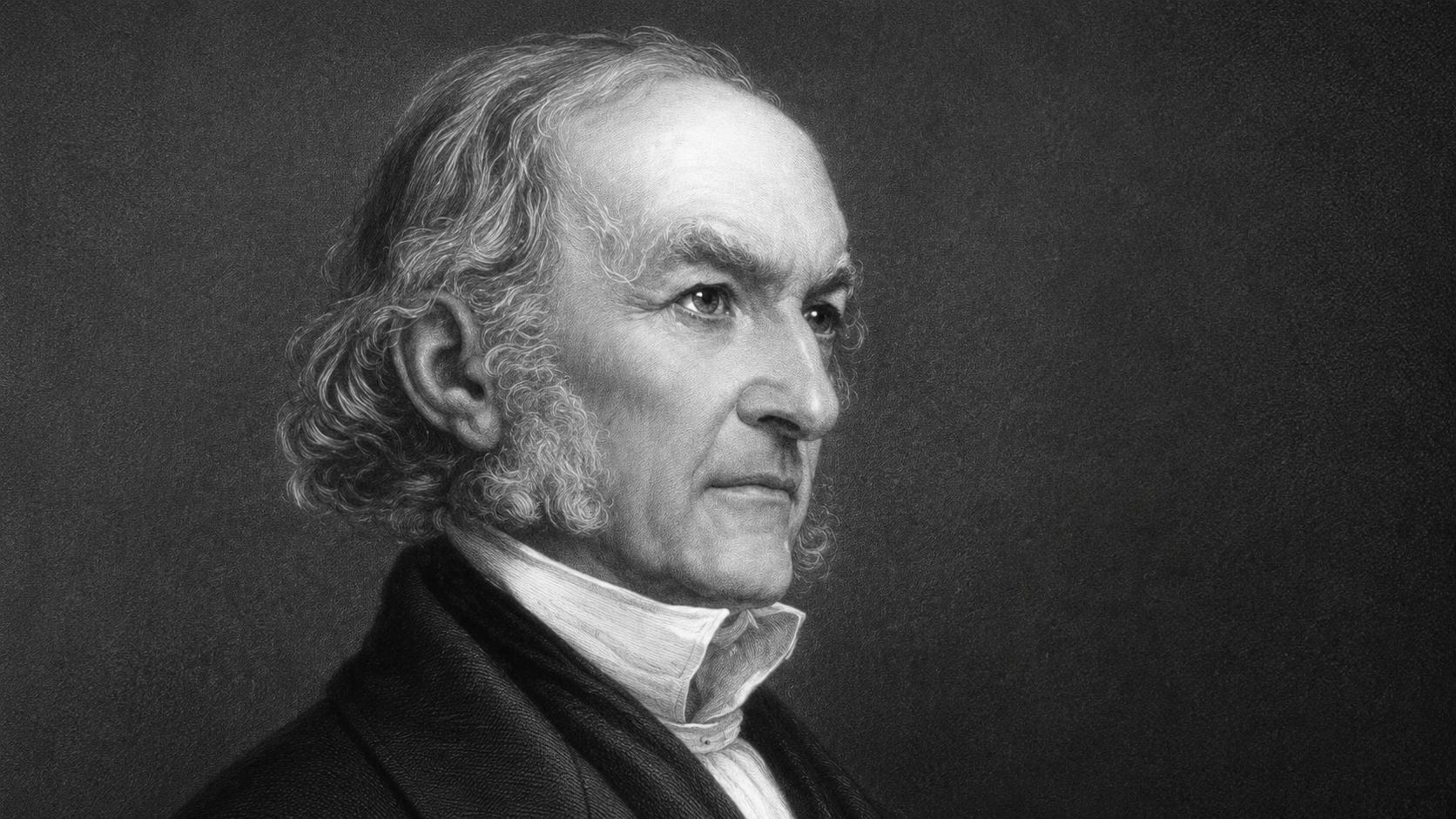
By 1891, William Gladstone was already one of the most significant figures in British political history, having served four separate terms as Prime Minister across a career stretching back decades. Yet even at this advanced stage of his career, Gladstone remained a genuinely powerful political force, and his decision to address the National Liberal Federation's annual conference in Newcastle that October would prove to be a defining moment.
The National Liberal Federation, essentially the forerunner of the modern party conference, met annually to debate and formally adopt a comprehensive package of Liberal policy commitments. In 1891 the Federation gathered in Newcastle upon Tyne, where its representatives passed an ambitious, wide-ranging resolution covering land reform, reform of the House of Lords, shorter parliaments, new district and parish councils, and the abolition of plural voting.
On 2 October 1891, Gladstone addressed the conference directly, giving his personal support to what would become permanently known as the Newcastle Programme. While reaffirming Irish Home Rule as the central plank of his political platform, exactly as it had been throughout the previous decade, Gladstone deliberately associated that cause with this considerably broader package of domestic reforms specifically demanded by the Federation's Newcastle resolution.
The programme's scope was genuinely unprecedented for the time. Beyond Home Rule, it committed the party to Scottish and Welsh church disestablishment, local veto powers over alcohol sales, employers' liability for workplace accidents, and reform of parliamentary registration rules. Historians have noted that such a detailed, itemised policy "shopping list" represented something genuinely new in British political practice, a considerably more comprehensive approach than parties had previously attempted.
The Newcastle Programme proved immediately controversial. Critics, including satirical cartoonists of the era, mocked the programme as a reckless, cobbled-together "radical programme" that risked disastrous consequences if fully implemented, with one widely circulated cartoon depicting Gladstone as the biblical figure Samson, dramatically destroying the pillars of the British constitution through the reforms it proposed to the political establishment.
Despite this criticism, the Newcastle Programme's core commitments carried the Liberal Party into the 1892 general election, which it won, although the resulting majority depended heavily on the support of Irish Nationalist MPs. That parliamentary arithmetic ultimately forced Gladstone's new government to prioritise Irish Home Rule legislation ahead of the wider Newcastle Programme reforms, exactly as many of the programme's own critics had originally warned would happen.
Some of the Newcastle Programme's specific commitments were nonetheless eventually delivered. Employers' liability legislation was passed, district and parish councils were established, and Chancellor William Harcourt's 1894 budget introduced graduated death duties for the first time, directly fulfilling one of the programme's more specific fiscal proposals first announced to that Newcastle audience three years earlier.
The Newcastle Programme also emerged partly in response to earlier internal Liberal tensions, particularly Joseph Chamberlain's own "Unauthorised Programme" of 1885, an unofficial radical manifesto that had previously divided the party before Chamberlain's eventual departure to form the separate Liberal Unionists during the great Home Rule split of 1886, leaving Gladstone's loyalists in firmer control of the National Liberal Federation by the time it gathered in Newcastle five years later.
Political historians have since offered a mixed assessment of the National Liberal Federation's growing influence during this period, with some describing the resulting Newcastle resolution as a "capacious ragbag" of policies designed primarily to hold together disparate sectional Liberal interests, rather than reflecting any single, coherent underlying political philosophy guiding the party's overall direction at the time.
Historians have since offered a mixed verdict on the Newcastle Programme's broader legacy, with some arguing it demonstrated the growing influence of grassroots party pressure groups over a coherent central Liberal ideology, ultimately contributing to the party's later retreat from ambitious, comprehensive policy-making of this kind.
Whatever its long-term political consequences, the programme forever tied Newcastle's name to one of the defining Liberal policy statements of the entire Victorian era. The National Liberal Federation's Newcastle meeting remains widely studied today as an early example of how organised grassroots party structures could directly shape a governing party's official national policy platform.
That legacy still shapes how historians understand the balance of power between grassroots party members and national political leadership today. The episode remains one of the clearest reminders that a single regional speech can occasionally reshape an entire party's national direction.
Share your comments below.
Did you know Newcastle once shaped a Prime Minister's agenda?
Political News
When Gladstone Came to Newcastle: The Speech That Set a Prime Minister's Agenda
In October 1891, William Gladstone stood before the National Liberal Federation in Newcastle and delivered a speech that would shape a general election and define Liberal policy for a generation.
Advertisement


Comments (0)
You must be logged in to post comments.
Don't have an account? Register here
No comments yet. Be the first to share your thoughts!