
Blood donation, organ donation and stem cell donation are frequently discussed together, but they involve entirely separate systems, registers and processes.
The rules around organ donation in particular changed substantially in recent years, and a great many people are unclear about what the current position means for them and their families.
Here is how each works.
Blood donation is the most straightforward.
NHS Blood and Transplant collects blood across England, with equivalent services operating in Scotland, Wales and Northern Ireland.
Broadly, donors need to be aged 17 or over, weigh above a minimum threshold and be in good general health. There are additional criteria relating to medical conditions, medication, recent travel, tattoos and piercings.
Men can generally donate every 12 weeks and women every 16 weeks, the difference reflecting iron levels.
A donation appointment takes around an hour in total, with the donation itself taking about ten minutes. Donors complete a health questionnaire, have their haemoglobin checked and are offered refreshments afterwards.
Rules on eligibility have changed.
Donation criteria are reviewed regularly, and several restrictions that applied for many years have been removed or amended following evidence reviews.
Notably, the rules on donation by men who have sex with men were replaced by an individualised risk assessment applying the same questions to all donors regardless of gender or sexuality.
Anyone previously told they could not donate should check the current criteria rather than assuming the position is unchanged.
Certain blood types and ethnicities are in particular demand.
Some blood types are needed in greater quantities than others, and O negative is especially valuable because it can be given to patients of any blood group in an emergency.
There is also a specific need for donors of Black heritage, because some blood subtypes more common in Black communities are required for patients with sickle cell disorder, who may need regular transfusions throughout life.
Plasma and platelet donation are separate processes, take longer and are collected at specific centres, but are equally needed.
Organ donation now operates on an opt-out basis.
England moved to an opt-out system in May 2020, legislation commonly referred to as Max and Keira's Law. Wales made the change in 2015, Scotland in 2021 and Northern Ireland in 2023.
Under opt-out, adults are considered to have agreed to donate their organs when they die unless they have recorded a decision not to, or are in an excluded group.
Excluded groups include those under 18, people who have lived in the UK for less than 12 months before death, people who lack the mental capacity to understand the change, and visitors.
Families are still consulted.
This is the most important and least understood element. The change to opt-out did not remove the role of families.
Specialist nurses always speak to the family before donation proceeds, and if a family objects, donation will not generally go ahead.
That makes recording your decision and telling your family the single most useful thing anyone can do. A family asked to make a decision during the worst hours of their lives is far more likely to agree if they already know what their relative wanted.
Decisions can be recorded, changed or withdrawn at any time on the NHS Organ Donor Register, and specific organs can be excluded if preferred.
Living donation is separate.
Living organ donation, most commonly of a kidney or part of a liver, follows an entirely different process involving extensive assessment, independent assessment of consent and specialist consideration.
It can be directed to a specific person, or altruistic and non-directed, where the donor gives to whoever needs it.
Anyone considering this should approach a transplant centre directly for information about the assessment involved.
Stem cell donation uses separate registers.
Stem cell and bone marrow donation is coordinated through registers rather than the organ donor register.
Anthony Nolan recruits donors aged 16 to 30, on the basis that younger donors produce better patient outcomes. DKMS and the NHS Stem Cell Donor Registry also recruit, with differing age criteria.
Joining generally involves completing a form and providing a cheek swab sent by post. Registration takes minutes.
If matched, most donations are made through a process similar to giving blood, in which stem cells are collected from the bloodstream over several hours after a course of injections. A minority of donations involve collection from the pelvis under general anaesthetic.
Matching depends on tissue type, which is inherited, so donors from Black, Asian, mixed heritage and minority ethnic backgrounds are urgently needed. Patients from those backgrounds currently have significantly lower chances of finding a match.
Where to sign up.
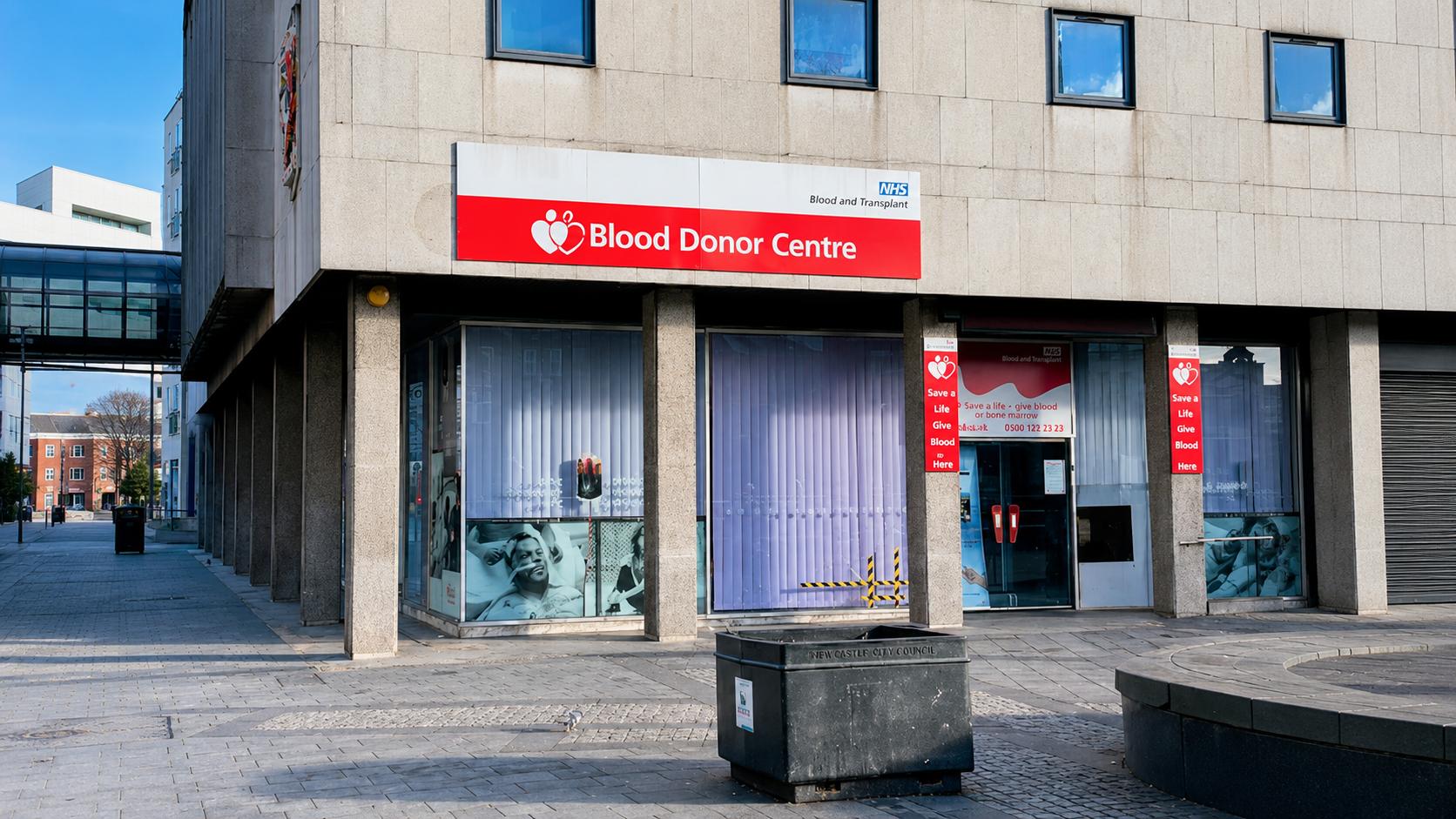
Blood donation appointments are booked through NHS Blood and Transplant online or by phone, with sessions held in permanent centres and travelling venues across the North East.
The organ donor register is accessible online and takes a couple of minutes to complete. The most important step afterwards is telling your family.
Stem cell registration is through Anthony Nolan, DKMS or the NHS register, depending on age and eligibility.
None of the three commits you permanently. Decisions can be changed at any point.
Share your thoughts.
Have you told your family what you would want to happen?
Community News
Blood, Organ and Stem Cell Donation: How to Sign Up
Three separate registers, three different processes, and a set of rules that changed significantly in recent years without many people noticing.
Advertisement





Comments (0)
You must be logged in to post comments.
Don't have an account? Register here
No comments yet. Be the first to share your thoughts!