
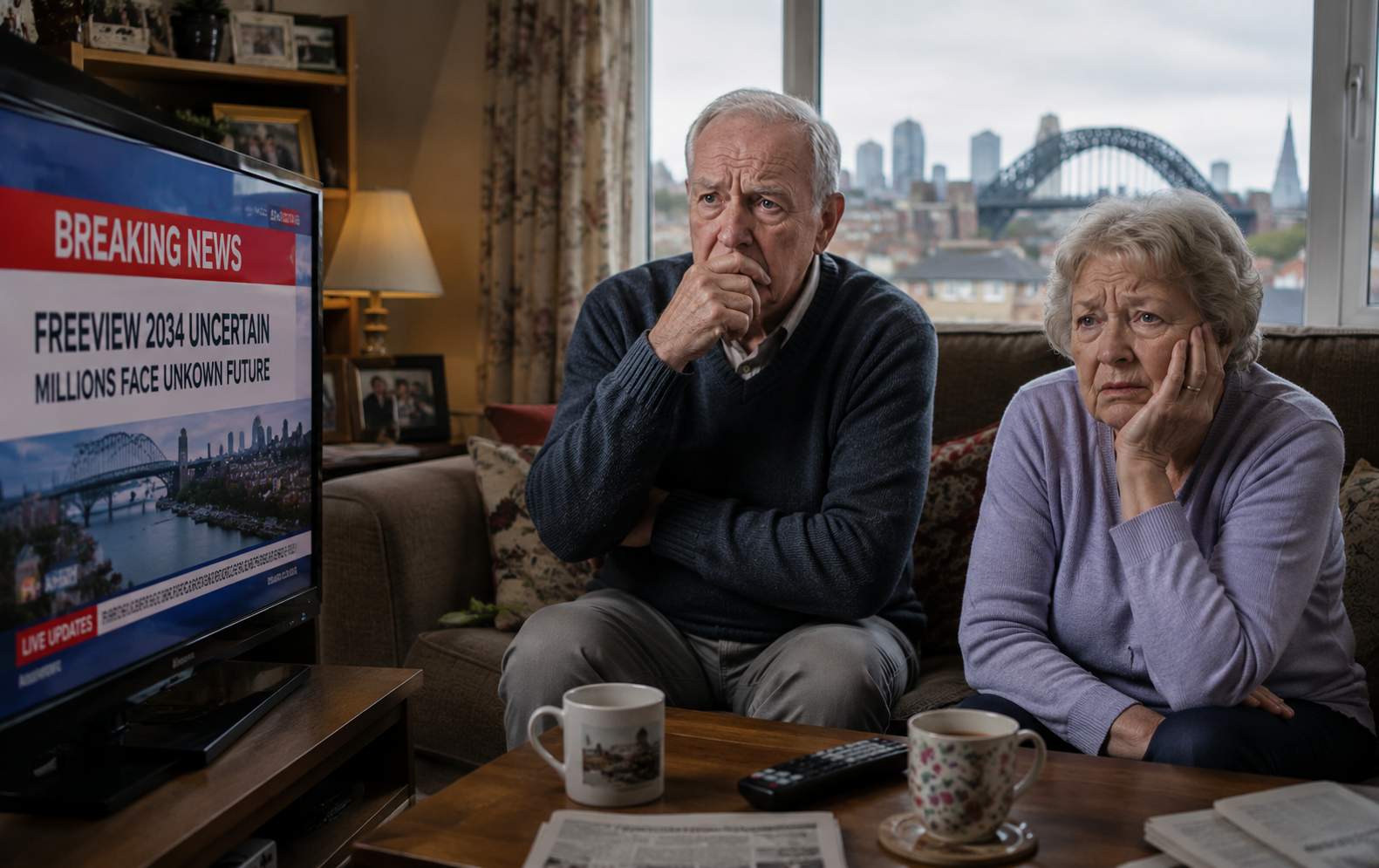
Millions of households across the UK could face major changes to the way they watch television after the Government confirmed that Freeview's current broadcasting licences are only guaranteed until 2034. While ministers insist no final decision has been made, concerns are growing that the future of traditional television could be moving towards an internet-only model.
For many people in Newcastle and across the North East, the prospect of losing Freeview is about far more than entertainment. Campaigners, pensioners and disability groups warn that any move away from traditional aerial-based television risks leaving some of society's most vulnerable people behind.
The Department for Culture, Media and Sport (DCMS) has confirmed that digital terrestrial television licences have been secured until at least 2034, but no decision has yet been taken on what happens after that date. The announcement has reignited fears that millions of households may eventually be forced to rely entirely on broadband connections to access television services.
Why The Future Of Freeview Matters.
Freeview remains one of the UK's most widely used television platforms, serving around 13.6 million homes. For many viewers, particularly older residents, it provides a simple and reliable way to access news, entertainment and emergency information without the need for subscriptions, broadband packages or complicated technology.
In Newcastle, where many pensioners live alone and rely heavily on television for companionship and information, the issue is attracting increasing attention. Community groups have warned that television often acts as a lifeline for elderly residents who may have limited mobility or struggle to leave their homes regularly.
The concern is not simply about adapting to new technology. For many people, especially those living on fixed incomes, the financial implications could be significant. If Freeview were eventually switched off, households without broadband would need to pay for internet access simply to continue watching television.
Thousands Could Be Left Behind By Digital Exclusion.
Although internet use is widespread, the UK still has a substantial digital divide.
Recent Ofcom research suggests around 2.8 million people in the UK do not have internet access at home. Other digital inclusion studies have highlighted that millions more struggle with affordability, digital skills or access to suitable devices.
Older people are among those most affected. Research shows many of those lacking basic digital skills are aged over 65, while disabled people are also disproportionately represented among digitally excluded groups.
For some Newcastle residents, particularly those living in social housing or surviving on State Pension payments, the additional cost of broadband could become another financial burden at a time when many are already facing rising household bills.
Digital exclusion campaigners argue that internet access is still not universal, despite years of investment in broadband infrastructure.
Newcastle's Older Residents Could Face The Biggest Impact.
The North East has one of the fastest ageing populations in England, with thousands of residents depending on traditional television services every day.
For many elderly viewers, television is not simply a source of entertainment. It provides news updates, health information, weather warnings and a sense of connection with the outside world.
Charities working with older people have repeatedly warned that forcing a rapid transition to internet-based services could increase loneliness and social isolation.
Many pensioners are comfortable using a television remote but may struggle with streaming platforms, account logins, password management and internet troubleshooting. Others simply cannot afford monthly broadband contracts.
The situation could be particularly difficult for residents living alone, many of whom rely on television as their primary source of daily interaction and information.
Concerns For Disabled Viewers Continue To Grow.
Disability campaigners have also raised questions about how an internet-only television system would affect people with accessibility needs.
Many disabled viewers depend on familiar technology setups that have been adapted to suit their requirements. Any transition to new equipment or streaming platforms could create additional barriers.
There are also concerns about reliability. Traditional broadcast television remains available during many internet outages and network disruptions. If households become entirely dependent on broadband services, interruptions could leave vulnerable viewers without access to essential information.
For those with visual impairments, learning difficulties or limited digital skills, adapting to new systems may not be straightforward.
Cost Of Living Pressures Add To The Debate.
One of the strongest arguments against a Freeview switch-off centres on affordability.
Broadband costs vary significantly across the country, but for households already struggling with food, heating and energy bills, another mandatory monthly expense could prove difficult to absorb.
Consumer groups point out that television has traditionally been available through a one-off equipment purchase and licence fee. Requiring internet access would effectively introduce an ongoing cost for households that currently do not need broadband.
Families receiving benefits could be particularly affected. Digital inclusion research has found that millions of low-income households continue to struggle with the cost of staying connected. Around 3.7 million families are estimated to fall below the minimum digital living standard required to participate fully in modern society.
Critics argue that any decision about Freeview's future must consider these financial realities before forcing viewers towards internet-only services.
Rural Communities Still Face Connectivity Challenges.
While Newcastle itself benefits from relatively strong broadband coverage, many surrounding rural communities across Northumberland and the wider North East continue to experience connectivity problems.
Even where broadband is available, speeds can vary considerably. Recent research has highlighted ongoing issues with digital infrastructure and connectivity across parts of the UK.
Campaigners argue that switching off terrestrial television before universal, reliable and affordable broadband access is achieved would risk creating a two-tier broadcasting system.
Residents in more remote areas could find themselves paying higher costs while receiving a less reliable service than those living in major cities.
Government Says No Final Decision Has Been Made.
Despite growing concern, ministers stress that no final decision has been taken regarding the future of Freeview after 2034.
Responding to parliamentary questions, the Government confirmed that the Department for Culture, Media and Sport is continuing to assess evidence regarding the future of digital terrestrial television.
Officials say any future changes would require careful consideration of how viewers could be affected, particularly vulnerable audiences.
That reassurance may provide some comfort, but campaigners believe discussions need to happen now rather than later.
With just eight years remaining until the current licence period expires, many argue that households deserve clarity about what television services will look like in the future.
Public Awareness Remains Surprisingly Low.
One of the most striking aspects of the debate is how little public awareness exists.
Polling cited by campaign groups suggests that a large majority of people remain unaware that the future of Freeview is currently under consideration.
For Newcastle residents who rely on the service daily, the possibility of losing traditional television access may come as a surprise.
Campaigners say this lack of awareness highlights the need for greater public consultation before any decisions are made.
They argue that pensioners, disabled people, carers and low-income households should have a direct voice in discussions about the future of UK broadcasting.
What Happens Next.
The Government's review of digital terrestrial television is expected to continue over the coming years, with ministers weighing up whether Freeview should remain beyond 2034 or whether the UK should eventually move towards internet-delivered television services.
For now, Freeview remains secure until at least 2034. However, the uncertainty surrounding its future is already prompting questions about affordability, accessibility and digital inclusion.
In Newcastle and across the UK, many viewers will be hoping that any future decision protects those who rely most heavily on traditional television. For pensioners, disabled residents and families struggling with rising costs, the debate is about much more than technology. It is about ensuring nobody is left disconnected from information, news and the wider world.
Have your say.
Are pensioners and vulnerable households being overlooked in the push towards digital services?
Entertainment News
Freeview Switch-Off Warning Sparks Fears For Newcastle Pensioners
Advertisement



Comments (0)
You must be logged in to post comments.
Don't have an account? Register here
No comments yet. Be the first to share your thoughts!