
There is a persistent and unhelpful belief that a hospice is where people go in the last few days of life, and that a referral is therefore a signal that everything has been given up on. Families frequently resist the suggestion for exactly that reason, and in doing so miss out on months of support that would have made a genuine difference to everyone involved.
Newcastle is comparatively well served. St Oswald's Hospice in Gosforth provides care for adults, young adults and children, and is the only children's hospice in the area. Marie Curie operates a hospice in the west of the city. Both work alongside NHS palliative care teams, district nurses and GPs rather than separately from them.
Palliative care is not the same as end of life care.
The distinction matters. Palliative care is the management of symptoms and support for quality of life in people with a serious illness that cannot be cured, and it can begin early, run alongside active treatment and continue for years.
End of life care refers to the last months, weeks or days. It is a part of palliative care, not the whole of it.
People receive hospice support while still having chemotherapy, while working, while raising children, and while very much alive in every ordinary sense. Some patients are discharged from hospice services when their symptoms are well controlled and return later.
What hospices actually do.
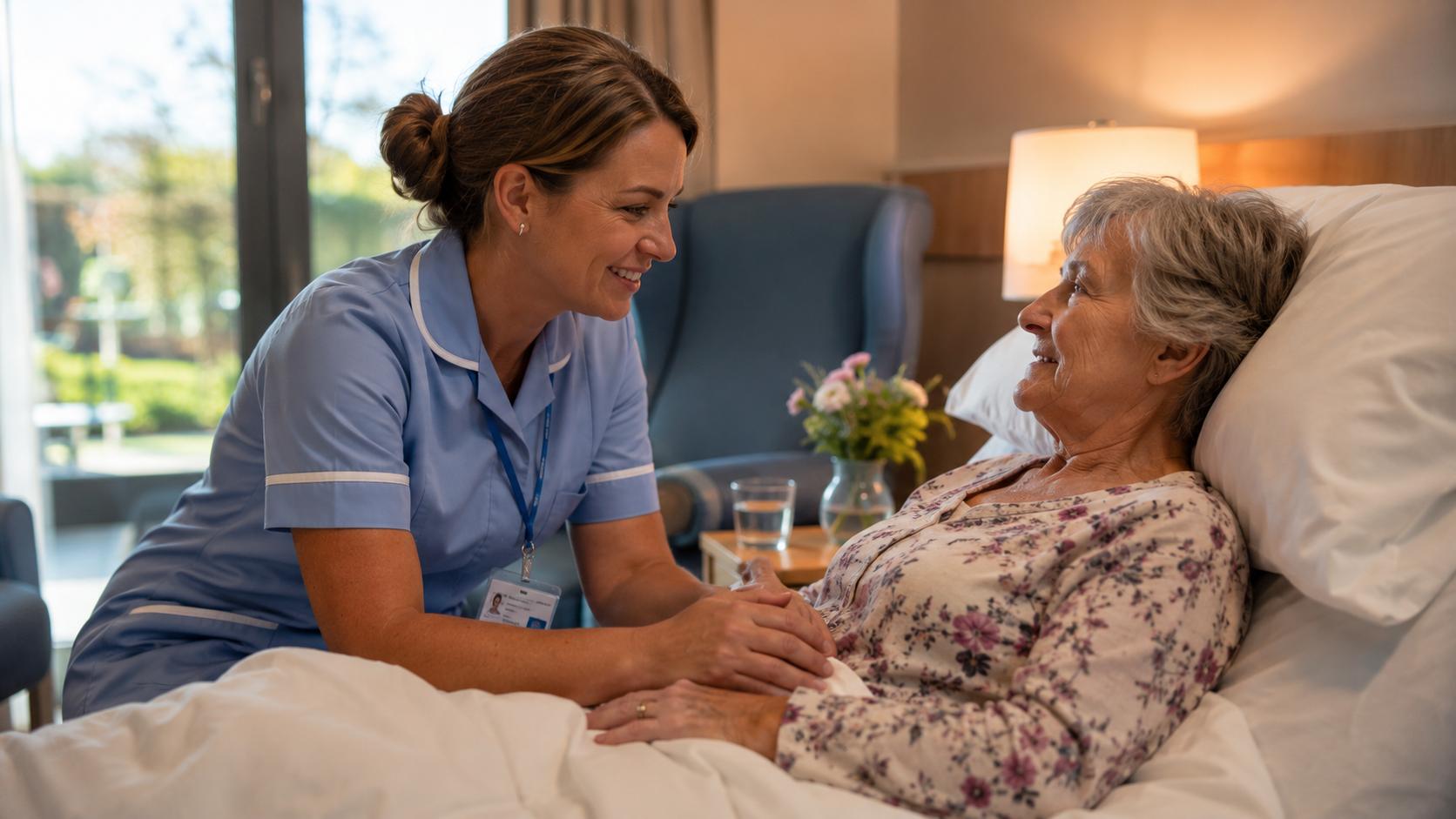
Inpatient beds are the most visible part, used for symptom control that is too complex to manage at home, for a period of stabilisation, for respite, and for care at the end of life. Many admissions are not final; patients come in, get symptoms under control and go home again.
Hospice at home services provide specialist nursing in the patient's own home, which is where most people say they would prefer to be, and which is achievable far more often when the right support exists.
Day services and outpatient clinics offer symptom review, therapies, creative and social activities and the chance to meet others in a similar position, which for isolated patients is frequently the most valued element.
Specialist therapies include physiotherapy, occupational therapy, complementary therapies, and lymphoedema services, which manage the swelling that follows some cancer treatments and can be seriously debilitating.
Family and bereavement support extends before and after death, and includes support for children, which is an area many families do not realise is available to them.
The children's and young adults' service is distinct.
Children's hospice care operates on an entirely different model from adult services. Children with life-limiting conditions may be supported for many years, and the emphasis is heavily on short breaks giving families respite from relentless caring, alongside symptom management and end of life care when the time comes.
The transition from children's to adult services in the late teens has historically been difficult across the country, and dedicated young adult services exist specifically to bridge it.
Sibling support is a recognised part of the work, since brothers and sisters of a seriously ill child carry a burden that is easily overlooked.
It is free to patients, and largely not funded by the NHS.
Hospice care is provided free of charge to patients and families. Nobody is billed, and nobody should hesitate to seek a referral for financial reasons.
The funding behind it is another matter. Most UK hospices are independent charities, and NHS funding typically covers only a minority of their running costs, with the remainder raised through shops, donations, legacies, lotteries and community fundraising.
That model produces a service that is embedded in and supported by its community, and also one that is financially exposed. Rising costs, pressure on charitable giving and the increasing complexity of patient need have caused real difficulty for hospices across the country in recent years, with some reducing services.
The shops on Newcastle high streets, the sponsored walks and the collection tins are not peripheral. They are how the beds stay open.
Getting a referral.
Referrals usually come from a GP, hospital consultant, district nurse or specialist nurse. Some services accept enquiries directly from patients or families, who can then be assessed.
The earlier the conversation, the better the outcome tends to be. Families who make contact early report feeling supported rather than abandoned, and have time to build relationships with the team before a crisis.
If you are unsure whether a referral is appropriate, ask. Hospice teams are used to that call and would far rather have it early than late.
Advance planning belongs in this conversation.
Discussing preferences before a crisis makes it far more likely that they will be met. That includes preferred place of care, what interventions a person would or would not want, and who should be involved in decisions.
Documents and processes exist to record this, including advance care plans, advance decisions to refuse treatment and lasting power of attorney for health and welfare. Hospice teams are experienced in supporting these conversations and can help families who find them impossible to start alone.
What families say afterwards.
The consistent theme in feedback is not about medicine. It is about being treated as a person rather than a diagnosis, about staff having time, and about the family being supported rather than managed.
The second consistent theme is regret at not having made contact sooner.
If you are affected by anything in this article, hospice teams, your GP and organisations including Marie Curie and Sue Ryder provide information and support, and bereavement support is available whether or not the person who died was a hospice patient.
Share your thoughts.
Do you think hospices are well understood locally, or does the word still put people off?
Health News
Hospice Care in Newcastle: What It Provides and Who Pays
Advertisement





Comments (0)
You must be logged in to post comments.
Don't have an account? Register here
No comments yet. Be the first to share your thoughts!