
Growing concerns over artificial intelligence are no longer limited to debates about jobs, privacy, or the future of work. Security analysts are now warning about the emergence of a new and more dangerous trend, one that could see small groups of anti-AI extremists turning frustration into direct action against technology infrastructure.
While public concern about artificial intelligence continues to rise across the UK and Europe, experts stress that the overwhelming majority of critics remain peaceful and simply want greater transparency, stronger regulation, and better protections for workers. However, intelligence specialists and researchers studying online extremist communities have identified a small but increasingly vocal fringe that views technological progress itself as a threat that must be stopped.
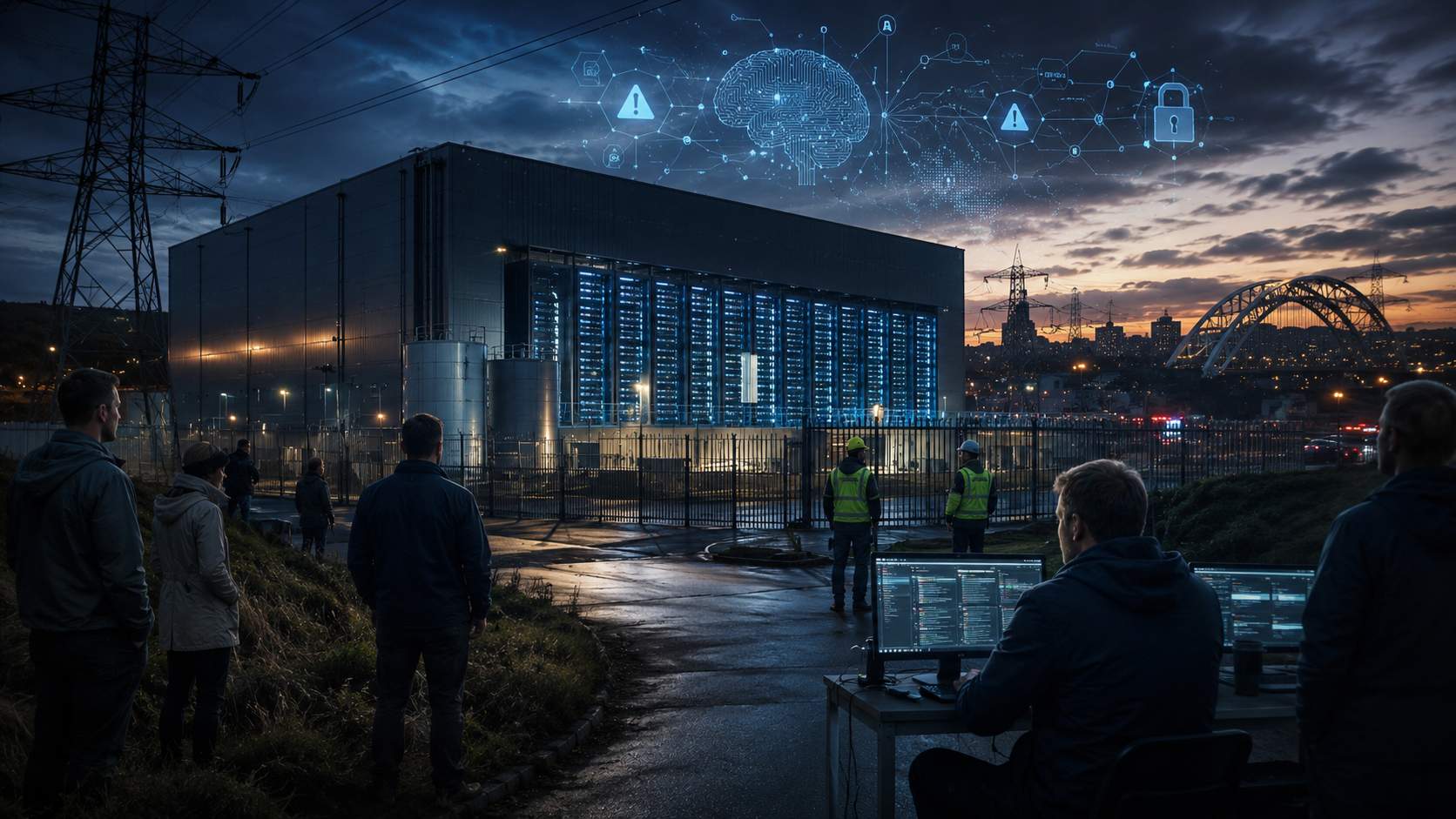
The development has raised questions for cities such as Newcastle, where technology investment, digital innovation, and data-driven industries are becoming an increasingly important part of the local economy. As artificial intelligence becomes embedded in everything from healthcare and transport to customer service and manufacturing, fears are growing that critical infrastructure could become a target for individuals motivated by anti-technology ideologies.
A New Form Of Extremism Emerges.
Researchers tracking online discussions have reported a noticeable increase in communities dedicated to opposing artificial intelligence at almost any cost. These groups are often united by a belief that advanced technology represents an existential threat to humanity, jobs, communities, and traditional ways of life.
Unlike conventional protest movements, which focus on lobbying, campaigning, or public demonstrations, some of these extremist factions advocate disruption and sabotage. Their rhetoric frequently centres on stopping AI development through direct action against companies, facilities, and infrastructure associated with technological advancement.
Security experts say these movements draw support from a mixture of environmental concerns, economic anxieties, anti-corporate sentiment, and fears about automation replacing human workers.
Although most online discussions remain non-violent, analysts have warned that inflammatory rhetoric can sometimes inspire isolated individuals to carry out criminal acts.
Why Artificial Intelligence Is Becoming A Flashpoint.
Artificial intelligence has transformed from a niche technology into a mainstream force affecting millions of people worldwide. Businesses are rapidly adopting AI systems to improve productivity, automate routine tasks, and enhance customer experiences.
Recent research suggests AI adoption is accelerating at a remarkable pace. A McKinsey global survey found that nearly nine in ten organisations are now using AI in some form, although many are still struggling to achieve large-scale results.
Meanwhile, workforce concerns remain significant. Research published by Pew found that 52% of workers are worried about how AI could be used in the workplace, while nearly one-third believe it could reduce future job opportunities.
These anxieties have created fertile ground for activists and campaigners who question whether society is moving too quickly toward automation without fully understanding the consequences.
In Newcastle and across the North East, where traditional industries have undergone major transformations over recent decades, concerns about technological disruption resonate strongly with many workers who have experienced economic change first-hand.
Data Centres Increasingly In The Spotlight.
One of the most visible symbols of the AI revolution is the rapid expansion of data centres.
These facilities store, process, and manage the enormous volumes of information required to power modern digital services. As demand for artificial intelligence grows, so too does demand for new data centre infrastructure.
Yet many communities are questioning the environmental and economic impact of these developments.
A recent survey found that 89% of adults had little or no understanding of what data centres actually do, highlighting a significant public knowledge gap. The same research showed that concerns about energy consumption, environmental impact, and local infrastructure remain widespread.
While legitimate concerns about development projects are common, security analysts warn that extremist groups may attempt to exploit these debates by encouraging more aggressive tactics.
Experts stress there is an important distinction between lawful protest and criminal activity. Communities have every right to question developments that affect their local area, but threats, intimidation, and sabotage represent an entirely different issue.
Newcastle's Growing Digital Economy.
Newcastle has emerged as one of the UK's leading regional technology hubs.
The city is home to a growing ecosystem of software companies, digital startups, research institutions, and technology employers. Newcastle University has established itself as a centre for innovation, while the wider North East continues to attract investment in advanced manufacturing, cybersecurity, and digital infrastructure.
Artificial intelligence is expected to play an increasingly important role in this growth.
From healthcare diagnostics and logistics planning to customer support and business analytics, AI applications are becoming deeply embedded across multiple sectors.
For this reason, any threat directed at digital infrastructure could have wider implications for employment, investment, and economic development throughout the region.
Industry leaders argue that while public debate about AI is healthy and necessary, attempts to disrupt technology projects through violence or intimidation could undermine opportunities for local businesses and workers.
Online Communities Fueling Radicalisation.
One of the biggest challenges facing researchers is the role of online platforms in spreading extremist narratives.
Digital communities allow people from different countries and backgrounds to connect around shared grievances. In some cases, these discussions remain focused on legitimate concerns. In others, conversations can become increasingly hostile and radicalised.
Security specialists have noted that anti-AI extremist content often combines several themes, including fears about mass surveillance, concerns about corporate influence, environmental worries, and predictions of societal collapse caused by advanced technology.
These narratives can be particularly appealing during periods of economic uncertainty, when people are already worried about employment, rising costs, and rapid social change.
Researchers caution that most individuals engaging in these discussions never become involved in criminal activity. However, even small extremist networks can generate disproportionate risks if they encourage acts of sabotage or violence.
The Employment Debate Continues.
Much of the anger directed toward artificial intelligence stems from concerns about jobs.
A growing number of workers worry that automation could eventually replace tasks currently performed by humans. These fears are often amplified by headlines predicting large-scale workforce disruption.
Recent studies suggest the issue is complex. Research indicates that AI can boost productivity while also changing the nature of work. According to PwC's 2025 AI Jobs Barometer, industries with greater exposure to AI have experienced significantly faster productivity growth, while demand for AI-related skills continues to rise.
At the same time, some surveys show ongoing concern among employees about future job security.
For cities like Newcastle, the challenge may be balancing innovation with workforce development. Business leaders increasingly argue that retraining, education, and skills investment will be essential if workers are to benefit from technological change rather than be left behind by it.
Security Experts Urge Caution.
Counter-extremism specialists are urging policymakers, businesses, and the public to avoid conflating peaceful critics of artificial intelligence with genuine extremists.
Many campaigners raising concerns about AI are focused on ethical issues such as privacy, accountability, transparency, and environmental sustainability. These debates are widely recognised as important components of responsible technological development.
However, analysts say there is a danger that a small number of extremists could attempt to exploit broader public concerns to gain attention and recruit supporters.
Experts emphasise that criticism of technology is not a threat. Violence, intimidation, and deliberate attempts to damage infrastructure are.
Maintaining that distinction will be crucial as public conversations about AI continue to evolve.
The Environmental Question.
Environmental concerns are another factor driving opposition to large-scale AI infrastructure.
Data centres require significant amounts of electricity and cooling capacity, leading some communities to question whether new developments are sustainable.
Research examining future AI infrastructure projects found growing concerns about energy consumption and water usage associated with large-scale computing facilities.
These debates are increasingly visible across Europe, where communities are demanding greater transparency regarding environmental impacts.
In Newcastle, where sustainability initiatives and green growth strategies are becoming increasingly important, questions about the environmental footprint of emerging technologies are likely to remain a key issue.
Balancing Innovation And Public Trust.
Perhaps the greatest challenge facing governments, businesses, and technology companies is maintaining public trust.
Artificial intelligence offers significant opportunities to improve productivity, healthcare outcomes, education, and economic growth. Yet many people remain uncertain about how these systems will affect their lives.
Research shows that AI adoption continues to expand rapidly across industries, but public understanding often lags behind technological development.
This gap can create confusion, misinformation, and fear.
Experts argue that transparency, public engagement, and clear communication will be critical in reducing tensions and preventing extremist narratives from gaining traction.
For Newcastle and other cities investing heavily in digital innovation, building public confidence may prove just as important as building new technology itself.
What Happens Next.
The rise of anti-AI extremist rhetoric represents a warning sign rather than a widespread crisis.
Most people concerned about artificial intelligence simply want sensible safeguards, responsible development, and reassurance that technological progress will benefit society as a whole. However, security specialists are increasingly monitoring a small minority whose views appear to be shifting toward direct action and potential criminality.
As AI becomes more integrated into daily life, debates about its future are likely to intensify.
The challenge for communities, businesses, and policymakers will be ensuring those debates remain open, informed, and peaceful.
For Newcastle, a city that continues to embrace technological innovation while maintaining a strong sense of community identity, the conversation around artificial intelligence may become one of the defining issues of the decade.
Join The Discussion.
Do you believe Newcastle is prepared for the rise of artificial intelligence and the challenges it could bring?
Tech News
New Anti-AI Extremist Movement Raises Fears Of Technology Attacks
Advertisement





Comments (0)
You must be logged in to post comments.
Don't have an account? Register here
No comments yet. Be the first to share your thoughts!