
The UK government is preparing to introduce one of the toughest online safety measures ever proposed in Britain, with Prime Minister Keir Starmer expected to announce plans that would prevent children under the age of 16 from accessing major social media platforms.
The proposals, which insiders have described as an "Australia plus" approach, would go beyond measures already introduced elsewhere by restricting access to popular apps including TikTok, Instagram, Facebook, X and Snapchat. Additional safeguards are also expected to affect gaming platforms and messaging services used by millions of young people across the country.
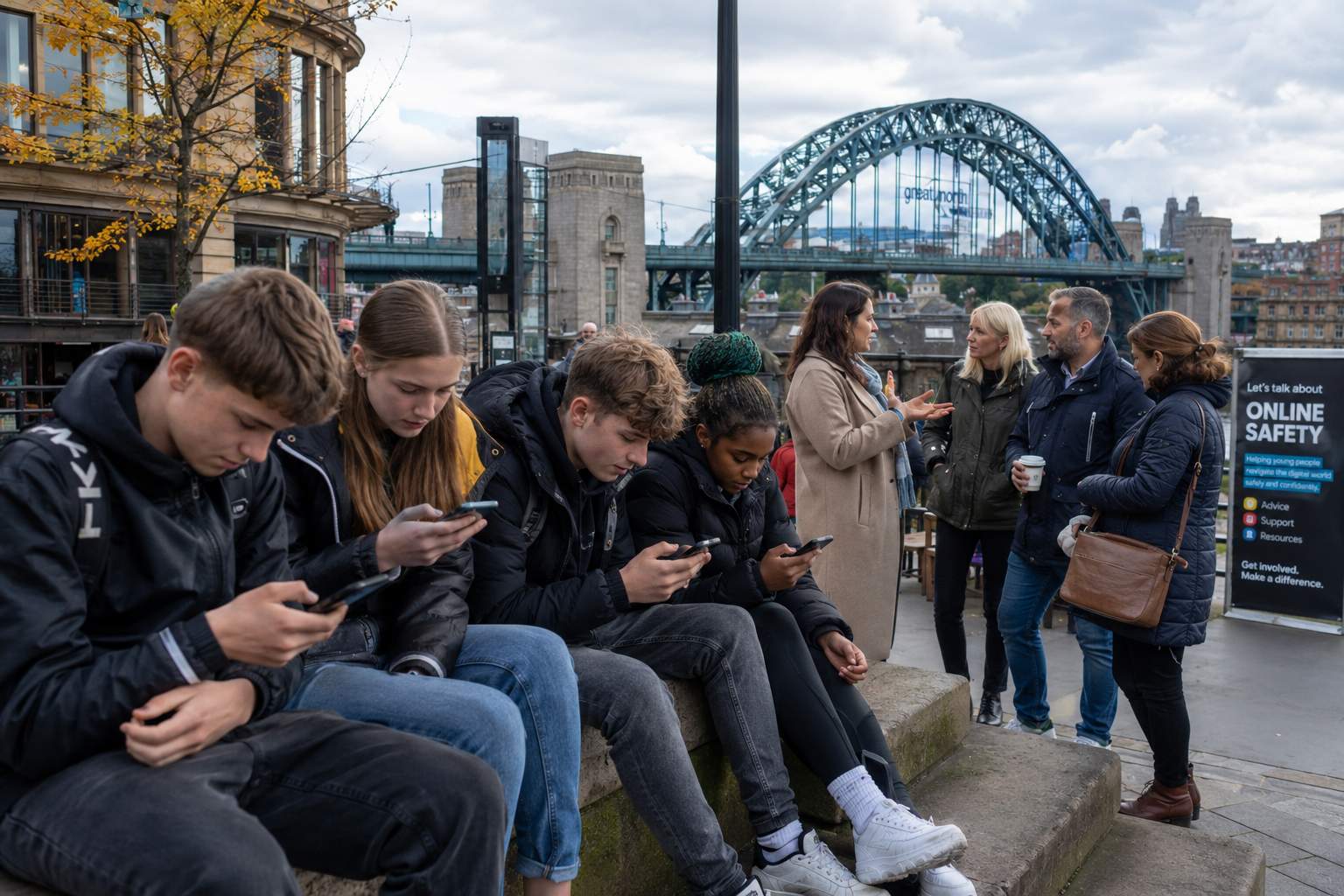
The announcement has already sparked discussion among parents, teachers and young people in Newcastle, where concerns about online safety, screen time and mental health continue to grow.
Why The Government Is Taking Action.
The government's move follows a consultation on children growing up in an increasingly digital world. Ministers say they have been influenced by evidence suggesting that social media platforms can expose young users to harmful content, addictive scrolling features and unwanted contact from strangers.
According to government figures, around 90 per cent of parents who responded to the consultation supported introducing a minimum age of 16 for access to major social media platforms. Meanwhile, nearly nine in ten respondents believed fewer children would encounter harmful or inappropriate content if stronger restrictions were introduced.
The government also reported that many young people supported limits on high-risk platform features, believing such measures could improve online safety.
These findings have helped shape a policy that represents a significant shift in the Prime Minister's position. Starmer had previously expressed concerns about whether social media bans could be effectively enforced, but government sources now say the evidence convinced him that stronger intervention is needed.
Newcastle Families Voice Mixed Reactions.
In Newcastle and across the North East, reactions have been varied.
Many parents have welcomed the proposals, arguing that children are being exposed to social media at increasingly younger ages. Some local families say they struggle to monitor the content their children consume online and believe tougher restrictions could help reduce risks.
Schools throughout Newcastle have also reported growing concerns around cyberbullying, online harassment and the impact excessive screen time can have on concentration and wellbeing.
However, not everyone is convinced the ban will solve the problem.
Some young people argue that social media has become an essential part of modern communication, helping them stay connected with friends, school groups and local communities. Others question whether teenagers will simply find ways around the restrictions.
The debate reflects a broader national conversation about balancing online freedom with child protection.
New Restrictions Could Extend Beyond Social Media.
The proposals are expected to cover more than traditional social media apps.
Government sources suggest that gaming platforms may be required to remove certain features for younger users, including the ability to communicate with strangers. Messaging tools could also face tighter controls, particularly features such as disappearing messages and location sharing.
In addition, ministers are reportedly considering restrictions aimed at older teenagers aged 16 to 18. These measures could target late-night scrolling habits and other features designed to maximise user engagement.
Another significant proposal would block under-18s from accessing romantic or sexual AI chatbots, reflecting growing concerns about artificial intelligence and its influence on younger users.
The Challenge Of Enforcement.
One of the biggest questions surrounding the proposed ban is how it would be enforced.
Technology companies may be required to introduce stricter age verification systems. Potential methods include facial age estimation technology, government-issued identification checks or verification through banking information.
While supporters argue these measures are necessary, critics warn they could raise privacy concerns for users.
Experience in Australia has also highlighted the difficulties of enforcement. Since Australia introduced its own under-16 social media restrictions, reports have suggested that many young people have attempted to bypass age limits using alternative methods.
Technology experts say any UK system will need to balance effectiveness with privacy and practicality.
The Statistics Behind The Debate.
The government's plans come at a time when social media use among young people remains extremely high.
Recent Ofcom research found that the vast majority of UK teenagers use at least one social media platform regularly. Studies have also shown that many children access social media before reaching the minimum age requirements already set by platforms.
Research cited by campaign groups suggests that nearly half of teenage girls reported seeing harmful content online within a single week. Mental health charities have repeatedly highlighted concerns about the relationship between excessive social media use, anxiety and low self-esteem among young people.
These statistics continue to fuel calls for stronger regulation and greater accountability from technology companies.
Industry Concerns Remain.
Not everyone supports the government's approach.
Technology industry representatives have warned that blanket restrictions could limit access to positive online experiences and educational opportunities. Some argue that parental controls and improved platform safety measures would be more effective than outright bans.
Child safety campaigners are also divided. While many support stronger protections, others fear that a ban could create a false sense of security if children continue accessing platforms through unofficial routes.
The coming months are therefore likely to see intense debate between government ministers, technology companies, parents, educators and child safety organisations.
A Defining Moment For Online Safety.
Whether the policy ultimately succeeds may depend on how effectively it can be enforced and whether technology companies cooperate with the government's plans.
For families across Newcastle, the announcement represents another major step in the evolving relationship between young people and the digital world. As social media becomes increasingly embedded in daily life, questions about safety, privacy and responsibility are unlikely to disappear anytime soon.
What is clear is that the government is signalling a new era of regulation, one that could reshape how the next generation experiences life online.
Share your views.
What do you think about the proposed under-16 social media ban?
Tech News
What The New Under-16 Social Media Ban Means For Newcastle Teens
Advertisement




Comments (0)
You must be logged in to post comments.
Don't have an account? Register here
No comments yet. Be the first to share your thoughts!