
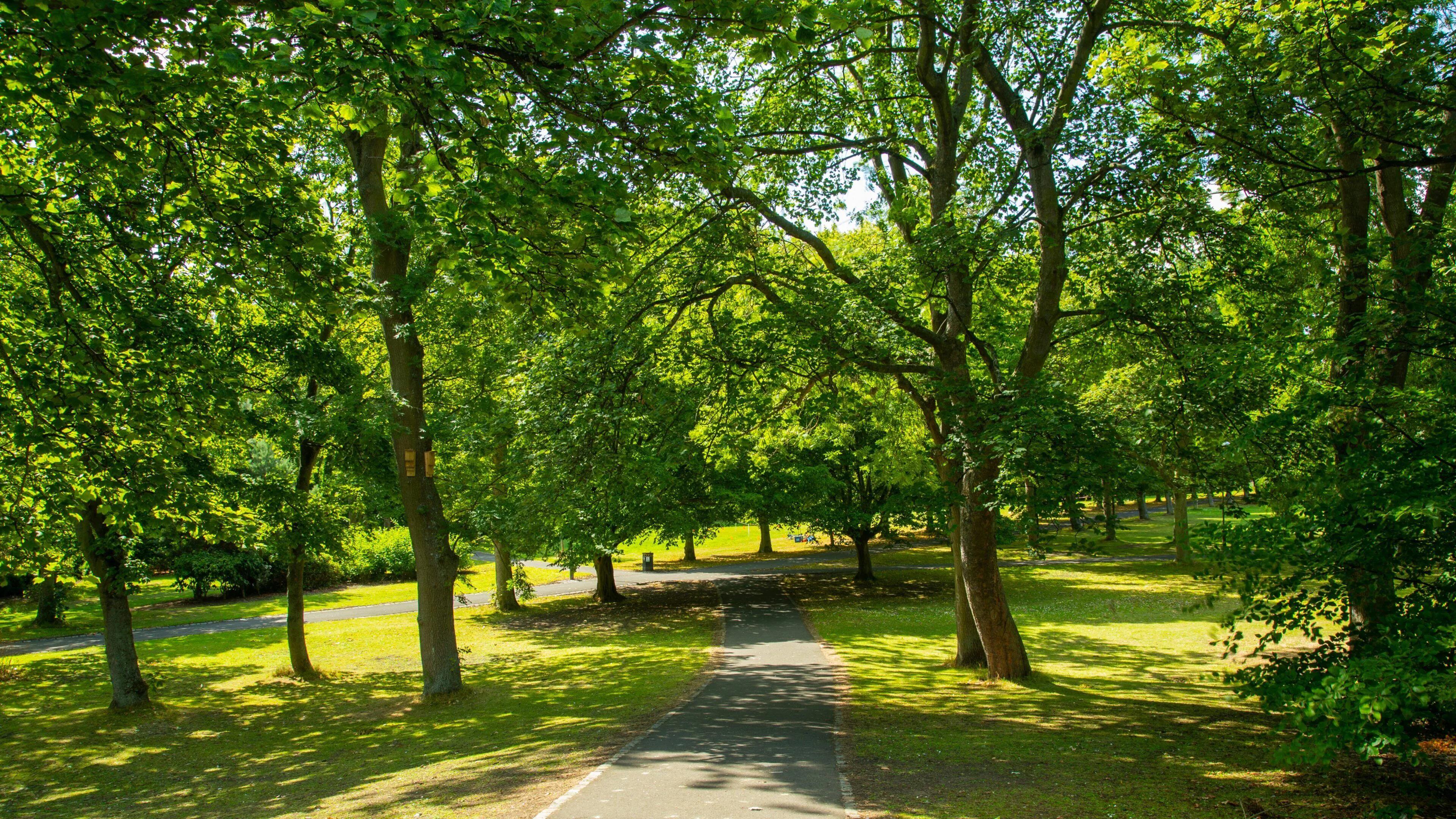
Parks and green spaces are among the most democratic and valued amenities a community has, free to all and open to everyone. But behind the gates, many of the North East's parks are under quiet pressure, the victims of years of funding cuts that threaten the quality and even the future of these much-loved spaces.
A Discretionary Service.
The fundamental problem is that, unlike schools or social care, parks are a discretionary service. Councils have no legal duty to provide or maintain them, which means that when budgets are squeezed, parks are often among the first things to be cut.
This leaves green spaces vulnerable in a way that statutory services are not, dependent on the willingness and ability of hard-pressed councils to fund them. In an era of severe financial pressure on local government, that is a precarious position.
Years of Cuts.
The figures tell a stark story. Across the country, councils have lost billions of pounds of funding for neighbourhood services, which include parks, since 2010, and the impact on green spaces has been severe.
The North East has felt this acutely. Newcastle, for example, cut its parks budget by around 91 per cent over a seven-year period, from millions of pounds to a tiny fraction of that, a reduction so drastic that the city eventually moved its parks into the care of an independent charitable trust to secure their future.
Visible Decline.
The consequences of these cuts are increasingly visible. Surveys of parks professionals report that budget reductions have led to reduced maintenance and a rise in unmaintained land, with many seeing cuts to the frequency of grass cutting and other upkeep.
The proportion of parks rated as being in good condition has fallen over recent years. Less mowing, fewer repairs, emptier bins and reduced staffing can set a park on a slow spiral of decline, making it less welcoming and, in turn, less used.
The Funding Outlook.
The outlook offers little immediate comfort. Surveys have found that the great majority of councils expect their budgets to fall further in the coming years, with many anticipating significant reductions, and parks services are likely to feel the effects.
While some recent national policy has begun to give parks more attention, and modest funding has been made available, this falls well short of reversing the damage done by more than a decade of cuts. Long-term, sustained funding for maintenance, rather than one-off capital grants, is what parks most need and most lack.
Why Parks Matter.
What makes this decline so concerning is the enormous value that parks provide. They offer free space for exercise, play and relaxation, benefiting physical and mental health, and they are especially important for those without gardens of their own, often in the most deprived areas.
They bring communities together, support wildlife and help to cool and clean the air in our towns and cities. The value parks delivered during the pandemic, when they became a lifeline for millions, demonstrated just how essential these green spaces are to the nation's wellbeing.
Finding New Ways.
Faced with shrinking budgets, councils and communities have sought new ways to sustain their parks. Some have moved parks into charitable trusts, as in Newcastle, while others have turned to income generation, partnerships and friends groups of local volunteers who help to maintain and improve their green spaces.
Relaxed mowing regimes, which save money while benefiting wildlife, have been adopted in many places. These innovations have helped, but there is a limit to how far they can plug the gap left by funding cuts, and they cannot substitute entirely for proper investment.
The Friends of the Park.
One of the most heartening responses has been the rise of friends groups and community volunteers who give their time to care for their local parks, such as Friends of Leazes Park. These groups raise funds, organise events, plant and maintain, and advocate for their green spaces, and their efforts have kept many parks alive and improving.
Their work is a powerful example of community spirit, but it also reflects the extent to which the upkeep of public spaces has come to rely on the goodwill of volunteers. They deserve recognition and support, not least because the burden on them grows as public funding falls.
A Shared Inheritance.
The North East's parks and green spaces are a shared inheritance, created by past generations for the benefit of all and held in trust for those to come. The pressures bearing down on them, the product of years of funding cuts and the precarious status of parks as a discretionary service, threaten that inheritance.
Protecting it will require proper funding, imaginative new approaches and the continued dedication of the communities who cherish their green spaces. For amenities that give so much to so many, and that belong to everyone, ensuring a healthy future is a cause worth rallying behind.
The Value We Overlook.
The pressure on parks reflects a deeper difficulty in how society values the things that are free, shared and open to all, for the benefits a park provides are real and substantial but rarely captured in the figures that drive funding decisions. A park does not generate revenue in any direct sense, yet it delivers enormous value: it improves physical and mental health, providing free space for exercise and relaxation; it brings communities together and reduces isolation; it supports wildlife and biodiversity; it helps to manage rainwater and to cool and clean the air; and it makes neighbourhoods more pleasant and desirable places to live.
Many of these benefits are diffuse and long-term, falling on the health service, on the environment and on the general quality of life rather than appearing as income on a balance sheet, which makes them easy to overlook when budgets are squeezed and harder choices loom. Yet to overlook them is a serious mistake, for the value a well-maintained park delivers far exceeds its modest running costs, and the consequences of letting parks decline, in worse health, greater isolation and degraded environments, are real even if they are slow to appear and hard to quantify.
The pandemic offered a powerful reminder of just how much parks are valued and needed, as people flocked to them for exercise, fresh air and a sense of normality when so much else was closed. That lesson should not be forgotten now that the crisis has passed.
Valuing parks properly means recognising the full breadth of what they contribute and funding them accordingly, treating them not as an optional luxury to be cut when money is tight but as essential infrastructure for healthy, happy communities. The green spaces that previous generations had the foresight to create are a precious asset, and ensuring they are valued and maintained is a responsibility that the present generation owes to the future.
Get involved.
As a discretionary service, parks have borne the brunt of council cuts, with Newcastle's parks budget once slashed by around 91 per cent.
How important is your local park to you, and have you noticed it changing?
Community News
Common Ground: The Pressure on Our Parks and Green Spaces
As a discretionary service, parks have borne the brunt of council cuts, with Newcastle's budget once cut 91%. We look at the pressure on green spaces.
Advertisement


Comments (0)
You must be logged in to post comments.
Don't have an account? Register here
No comments yet. Be the first to share your thoughts!