
For decades, sugar has been one of the most widely consumed ingredients in the world. It sweetens everything from tea and coffee to cereals, desserts and soft drinks. Yet growing concerns about obesity, diabetes, heart disease and excessive calorie intake have encouraged millions of people to look for healthier alternatives.
The search for better sweeteners has accelerated in recent years as health-conscious consumers seek ways to reduce sugar without sacrificing taste. One of the biggest developments has been the arrival of monk fruit sweetener in the UK, following regulatory changes that have opened the door to wider use of the ingredient in food and beverages.
At a time when diabetes rates continue to climb and public health experts are urging people to cut back on added sugars, understanding the benefits and drawbacks of alternative sweeteners has never been more important.
Why So Many People Are Cutting Back On Sugar.
Sugar consumption has become a major health concern across the UK.
According to Diabetes UK, approximately 4.6 million people in the UK are living with diagnosed diabetes, while millions more are considered at risk through pre-diabetes or undiagnosed cases. One recent analysis suggested that around one in five UK adults now has either diabetes or pre-diabetes.
The financial impact is equally significant. Diabetes currently costs the NHS an estimated £10.7 billion annually, with projections suggesting costs could rise substantially in the coming years if current trends continue.
Traditional table sugar contains around four calories per gram and can contribute to weight gain when consumed in excess. While sugar itself is not inherently harmful, excessive intake has been linked to a range of health issues, particularly when combined with sedentary lifestyles and highly processed diets.
This has led many consumers to explore alternatives that offer sweetness with fewer calories and less impact on blood sugar levels.
Monk Fruit Sweetener.
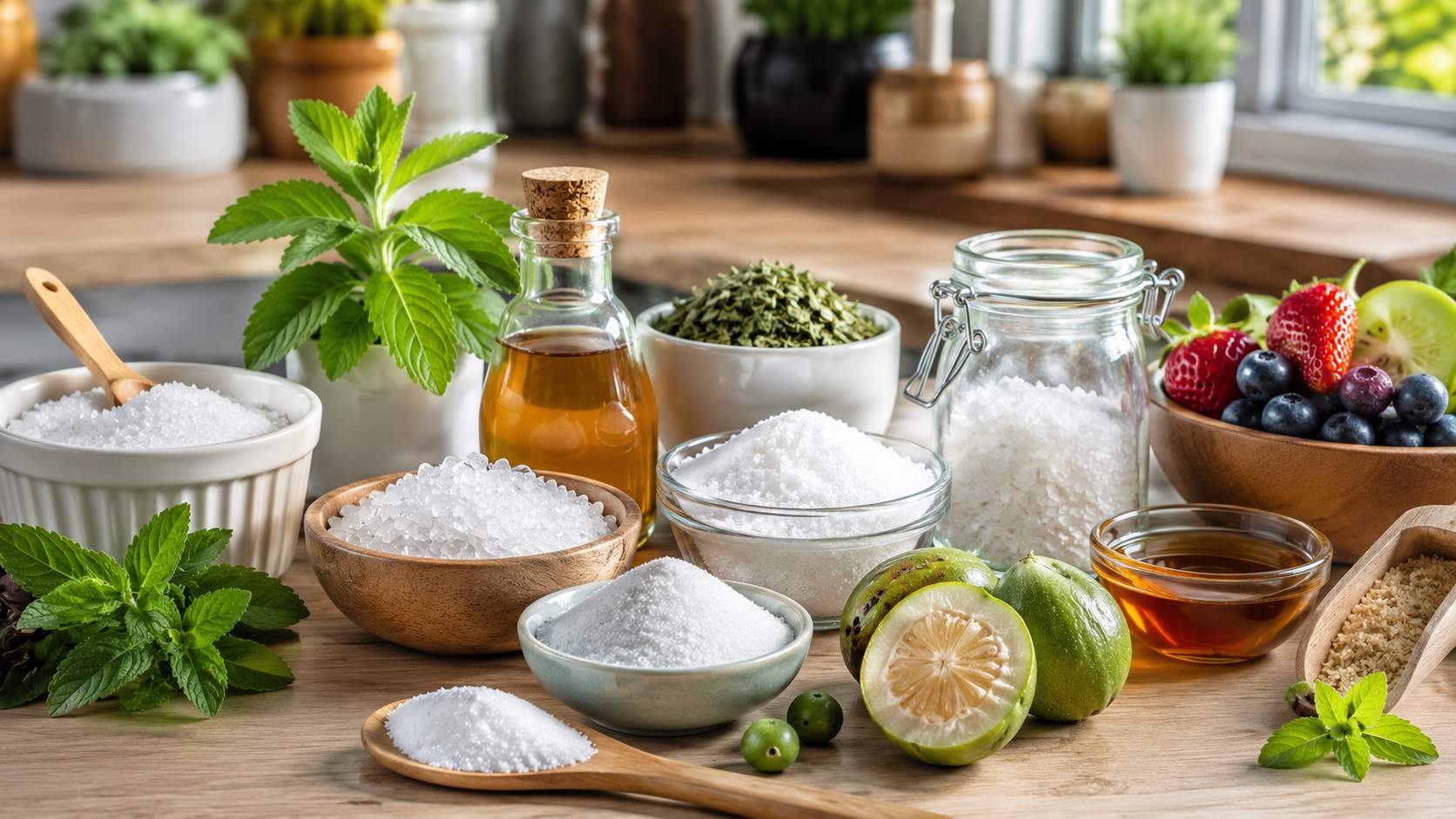
Monk fruit has rapidly become one of the most talked-about sugar alternatives available today.
Derived from the Siraitia grosvenorii plant, monk fruit has been used traditionally for centuries. What makes it particularly attractive is that its sweetness comes from natural compounds called mogrosides rather than sugar itself.
Monk fruit is estimated to be between 150 and 250 times sweeter than sugar, meaning only tiny amounts are required to achieve the same level of sweetness. It contains virtually no calories and does not significantly raise blood glucose levels, making it particularly appealing for people managing diabetes or reducing calorie intake.
A major development occurred when UK food authorities confirmed that traditional monk fruit preparations could be used more widely, creating new opportunities for manufacturers and consumers alike.
Many nutrition experts believe monk fruit could become one of the fastest-growing natural sweeteners in the UK over the next decade.
Stevia.
Stevia has become a household name among health-conscious shoppers.
Extracted from the leaves of the Stevia rebaudiana plant, stevia contains compounds called steviol glycosides that provide intense sweetness without significant calories.
Like monk fruit, stevia is far sweeter than traditional sugar, often estimated at 200 to 300 times sweeter. Because so little is required, calorie intake remains extremely low.
One of stevia's biggest advantages is its minimal effect on blood sugar levels. This has made it particularly popular among individuals managing diabetes and those following low-carbohydrate diets.
However, some consumers report a slightly bitter or liquorice-like aftertaste, which can vary depending on the formulation used.
Despite this, stevia remains one of the most widely used natural sugar alternatives worldwide.
Erythritol.
Erythritol belongs to a group of sweeteners known as sugar alcohols.
Unlike traditional sugar, erythritol contains only a fraction of the calories. Most estimates place its calorie content at around 0.2 calories per gram compared with four calories per gram for sugar.
It provides approximately 70 percent of sugar's sweetness and is commonly used in combination with monk fruit or stevia to create products that more closely replicate the taste and texture of sugar.
One reason erythritol has gained popularity is its low glycaemic impact. Blood sugar levels generally remain stable after consumption, making it a common ingredient in diabetic-friendly products.
Another advantage is dental health. Unlike sugar, erythritol does not appear to contribute significantly to tooth decay.
Xylitol.
Xylitol is another sugar alcohol that has become increasingly common in sugar-free products.
Found naturally in small amounts in fruits and vegetables, xylitol contains roughly 40 percent fewer calories than sugar while providing a similar level of sweetness.
One of its most interesting benefits is its reputation for supporting oral health. Numerous dental products, including chewing gums and toothpastes, contain xylitol because studies have suggested it may help reduce cavity-causing bacteria.
For consumers seeking a sweetener that behaves similarly to sugar in cooking and baking, xylitol is often considered one of the closest alternatives.
However, excessive consumption can cause digestive discomfort in some individuals, so moderation remains important.
Allulose.
Allulose is a newer entrant to the sugar alternative market but is attracting growing attention from researchers and food manufacturers.
Naturally present in small amounts in foods such as figs and raisins, allulose tastes remarkably similar to traditional sugar while containing only a fraction of the calories.
Many experts view allulose as one of the most promising next-generation sweeteners because it delivers a familiar taste profile without the blood sugar spikes associated with regular sugar.
Although availability remains more limited than some alternatives, industry analysts expect its popularity to continue growing as demand for healthier sweetening options increases.
Yacon Syrup.
For those seeking a more natural and minimally processed option, yacon syrup offers an interesting alternative.
Produced from the roots of the yacon plant, the syrup contains fructooligosaccharides, a type of carbohydrate that acts as a prebiotic fibre.
Unlike refined sugar, yacon syrup may help support beneficial gut bacteria. It also contains fewer calories than conventional sugar and has a lower glycaemic impact.
The taste is often described as similar to caramel or molasses, making it particularly suitable for baking and dessert recipes.
While it should still be consumed in moderation, yacon syrup represents another option for people seeking alternatives to highly refined sweeteners.
How The Calories Compare.
Understanding calorie differences can help consumers make informed choices.
A teaspoon of sugar contains approximately 16 calories.
By comparison:
Monk fruit: Approximately 0 calories.
Stevia: Approximately 0 calories.
Erythritol: Around 0.2 calories per gram.
Xylitol: Around 2.4 calories per gram.
Allulose: Around 0.4 calories per gram.
Yacon syrup: Approximately one-third fewer calories than sugar.
These differences can become significant over time, particularly for individuals who regularly consume sweetened drinks, desserts or snacks.
Which Sweetener Is Best For Diabetes.
People living with diabetes often look for sweeteners that minimise blood sugar spikes.
Monk fruit, stevia, erythritol and allulose generally have little to no measurable impact on blood glucose levels. This makes them popular choices among those managing diabetes or attempting to reduce carbohydrate intake.
Considering that around 90 percent of diabetes cases are type 2 diabetes, dietary changes remain a key component of prevention and management strategies.
While sweeteners alone are not a solution, replacing excessive amounts of added sugar can form part of a broader healthy eating plan.
Consumer Demand Continues To Rise.
The global market for sugar alternatives has expanded rapidly over the past decade.
Growing awareness of obesity, diabetes and healthier lifestyles has encouraged manufacturers to reformulate products and explore new sweetening technologies.
Monk fruit's arrival in the UK market is expected to accelerate this trend further, giving consumers more options than ever before.
At the same time, experts continue to emphasise that no sweetener should be viewed as a magic solution. The healthiest diets still focus on whole foods, balanced nutrition and moderation.
For consumers seeking practical ways to reduce sugar intake, however, today's range of alternatives offers far greater choice than was available just a few years ago.
As awareness grows and innovation continues, healthy sugar substitutes are likely to become an increasingly common part of everyday diets across the UK.
Join The Conversation.
Have you tried monk fruit, stevia or another sugar alternative?
Health News
Why Thousands Are Swapping Sugar For Monk Fruit
Advertisement




Comments (0)
You must be logged in to post comments.
Don't have an account? Register here
No comments yet. Be the first to share your thoughts!