
York is one of the easiest day trips available from Newcastle, and one of the most consistently rewarding. The train takes around an hour, deposits you a ten-minute walk from a medieval street plan that has barely changed in six centuries, and gets you home the same evening without any of the logistics that a proper trip away involves.
It is also a city that punishes poor planning, because everybody else has had the same idea. York receives an enormous number of visitors relative to its size, and the difference between a lovely day and a shuffle through crowds is largely down to when you go and what order you do things in.
The train is the obvious way to travel.
Services run frequently between Newcastle and York on the East Coast Main Line, with journey times generally around an hour on the faster services and a little longer on the stopping ones.
Advance tickets bought ahead of time are dramatically cheaper than buying on the day, and the saving on a family group is substantial. Off-peak returns give flexibility at a higher price. Railcards apply and pay for themselves quickly on this route.
Driving is possible but less appealing. The A1 is straightforward, but York's city centre is heavily restricted, parking is expensive and the park and ride sites, while good, add a step that the train avoids entirely.
York station itself is worth a moment. The great curved train shed, built in the 1870s, was the largest in the world when it opened and is a genuinely impressive piece of railway architecture in its own right.
The Minster is the anchor, and it charges.
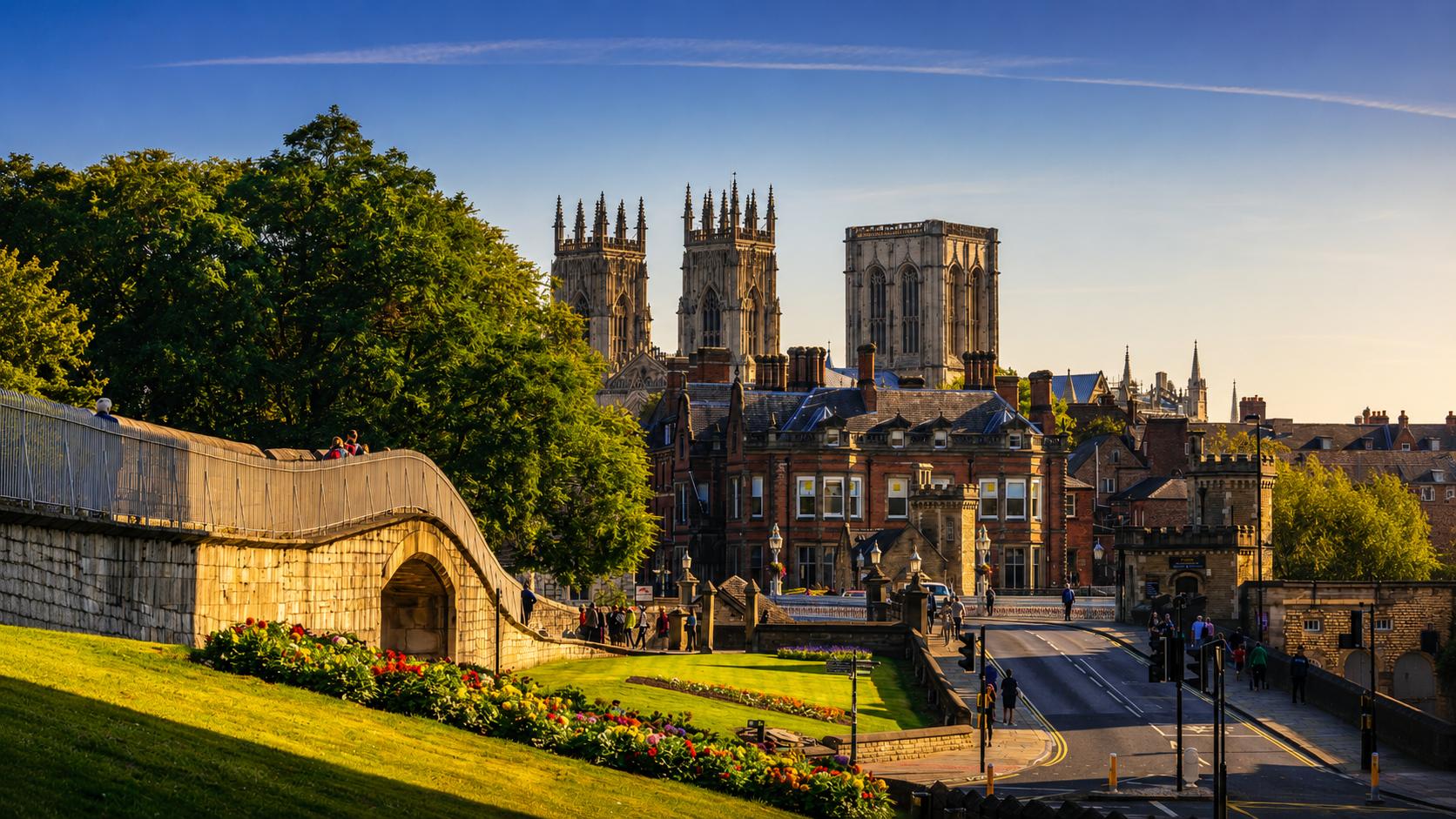
York Minster is the largest medieval Gothic cathedral in northern Europe and dominates the city both physically and in any itinerary. There is an admission charge for visitors, with the ticket typically valid for a year, and access to the central tower costs extra and involves a substantial climb up a narrow spiral staircase.
The Great East Window is the largest expanse of medieval stained glass in the country, and the undercroft contains Roman and Norman remains discovered during structural works in the twentieth century, which is a considerably more interesting exhibition than that description suggests.
Worshippers attending services are not charged, and evensong is free to attend and is one of the better ways to experience the building.
The city walls are the best free thing to do.
York retains more of its medieval walls than any other English city, and the walkable circuit is a couple of miles with several gates, or bars, along the way.
Walking a section rather than the whole thing is a good use of an hour, and the stretch near the Minster gives the best views of the building. The walls are free, open during daylight hours, and are the single most underrated attraction in the city.
The gates themselves have their own history, and Micklegate Bar was traditionally where the heads of traitors were displayed, which children find considerably more interesting than anything in a museum.
The Shambles is famous and brief.
The Shambles is the narrow medieval street with overhanging timber-framed buildings that appears on every photograph of York, and it is genuinely remarkable. It is also very short and extremely busy, and its association with a certain wizarding franchise has multiplied the crowds.
Go early or go late. The surrounding Snickelways, the network of tiny alleys threading through the old city, are just as atmospheric and considerably quieter.
The museums are strong and varied.
The National Railway Museum is free to enter, enormous, and holds a collection including Mallard and a Japanese bullet train. For anyone with an interest in the industrial history that Tyneside shares, it is essential and easily fills half a day.
Jorvik Viking Centre reconstructs the Viking-age city on the site where the excavation took place, and is popular enough to warrant booking a timed slot in advance.
York Castle Museum contains a recreated Victorian street and is stronger than most people expect. The Yorkshire Museum sits in botanical gardens with the ruins of St Mary's Abbey, which are free to walk around.
A realistic day.
Aim for an early train. Walk the walls from the station side, take in the Minster mid-morning before the coach parties arrive, eat early rather than at one o'clock, and use the afternoon for whichever museum appeals.
Leave the Shambles until later in the day when it thins out, and finish with a walk along the Ouse or a drink in one of the older pubs, of which York has a great many.
Booking anything with a timed entry in advance is worth doing, as is checking whether a race meeting is on at York Racecourse, since race days transform the city and the trains.
For families and for longer stays.
York works well with children, largely because the city is compact and walkable and the attractions are dense. The chocolate story, the boat trips on the Ouse and the interactive elements of Jorvik all land well.
If a day feels rushed, York is equally good as an overnight, and staying means having the streets to yourself early in the morning before the day visitors arrive, which is when the city is at its best.
Share your thoughts.
Is York your go-to day trip from Newcastle, or is there somewhere you rate higher?
Travel News
A Day in York From Newcastle
Advertisement


Comments (0)
You must be logged in to post comments.
Don't have an account? Register here
No comments yet. Be the first to share your thoughts!