
Barcelona manages something few cities pull off: a world-class cultural offering and a city beach you can walk to from the old town.
That combination makes it one of the most versatile short-break destinations in Europe, and particularly good for families who want more than museums.
Here is what to see and how to plan it.
Getting there from Newcastle.
Barcelona has been served from Newcastle Airport by more than one carrier over recent years, with flying time around two and a quarter hours. Routes and frequencies vary by season and by year, so check current schedules.
El Prat airport lies south-west of the city. The Aerobús runs to Plaça de Catalunya in around thirty-five minutes, and there are also train and metro connections.
Taxis are metered and reasonably priced, with a supplement for airport journeys.
Where it is and how it works.
Barcelona sits on Spain's north-east Mediterranean coast, in Catalonia, with the Collserola hills behind and the sea in front.
The Gothic Quarter and El Born form the medieval core, a maze of narrow streets north of the harbour. Above them lies the Eixample, an extraordinary nineteenth-century grid with chamfered corners, laid out by the engineer Ildefons Cerdà.
That grid makes navigation straightforward once you are in it. La Rambla runs down from Plaça de Catalunya to the waterfront, dividing the old town.
Gaudí defines the skyline.
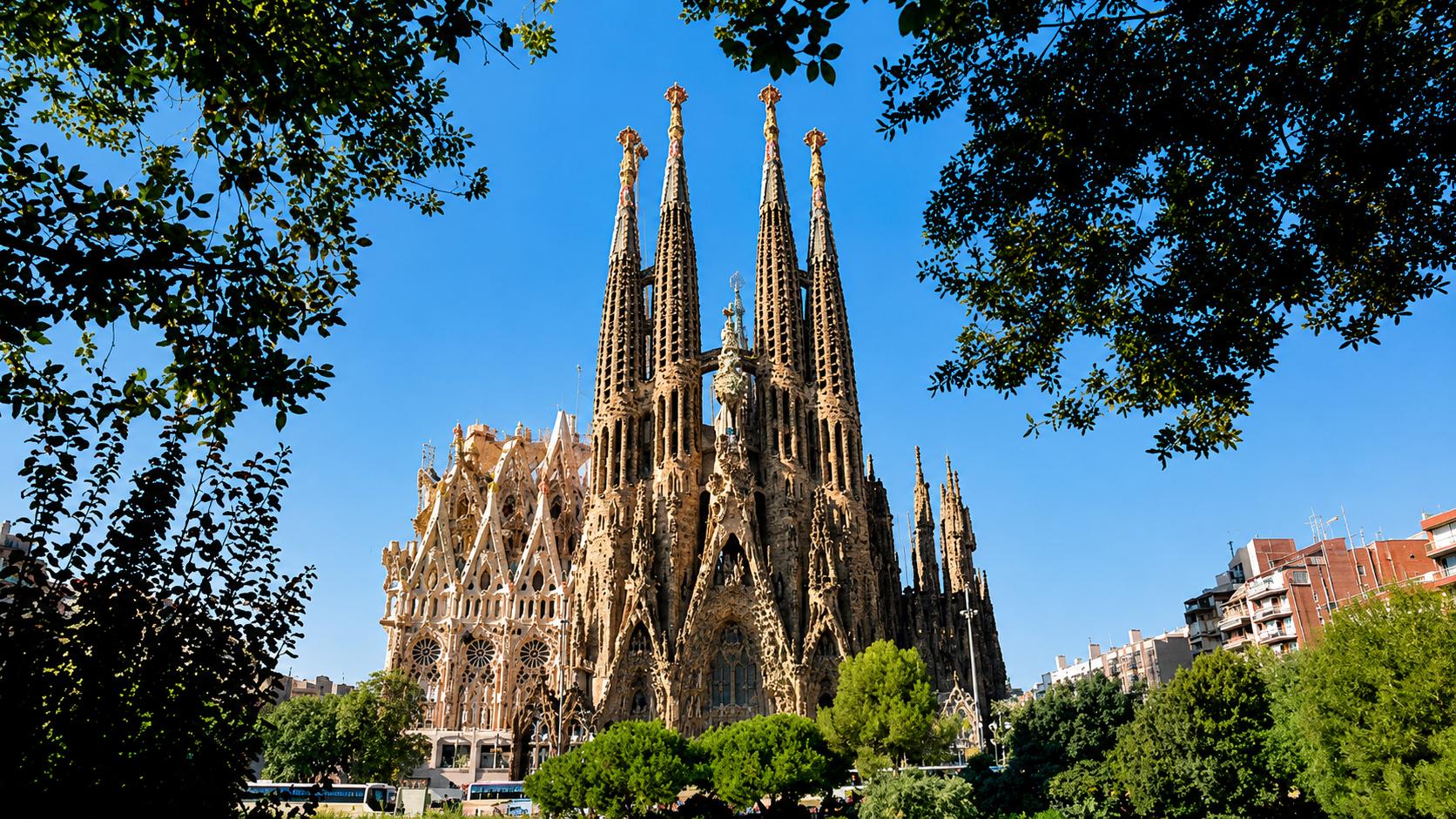
The Sagrada Família is the single essential sight. Antoni Gaudí's basilica has been under construction since 1882 and remains unfinished, which is part of the experience.
Tickets are timed and must be booked online in advance. Adding the tower access is worthwhile for older children and adults comfortable with heights and lifts.
Park Güell requires a timed ticket for the monumental zone, and it sells out. The surrounding park is free and gives good views without the queue.
Casa Batlló and Casa Milà, also known as La Pedrera, sit on Passeig de Gràcia and can be visited inside. Both are expensive; Casa Batlló's audio-visual presentation is the more theatrical of the two.
The old town rewards wandering.
The Gothic Quarter contains the cathedral, Roman wall fragments and a dense network of squares and alleys best explored without a fixed plan.
El Born, immediately east, holds the Picasso Museum and the beautiful Santa Maria del Mar church, and has a better concentration of independent shops and bars.
La Rambla itself is heavily touristed and worth walking once. La Boqueria market off it is spectacular, though prices at the front stalls reflect the footfall.
The beach makes it work for families.
Barceloneta beach is a short walk or metro ride from the old town, with wide sand, showers and lifeguards in season.
Beyond the beach, the aquarium at Port Vell is among the largest in Europe with a walk-through shark tunnel. The Cosmocaixa science museum has an indoor flooded rainforest and is excellent for children.
Tibidabo, on the hill above the city, is a historic amusement park with vintage rides and enormous views, reached by tram and funicular. The Montjuïc cable car and castle are another good half day.
Camp Nou has been undergoing major redevelopment in recent years, so anyone planning a stadium visit should check what is currently open.
Eating and drinking.
Catalan food is distinct from the rest of Spain. Look for pa amb tomàquet, bread rubbed with tomato and oil, along with escalivada, botifarra sausage and seafood rice dishes.
Eating hours run late. Lunch is generally from around two, dinner rarely before nine, and restaurants serving at seven are usually aimed at visitors.
A menú del día at lunchtime offers several courses at a fixed price and remains the best value meal of the day.
Getting around is straightforward.
The metro covers the city well and runs late, with a T-casual multi-journey ticket working out considerably cheaper than singles for a group or a few days of travel.
The Eixample grid is walkable but the blocks are large, and distances that look short on a map take longer than expected. Comfortable shoes matter.
The hop-on bus routes are useful for reaching Montjuic and Park Guell, both of which involve climbs, though the ordinary bus and metro network does the same job for a fraction of the price.
Practical points.
Barcelona has a genuine and well-documented pickpocketing problem, concentrated on La Rambla, the metro and crowded areas around major sights.
Nothing about this needs to spoil a trip, but basic precautions matter: bags closed and in front of you, phones not left on café tables, and particular care on escalators and in metro crowds.
Catalan and Spanish are both official. English is widely spoken in tourist areas. The euro is used throughout and cards are accepted almost everywhere.
When to go.
May, June, September and October offer warm weather without the peak crowds and heat of July and August.
Midsummer can be uncomfortably hot for sightseeing with children, and the beaches are extremely busy.
Winter is mild, quiet and cheap, and the Gaudí sites are considerably more pleasant without queues, though the beach is for walking rather than swimming.
Share your thoughts.
Sagrada Família or the beach: which would you do first in Barcelona?
Travel News
Barcelona from Newcastle: A City Break Guide
Barcelona offers the rare combination of a major cultural city and a proper beach, which makes it unusually good with children in tow.
Advertisement

Comments (0)
You must be logged in to post comments.
Don't have an account? Register here
No comments yet. Be the first to share your thoughts!