
Airports are difficult environments for a great many people, and not only for those using a wheelchair. Long distances, queues, noise, unpredictable timings, crowds and the sheer amount of information to process make air travel genuinely hard for anyone with reduced mobility, a long-term health condition, a sensory impairment, a learning disability or a hidden condition such as autism or dementia.
Special assistance exists precisely for this, it is a legal right rather than a favour, and it is free. The main barrier is that people either do not know it applies to them or feel that asking for it is making a fuss.
It is a legal entitlement.
The rules governing assistance for disabled passengers and those with reduced mobility are set in law and apply to airports and airlines across the UK. Airports must provide assistance from a designated arrival point through to the aircraft seat, and in reverse on arrival, and cannot charge for it.
Airlines cannot refuse to carry someone on grounds of disability except in narrowly defined safety circumstances, and where a refusal happens it must be explained.
Regulators monitor airport performance on assistance and publish assessments, which has driven real improvement over the past decade.
Book it through the airline, not the airport.
This is the point people most often get wrong. Assistance is requested through the airline or travel agent when booking, or by contacting them afterwards, and the airline passes the request to the airport.
Book at least forty-eight hours before departure. Requests made later will usually still be met, but the guarantee of a prompt service applies to those booked in advance, and short-notice requests can involve waiting.
Do this for every leg of the journey, including connections and the return, and check that it has been recorded rather than assuming.
Be specific rather than general. Saying that you need a wheelchair to the gate but can walk short distances and manage steps produces a better outcome than a vague request, because the assistance team can allocate the right support.
What is actually provided.
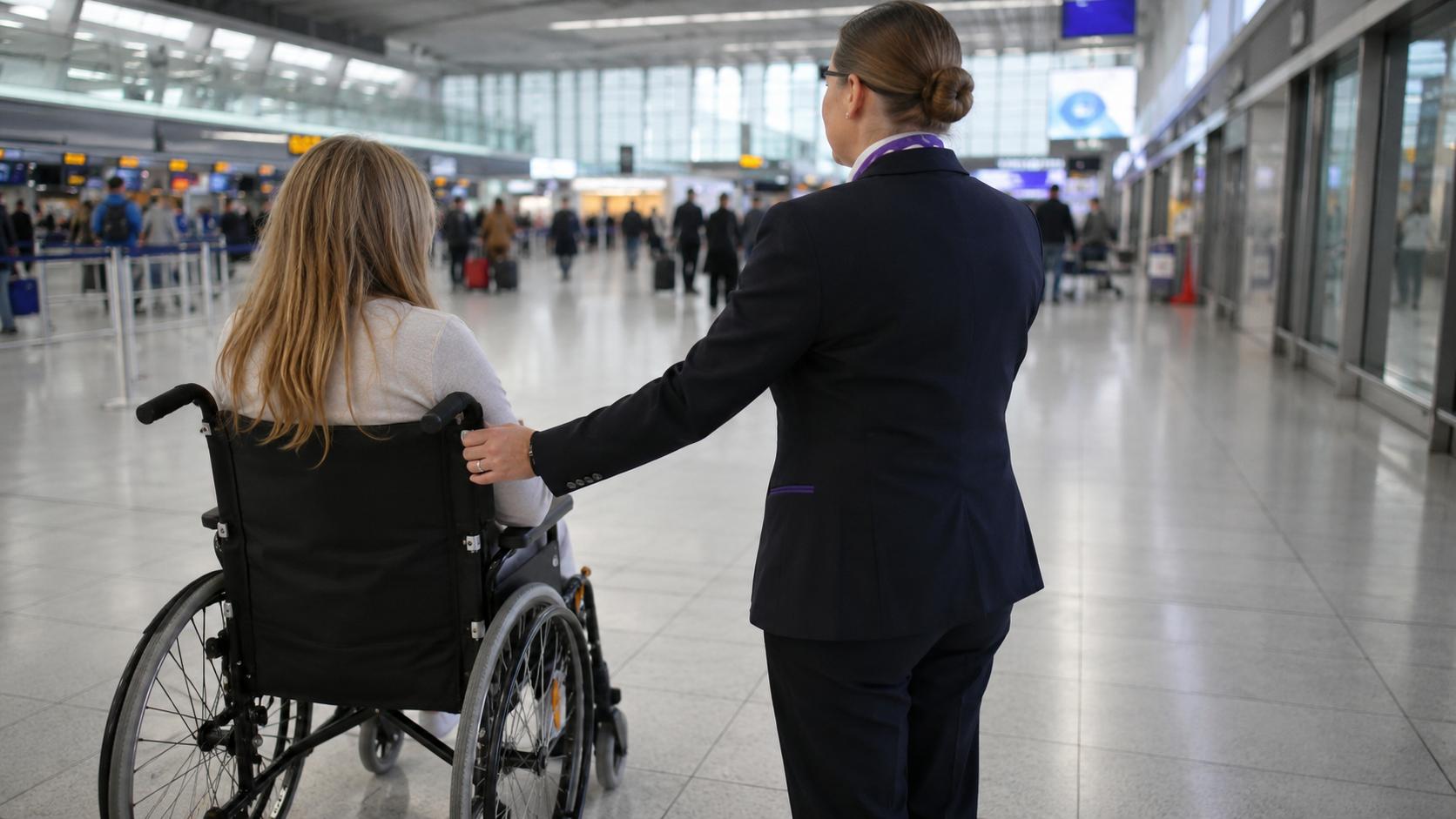
Assistance covers help from a designated meeting point at the terminal through check-in, security and passport control to the gate and onto the aircraft, and the reverse on arrival, including help with baggage reclaim and getting to the terminal exit or onward transport.
Wheelchairs are provided at the airport for those who need them, and passengers can use their own up to the aircraft door in most cases, with it then being carried in the hold and returned at the aircraft door or at reclaim depending on arrangements.
Where a passenger cannot use steps or a jet bridge, an ambulift vehicle raises them to aircraft door level.
Assistance dogs travel with their owner in the cabin subject to arrangements made in advance with the airline, and the requirements differ from ordinary pet travel.
Hidden disabilities are covered.
The sunflower lanyard, now recognised at airports across the UK and internationally, is a discreet way to indicate that you may need additional time, patience or support without having to explain yourself repeatedly.
Lanyards are available free at airports including Newcastle, and can also be obtained in advance. Wearing one does not require proof or registration.
Many airports offer quieter routes through security, familiarisation visits before travel for people who find the environment difficult, and visual guides showing what to expect step by step. These are particularly valuable for autistic travellers and for families travelling with a child who finds new environments distressing.
Medical equipment and medication.
Passengers travelling with medical equipment, including oxygen, CPAP machines, insulin pumps and mobility scooters with batteries, must inform the airline in advance because approval and specific handling arrangements are required, particularly for anything involving batteries or compressed gas.
Medication should travel in hand luggage in original packaging, with a copy of the prescription or a letter from a GP, which also assists at security where liquids or needles are involved. Security staff deal with this routinely.
Mobility scooters and powered wheelchairs need battery type declared in advance, since the rules differ substantially between wet, gel and lithium batteries.
Practical points at Newcastle.
Newcastle Airport is compact by the standards of major UK airports, which works in favour of anyone finding distances difficult, and the Metro runs directly into the terminal.
Designated assistance points are signed within the terminal and at the drop-off and car park areas, and there is a call point to summon assistance on arrival at the airport.
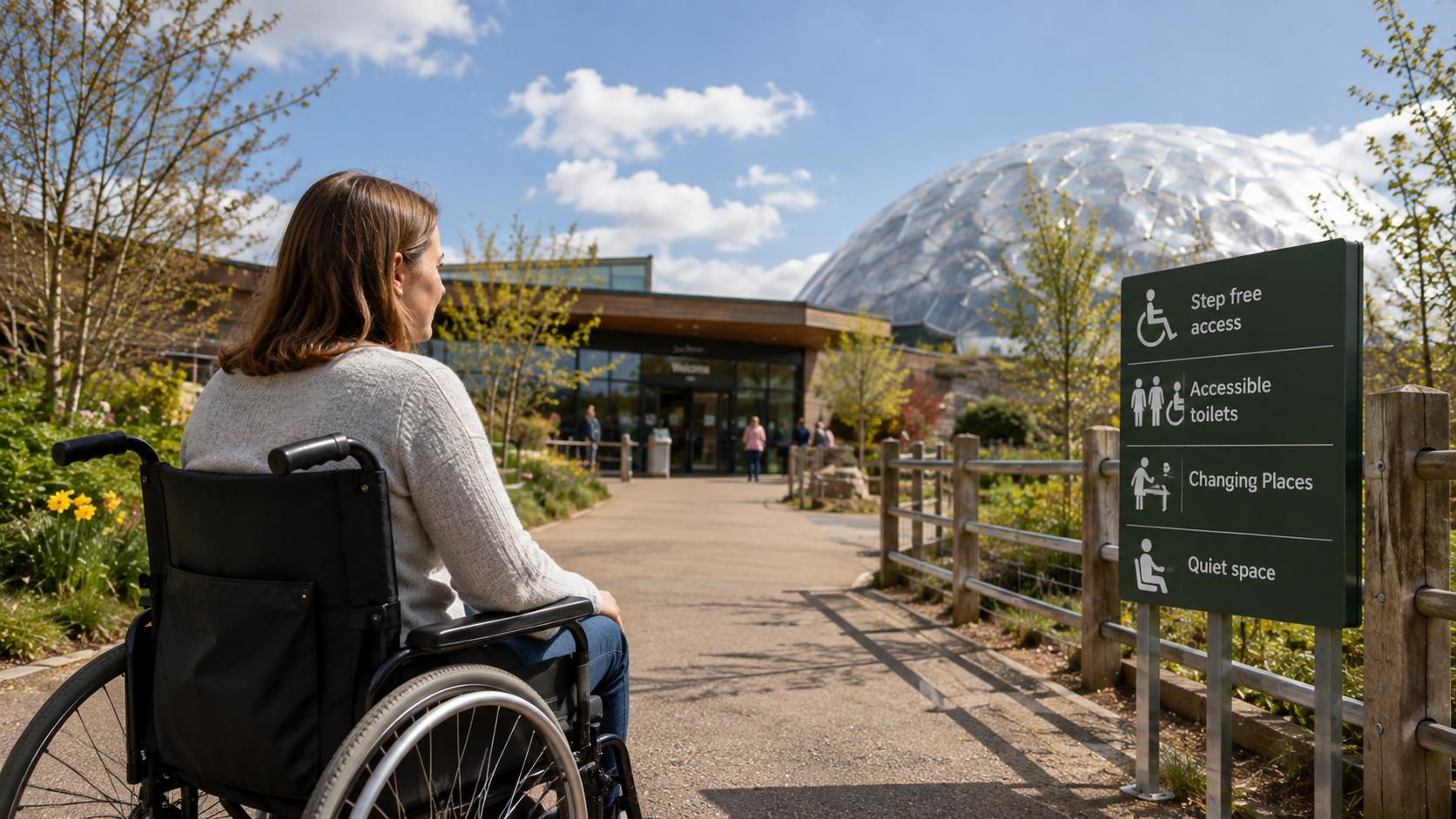
Blue Badge holders should check parking arrangements and any concessions in advance, and the airport publishes an accessibility guide setting out facilities including accessible toilets, Changing Places provision, and quiet areas.
If it goes wrong.
Complain, and complain to the right body. Assistance failures should be raised with the airport or airline first, in writing, with flight details and times.
If the response is unsatisfactory, the aviation regulator oversees these obligations and there is an escalation route, including alternative dispute resolution schemes that airlines belong to.
Reporting matters beyond your own case, because performance data drives regulatory attention and service improvement. A poor experience that goes unreported changes nothing.
Share your thoughts.
Have you used airport special assistance, and did it work as it should have?
Travel News
Requesting Special Assistance at Newcastle Airport
Advertisement


Comments (0)
You must be logged in to post comments.
Don't have an account? Register here
No comments yet. Be the first to share your thoughts!